
 E-Paper



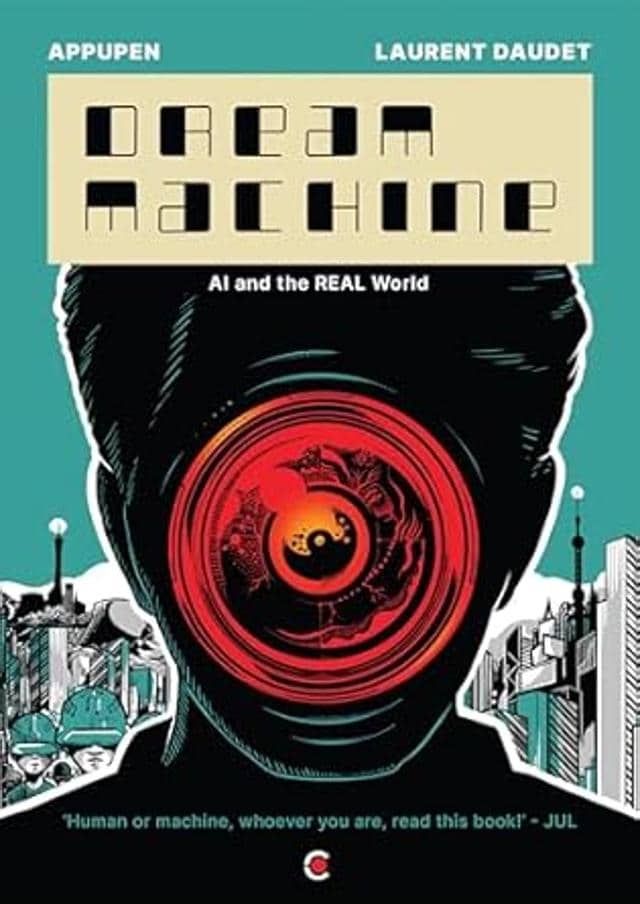
Review: Dream Machine by Appupen and Laurent Daudet
From beginning as a general-purpose primer on AI, this book slowly advances towards “real-world issues” and serves both as a warning and a comforting force

 Prefer HTon Google


In partnership with Microsoft, OpenAI rolled out an early demo of ChatGPT on 30 November 2022. The rest, as they say, is history. A few days later, realising the large language model (LLM)-based tool’s potential and capabilities, CEO of Tesla Motors, Elon Musk tweeted on X: “ChatGPT is scary good. We are not far from dangerously strong AI.”
Pay specific attention to the adjective ‘scary’ and the adverb ‘dangerously’. They signalled that the world is way past “AI winter”, a period of slowing interest. It’s spring season for artificial intelligence (AI), as can be observed with the use of generative AI tools like Grok and Perplexity, and the recent, outrageous flooding of the internet with the Ghibli-style AI-generated images.
The world over, organisations are in a frenzy. Human creators — imagine, we’re already making this distinction — are anxious. They’re faced with an existential crisis as they wrap their heads around a scenario where they find themselves replaceable, redundant — their skills no longer cost-efficient, their presence an eyesore for profit-mongering enterprises.
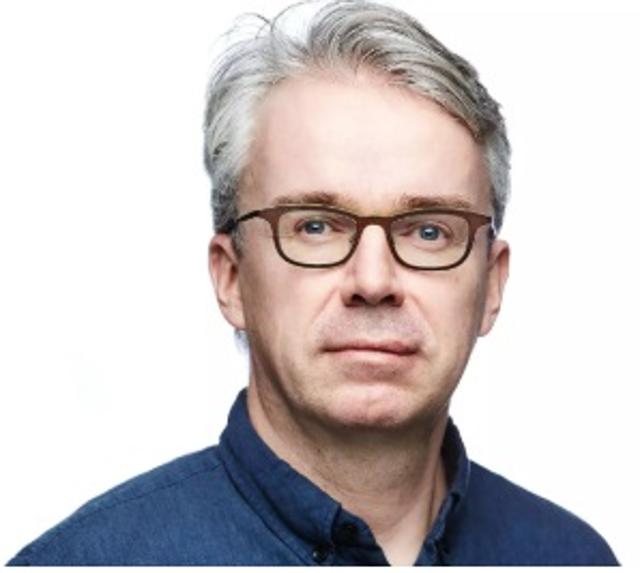
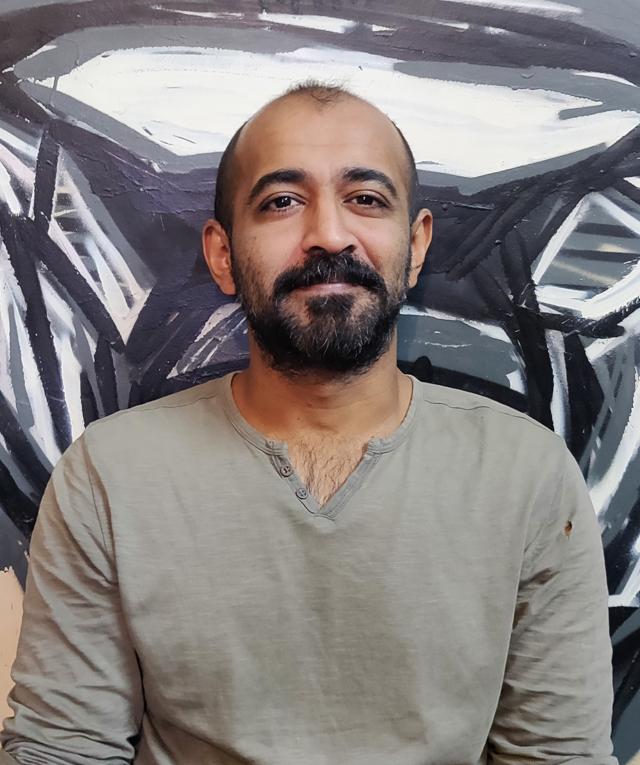
It’s not the tool(s) or the drift towards maximising profits, but the sheer scale and magnitude of change, which is making itself palpable and disrupting their everyday lives in unimaginable ways, that’s maddening them. In such a situation, consider an outcome of a Franco-Indian collaboration between graphic novelist and artist George Mathen, popularly known as Appupen, and the Professor of Physics and Co-CEO and co-founder of LightOn, which is aimed at shaping “a future where AI integration is seamless and transformative,” Lauren Daudet — a graphic novel Dream Machine: AI and the REAL World.
Fascinating and educative, not only does this work try to make sense of the paranoia of our times but it also comes across as an introductory guide to the nuances and challenges that are lost on us when we discuss AI, LLM-based tools like ChatGPT, and their impact on our lives, and the ecosystem at large. This includes the massive energy that’s required to train LLM-based tools — 1,287 megawatt hours (1,287 MW of electricity consumed continuously for an hour!) in 2023, and the unethical use of AI — deepfakes and other scams, and job loss, to name a few.
Beginning with the central character Hugo’s dreamscape, the novel presents spectacular visuals of possibilities. All illustrations were generated by the Stable Diffusion model as the authors note in the Afterword. A tech bro, Hugo’s firm KLAI “is all set to break new ground”. In reality, his dream is to work with REAL, a game-changing firm and one of the major disruptors in the field of LLM-based tools.
“What does one do when dreams come true? I suppose we feel invincible. We are driven to dream more. We dream bigger. We try to dream better,” Hugo notes. It may seem an ordinary, unnoticeable paragraph in this captivating work. However, it performs a crucial function: it tells us how humans proceed in a mindless manner not realising the effect of their self-centred dreams. This is often at the cost of their personal lives, which is clearly depicted from Hugo’s partner, Anna’s viewpoint throughout.
“She anchors my dreams,” says Hugo. However, Anna comes across as the one who, if not doubting initially, continues to question REAL’s real agenda behind creating a “survival game”. In it, “you could win ‘a life beyond’!” and achieve immortality. To build it, the fishy organisation needs KLAI’s and Hugo’s help. Tempting, bewildering, and eerily possible, this opportunity makes Hugo focus on making it happen for himself, his firm, and Anna! As one conflict after the other is introduced in this immersive work, it deep dives into the challenges facing our species by submitting a question: What do we do about it?
Thus, from a general-purpose primer on AI, which is how it begins, the book slowly advances towards “real-world issues”. Sample this: “AI could be the next man-made issue. Yet we cheer for automated weapons!” (Remember Google employees’ 2018 letter to Sundar Pichai — “We believe Google should not be in the business of War”, referring to the firm’s involvement in warfare technology?) While it’s difficult to understand the immensity of what lies ahead, the book serves both as a warning and a comforting force in ways only novels can and must. They offer a world of possibilities, asking difficult questions. This one does and that more, with dollops of humour.
For example, a personal assistant’s interference is a reminder of how our lives have been integrated with AI. Then, there’s an interaction between Hugo and an artist, modelled on the avatars of Daudet and Appupen. It makes for a hilarious read as one gets a glimpse of an outsider’s viewpoint on matters of extreme urgency for a business-minded, goal-oriented person like Hugo.
Interestingly, a few scenes draw from real life — a conference, NeurIPS 2022 “where the AI world discovered the newly released ChatGPT”, held in New Orleans. A mecca for techies, this conference in the book features a researcher Mathilde, “an ardent advocate of AI for scientific impact”, who helps share how ‘AI for science’ “can actually give us actionable insight on unseen data”. The question, however, is who gets to use this data and tell — or rather control — the narrative, which is what large organisations are doing. And, most importantly, who benefits from this story?
Effectively communicating the socio-political impacts of an AI-driven world, this is a reflection of what lies ahead. From offering an interesting take on the biases against minorities of all kinds that LLM-based tools are already hardwired for to presenting itself as an example of what a collaboration with AI can do, Dream Machine is a must-read for all — “human or machine,” as the French rapper Jul notes in the preface.
Saurabh Sharma is a Delhi-based writer and freelance journalist. They can be found on Instagram/X: @writerly_life.


