
 E-Paper



Review: Hijacked by Pralav Dhyani
Elevated by prose that faithfully records the chaos, this is an honest and immersive survivor’s account of being taking hostage by Somali pirates

 Prefer HTon Google


Hijacked, a real-life story about being taken hostage by Somali pirates, begins rather unexpectedly with the author, Pralav Dhyani’s failed education stint in Canada. After he returned to India with no degree and no plan, his father enrolled him in the merchant navy, hoping it would have a positive influence. A true brat, the young man enrols with his PlayStation, speakers and a small TV in tow. His self-centred ways continue until he is reprimanded by the captain, a major turning point in his life. Dhyani writes with disarming honesty about his early failures followed by waves of remorse and self-awareness.
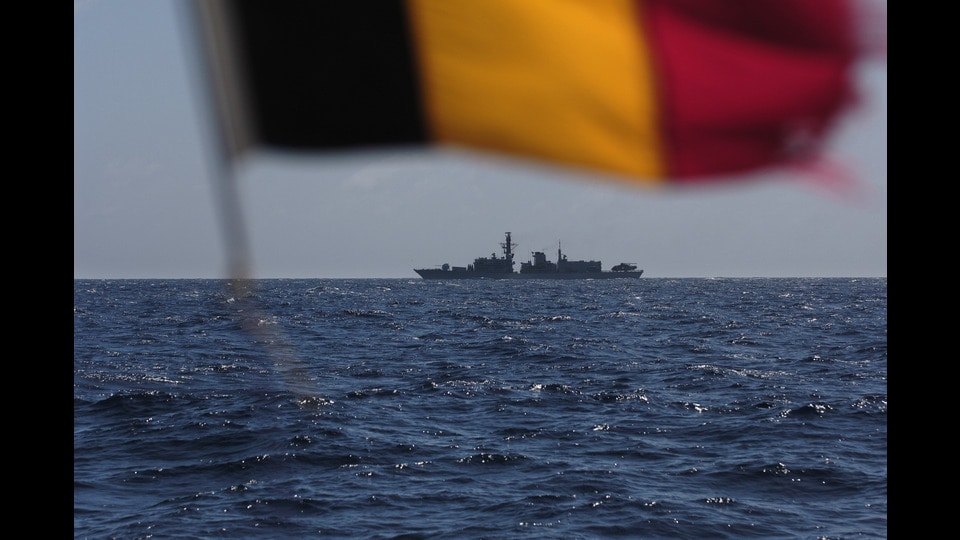
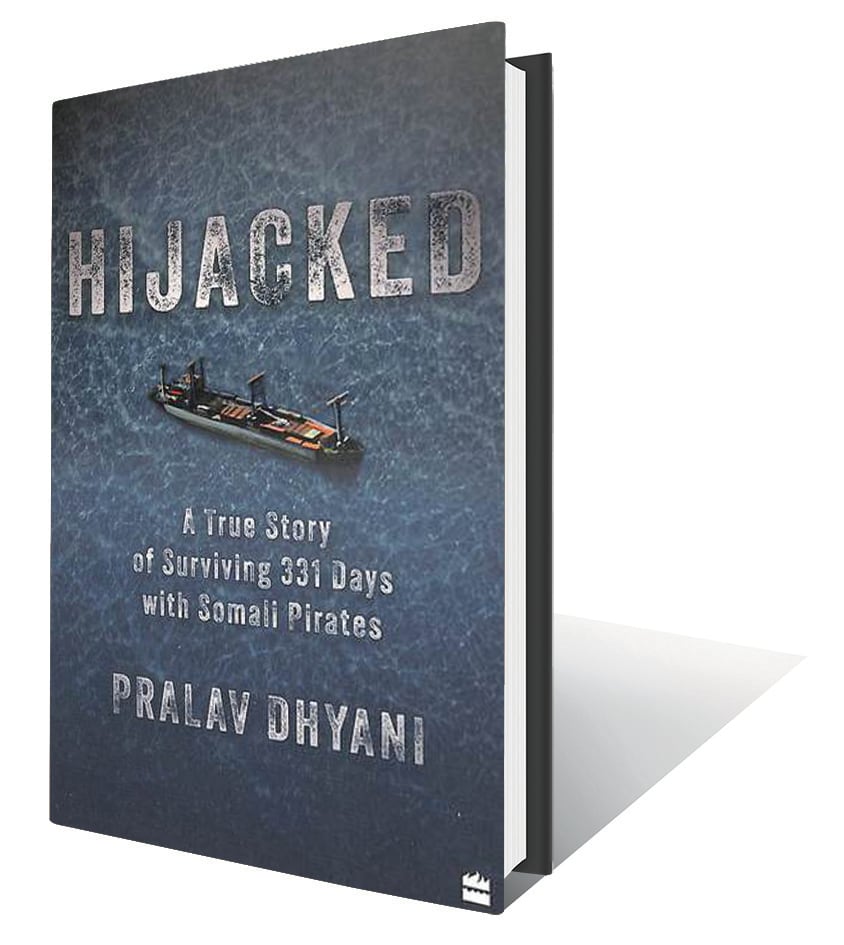
Afterwards, life seemed to be falling into a reassuring pattern when, after seven months at sea, on a lazy Sunday, a dead engine makes the ship fall prey to pirates. They take it to Somalia where it is stripped of valuables. An interpreter is then sent to negotiate with the captain for the crew’s lives. The starving pirates aren’t in a great condition and they grab whatever food they can find including plain bread. Panic struck, the ship cook’s skills deteriorate until the captain steps in with a reprimand. Despite the pirates’ ferociousness they fear entering the dark engine room even as tea and cigarettes are freely given to the crew to keep up morale.
The weather, human error and the unpredictability of existence prolongs the ordeal. Incidentally, this case turned out to be one of the longest waits ever endured by hostages at sea. As time went on, the crew and the pirates formed unlikely friendships and on occasion, fell out as they struggled with language barriers. The pirates spoke of their hatred of American ships and gave the author an idea of how piracy operates as an industry like any other. The Somalis were demanding ransom in the form of “tax” for crossing Somalian waters. The author notes that a Spanish trawler and a chemical tanker have met the same fate as their vessel. Part of competing private factions that are externally funded, the pirates often used captured ships as part of their ‘hunting parties’ to capture more vessels. Clearly, in a country caught up in political instability, civil war, fishing losses and cycles of violence, piracy is one of the few means of survival. A young pirate tells the author that he was gifted an AK47 on his 18th birthday, signalling his ascent into manhood and the world of adult responsibility.
This is also a tale of unforeseen twists and turns: at one point, the negotiation process is prolonged because the Somalian translator has to go home for a few months to take care of his sick mother; then, the negotiator on behalf of the shipping company died; finally, the onset of a long monsoon meant the pirates didn’t want to move and leave their coast empty. Things got dire for the crew at around the 100-day mark. The pirates had feasted on the ship’s supplies, crew members had begun to show signs of severe weight loss and the author’s nickname, ‘bonge’, meaning chubby, no longer held true. There’s an element of black humour even in the telling of this part of the story – the pirates grew so fed up of the ship’s cook that they brought in one of their own, who turned out to be much better. Meanwhile, back home, desperate families spent significant amounts of money on consulting fortune tellers and ‘babas’. And then there was the shared fate of the pirates and the crew, who both ran with the same anticipation when weekly rations arrived. Negotiations took so long that the pirates began rationing their ‘khat’, an addictive substance, as they had not been paid in a long while.
Seven months in, the desperate pirates began resorting to scare tactics to leverage a speedy ransom. This included faking shootouts to pressurize the captain and sending doctored photos to the ship owner. This took a huge psychological toll on the crew especially when it seemed like their mates had been executed. It wasn’t just the erratic behaviour of the pirates that the crew had to contend with; they had a dead engine, a hole in the hull which allowed water to gush in, and not much diesel left to power generators and the water purifier. To add to all this, some crew members, in an attempt to curry favour with the pirates, began to suggest solutions to fix the ship, which further endangered lives. This led to much in-fighting and physical exhaustion brought on by attempts to execute farfetched ideas. In all these times of crisis, the caption kept the crew together and ensured they survived everything that the pirates and the broken ship could throw at them. He also ensured the crew’s morale stayed high and deployed tactics to prevent the pirates from interfering with the running of the ship.

Close to a year in captivity when the drinking water was running out, and the men realised that they were now struggling to remember the names of relatives, a crew member died. A few days later, the ransom was paid, and the crew was finally free to go home. The grief of the death, however, meant the mood was sombre. Dhyani writes of how, when the ransom came in, the pirates lined up on the ship to celebrate on finally receiving their wages.
An honest and immersive survivor’s account, Hijacked is narrated with no self-pity and no performative suffering. A clear-eyed attempt to document the emotional and physical toll of the ordeal, it is elevated by its unadorned prose that is steady, observational, and faithful to the chaos it records. In the end, Pralav Dhyani’s book is an unbiased look at what can go terribly wrong at sea.
Percy Bharucha is an independent writer.


