
 E-Paper



Review: Memories of Rain by Sunetra Gupta
Cross-stitching a weekend’s chronology with the yearnings that precede it, this novel, which won the Sahitya Akademi award in 1996 and has been reissued, is about a young Indian woman married to a British man who decides, in the face of her husband’s public affair, to return to Calcutta with her daughter

 Prefer HTon Google


We have spent the last decade arguing about representation at the level of casting and cataloguing. Sunetra Gupta in her Memories of Rain worked 30 years ago on the slower problem of how thought sounds under pressure of migration, marriage, class, work. The book honours complexity, grants people their contradictions and then demands we track them. The new Westland Ashoka University edition returns her 1992 debut to readers.

Since winning the Sahitya Akademi award in 1996 for her first book, Gupta has written five more while teaching and working as a scientist. Those facts matter because Memories of Rain reads like the work of someone trained to observe systems of ecologies, epidemics, feedback loops and is unafraid to keep all variables in play.
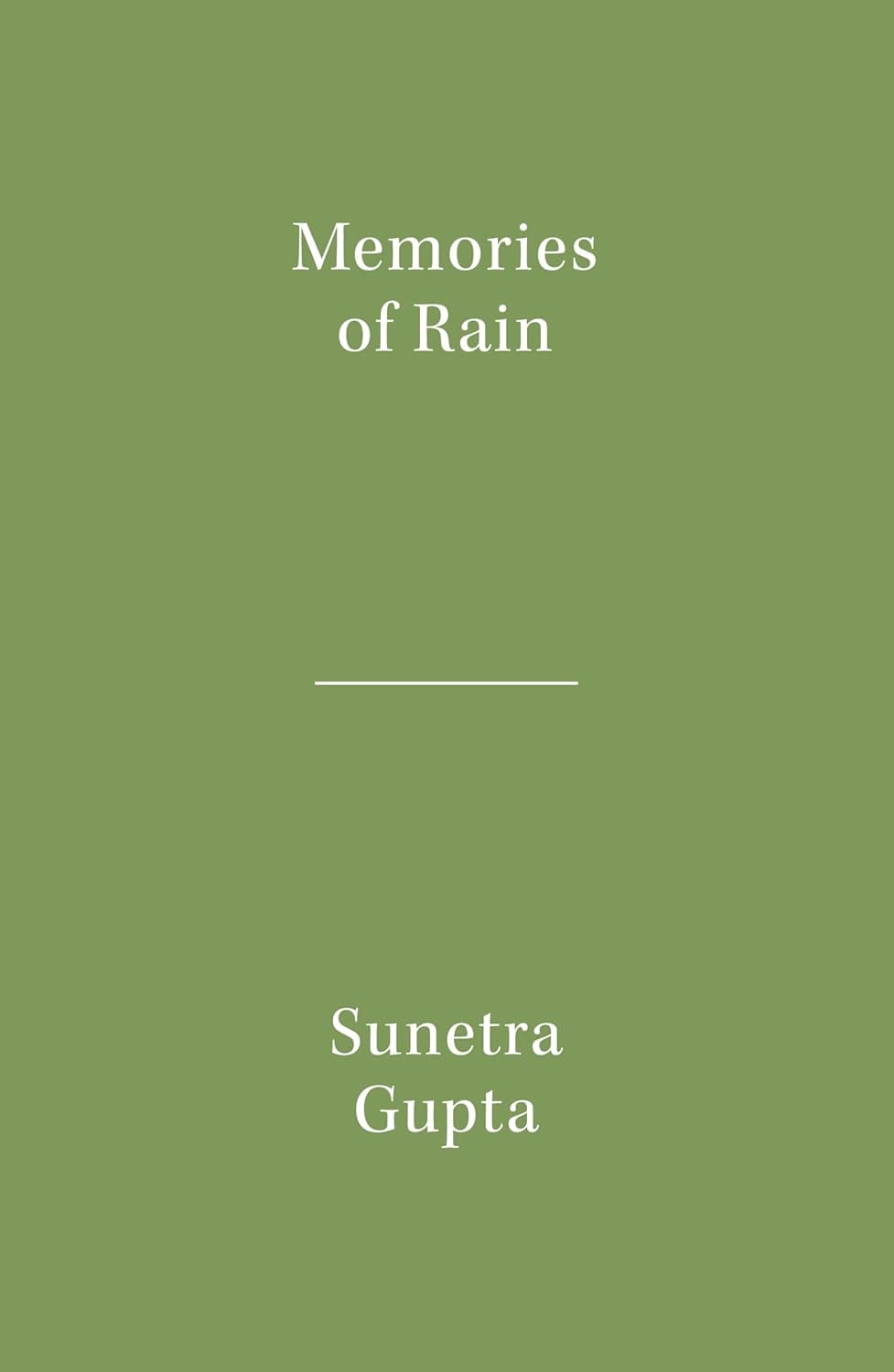
A marriage between an Indian woman and an Englishman is the story you can tell in a sentence. The experience of that marriage and its private weather, takes three days, four sections, and long, tensile sentences that suspend time. A young Indian woman, Moni, marries British expat Anthony. London absorbs them and years later, after the birth of a daughter and the public persistence of Anthony’s affair with Anna, Moni decides to return to Calcutta with the child. The decision is timed to a birthday party. It is a theatrical exit. Gupta’s narration moves through stream of consciousness, and a plethora of returns.
Rain works as a memory metronome and is not an aesthetic choice. Gupta opens one of the book’s most interesting chains of association on Oxford Street where Moni watches a woman crush an ice-cream cone to feed pigeons and pour water into a bowl. The moment triggers a line from her childhood: “many years ago her grandmother had told her that pigeons can only quench their thirst by opening their beaks to drops of rain.” And this is how the novel works. A present action pulls a memory, which then rekeys the present.
When London’s drizzle becomes a portal back to Calcutta in 1978, Gupta explains the contradiction of place and feeling without anesthetizing it. Calcutta is remembered as the season when “the rain poured from the skies not to purify the earth, but to spite it, to churn the parched fields into festering wounds, rinse the choked city sewers on to the streets, sprinkle the pillows with the nausea of mould . . .” The prose is exact about disgust. It is exact, too, about allure. Rain, here, dissolves boundaries and binds memory to event. If the British novel tends to use weather as atmosphere, Gupta uses it as logic.
Readers who call this “Woolfian” are chasing a lineage. Stream of consciousness, yes. A sensitivity to light and water, yes. But Gupta’s book cross-stitches a weekend’s chronology with the yearnings that precede it. The technique almost works like accounting. It explains what got said, what stayed unsaid, what a character imagined herself to have said, which is often her truth. Memories of Rain treats interiority as evidence. That is why the long sentences feel deliberate rather than indulgent. They work to make a case.
There are ethics at play here as well. Anthony’s affair with Anna is not hidden. Anna and Moni share some care of the child. Everyone knows and no one speaks adequately. Silence is an instrument here. The free indirect mode lets Gupta steal the voices of her characters even as she reveals their thoughts.
This is where the East-West argument gets interesting. This is often described as a novel of the East-West marriage, an allegory of colonial residue. That’s not wrong, but it is only half useful. Gupta is careful to show that the machinery of silence works in both contexts. In England, Moni loses facility with speech and song; in India, she moves from her parents’ house to her husband’s and, later, back to her parents, which raises the tidy Western question: why not an apartment of her own with her child? Because the book is strict about material and social constraints like inheritance norms, gendered expectations, and the practical arithmetic of care. Tagore songs thread through the text as a musical technology for holding thought when speech fails. The four sections behave like movements. Each repeats motifs with slight alteration.
Anthony receives no exoneration. He is a man who wants to be the poet of his own intensity, then discovers an office job and grows quietly resentful of the bureaucratic texture of grown-up time. He “would love her forever, even though their passion was spent.” That sentence should be framed and nailed above every workshop table. It captures the moral laziness of love as a permanent excuse. His self-idea comes stamped with the entitlement of a traveller-scholar. “He had come to this land, like his forefathers had done, with the conviction that all he wanted would be his, he had come not with greed, only a desire for knowledge, for experience.” The rhetoric is classic extraction disguised as curiosity, which is to say, the colonial grammar made intimate.
If your tolerance for long sentences is low, the novel will test you. Moni too becomes unbearable because she appears to consent to her own diminishment. But the form reveals the strain of that consent. She wants, she fears, she calculates costs, and she fails to speak. But this is definitely not a parable about docility. It, in fact, feels like a case study in how norms win when speech fails.
Gupta is also unsentimental about the baby politics of divorce. There is a child. There is a party planned. There is a timeline for departure. The narrative compresses into a weekend to mirror the sick tempo of an ending. The alternation of Moni’s and Anthony’s points of view is a method for mapping mutual incomprehension. He believes himself to be intellectual kin with Anna and emotionally bound to Moni by history. She recognizes the pose and feels the pull of family, language, and the idea of rescue. Return to India becomes both plan and myth. She imagines a life of service, of helping the poor. It is a workable self she can name when other selves feel confiscated.
Gupta leans on the tool of stream of consciousness as if to stage the central problem of speech. The narrator’s power “literally” steals the characters’ voices. The result is that we learn how much a person can say without ever saying it aloud. Silence becomes legible. In this sense, the book is less Woolf than clinical. It is as if Gupta is testing how long a social system can suppress expression before the pressure forces a decision, to leave, stay, implode, or simply confess.
The marriage as a figure of the empire is present and acknowledged. But it does not dominate. “He had come… like his forefathers had done,” is the banner line, but the daily colonialism that matters here is the management of another person’s (woman’s) day. Calendar imperialism. Who gets Tuesday afternoons? Who handles the school pick-up? Who chooses the books in the house? The scenes in Anna’s mother’s home are exact about a mixed arrangement that pretends to be modern and humane while reaffirming an older hierarchy. The book refuses scandal as plot engine and prefers routine pain.

One of Gupta’s best choices is the use of Tagore songs. They give Moni a way to think. They also remind the reader that culture is not a costume you wear for the Western gaze but an audio library you reach for when alone. The decision to leave — to take the daughter and step back into the city of origin feels like redemption. I don’t see it that way. There is pain on all sides because the child is embedded in both households. There is no speech act that dissolves the fact. Moni’s friend who says, “You should just leave the bastard,” is speaking in a register of individualist freedom that the novel respects and also tests against actual constraints.
There is an absence of courtroom-style confrontations where truths are spoken and order restored. Gupta wants us to feel how a culture trains us to accept certain arrangements as inevitable. She then shows what it costs to resist that training when you have a child and a history.
The prose is beautiful. London scenes carry a wet pallour and Calcutta scenes burn with detail. There are places where the novel leans into romantic thinking. Like the fantasy of wounding a lover through a grand exit, the idea of returning home as moral purification. The book knows the seduction of these scripts and stages them anyway. And she insists that the mix of gender, class, and empire is a climate. You don’t break climate with a speech. You change housing. You move.
The new edition brings back a book that argues that the private is also historical. The line “he would love her forever, even though their passion was spent” is the sigh of a man who mistakes feeling for fidelity. And “The pride of martyrdom ran deep in her race” is a diagnosis aimed at the reader as much as the character. What stories about suffering do we like to read? Which ones feel true because they flatter our sense of being sensitive?
Pranavi Sharma writes on books and culture. She lives in New Delhi.


