
 E-Paper



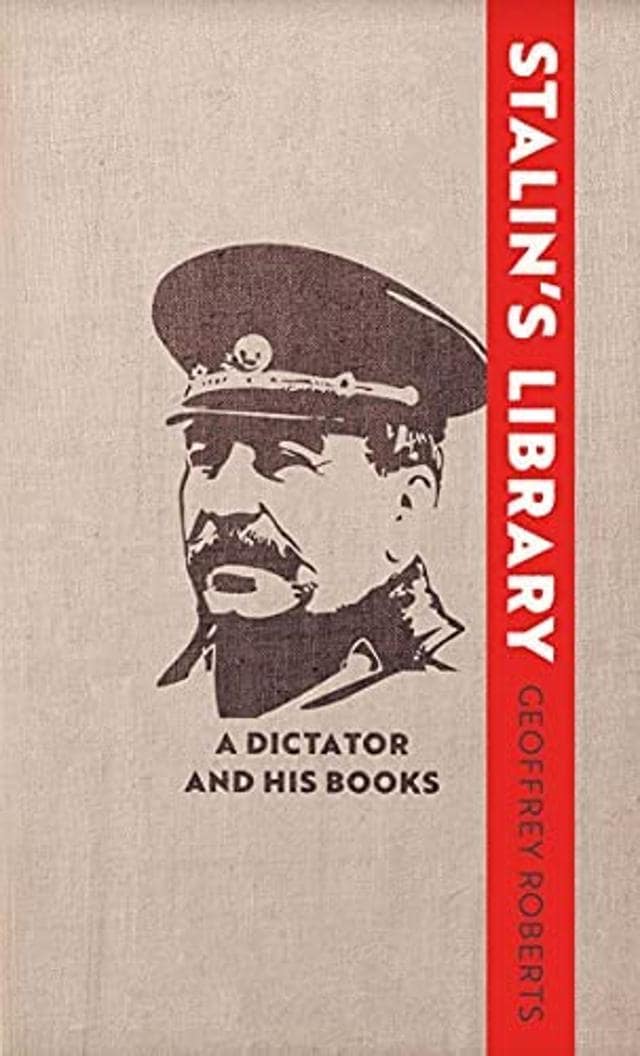
Review: Stalin’s Library: A Dictator and his Books by Geoffrey Roberts
Roberts focuses on the marginalia in Stalin’s books to provide an analysis of key episodes in his life including the Great Terror of 1937–8 and his interventions in debates on philosophy and science

 Prefer HTon Google


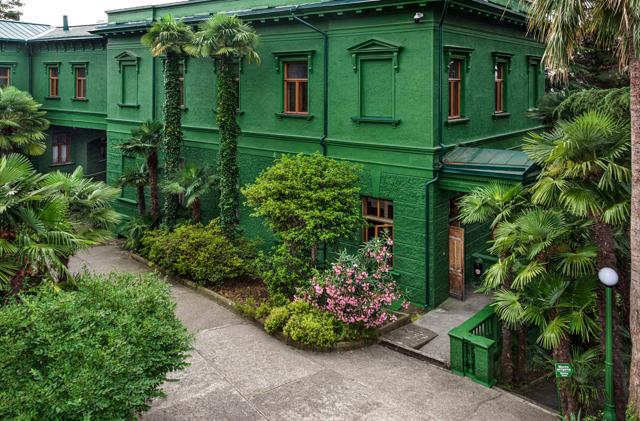
Joseph Stalin has been called a tyrant, a paranoid man, a heartless bureaucrat, a monster, genocidaire, warlord and an ideological fanatic. Joseph Vissarionovich Stalin (real name Ioseb Besarionis dze Dzhugashvili) has also been hailed as a revolutionary, a state-builder, a moderniser and a genius. Whatever the labels, he was unquestionably an intellectual who was often engrossed in “endless reading, writing and editing” according to Geoffrey Roberts, author of Stalin’s Library: A Dictator and his Books. The library in question, Biblioteka IV Stalina, at the dictator’s dacha (country house) near Moscow contained over 25,000 books, periodicals and pamphlets, and this book attempts to arrive at a picture of the man by examining this trove.
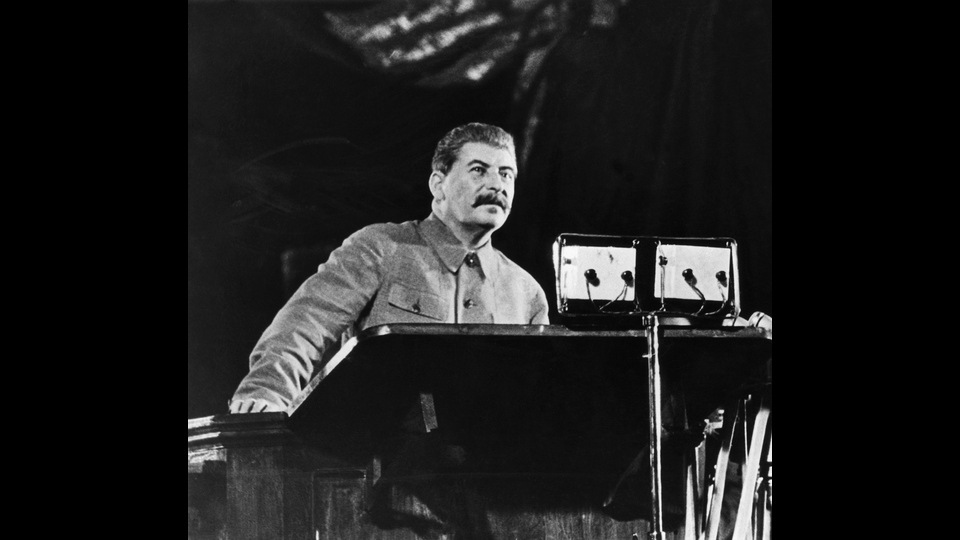
History was Stalin’s favourite subject and he was “preoccupied with the lessons of Tsarist rule in Russia, especially the reigns of Ivan the Terrible and the Greats, Peter and Catherine,” writes Roberts. Marxist theory, Vladimir Lenin and arch enemies like Leon Trotsky came next in order of preference, apart from fiction. “As an internationalist, Stalin’s interests were global, but he lacked command of any languages except Russian and his native Georgian,” adds the author whose book also provides a view of the man through the words of contemporaries.
Take this description by apparatchik Dmitry Shepilov, who visited the dacha on 6 March 1953, the day after Stalin died of a stroke. There was “a large writing desk, with a second desk placed against it to form a T”. Both were piled high with books, manuscripts and papers. Stalin was a voracious reader throughout his life and the young Stalin and the mature man are recognisably the same person. Roberts says that he “read and marked books in 1952 in much the same way he did in 1922 – actively, methodically and with feeling.” His reading, however, was selective: “Some he read cover to cover, others he merely skimmed. Sometimes he would begin reading a book, lose interest after a few pages, and jump from the introduction to the conclusion. Some books he read in a single sitting, others he dipped in and out of.”
Roberts focuses on Stalin’s pometki (Russian for annotations and markings) to provide an “analysis of some key episodes in his biography: the intra-party power struggles of the 1920s, the Great Terror of 1937–8, the spy mania of the 1930s and 1940s, the emergence of a Soviet patriotism, military affairs and the Great Patriotic War, and his interventions in postwar debates in philosophy, science, psychology and linguistics.” In this reading, Stalin’s “innermost interests and feelings” are embossed in the pometki. The jottings are about his enemies too.
Roberts looks at Stalin through “a different lens” and judges him critically while also discovering in him “a dedicated idealist and an activist intellectual who valued ideas as much as power, who was ceaseless in his own efforts at self education, a restless mind, reading for the revolution to the very end of his life”. Narrating “the story of the creation, fragmentation and part resurrection of his personal library”, the author finds him, at the end, “more Bolshevik than intellectual” and attempting to “moderate his deadly pursuit of socialist utopia.”
There is much interesting information about libraries: the Nazis ransacked 4,000 Soviet libraries during the Second World War, yet 80,000 remained in the USSR, with 1,500 in Moscow alone. Interestingly, the booty extracted by the Red Army from Germany included “13 railway wagons filled with books for Moscow University and 760,000 books for the state’s main depository, the Lenin Library.” But despite his interest in them, Stalin’s wrath did not spare books. “Public libraries were subject to censorship, too. From its earliest days the Bolshevik regime sent circulars (informally known as the Talmud) to librarians instructing them what books to remove from their shelves.” Sadly enough, Lenin’s widow, Nadezhda Krupskaya, was tasked with overseeing the “the library purge”. In 1925, the Leningrad region’s censorship office banned 448 books for political and ideological reasons. “The 1930s saw successive purges of library book stocks. In 1938–9, 16,453 titles and 24,138,799 copies of printed works were removed from libraries and the book trade network,” Roberts reveals.
Going beyond Stalin’s own library, the author also observes the dictator’s loneliness, unhappiness and insecurity. In 1932, his second wife (the first one died prematurely), Nadya, mother of Svetlana Iosifovna Alliluyeva, committed suicide at the same dacha. Among Nadya’s closest friends was Polina Zhemchuzhina, wife of Stalin’s protégé Viacheslav Molotov. The latter was forced to divorce Polina, who was Jewish, in 1949. She was expelled from the party on cooked-up charges and arrested. After Stalin’s death, Viacheslav and Polina were reunited.
The author believes Stalin’s oft-noted paranoia was political not personal. It was a reflection of the times when the Soviet state was globally “isolated and vulnerable to renewed attack by the grand coalition of capitalist powers that had already sought its overthrow during the Russian Civil War.”
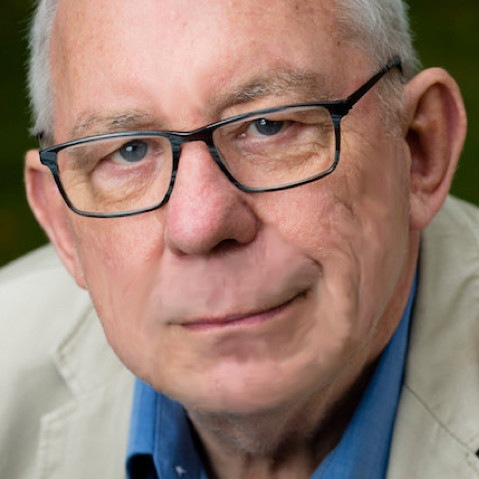
Stalin kept no diary and was not keen on writing his memoirs. Therefore, Roberts believes, his biographies were more impressions than authentic records. But there are exceptions like Oleg V Khlevniuk’s Stalin: New Biography of A Dictator and Edvard Radzinskky’s Stalin, which are both based on research at hitherto unknown archives.
“When it comes to Stalin, gossip is reported as fact; legend provides meaning; and scholarship gives way to sensationalist popular literature with tangential reference to reliable sources,” wrote Ronald Gregor Suny, author of Stalin; Passage to Revolution, a biography of the Soviet leader’s formative years.
Stalin’s Library: A Dictator and his Books then provides another view of the man through the only personal scribbles available to us – the comments he made in the margins of his books. As Roberts says, “By following the way Stalin read books, we can glimpse the world through his eyes. We may not get to peer into his soul, but we do get to wear his spectacles.”
Sankar Ray is a writer and commentator on Left politics and history, and environmental issues. He lives in Kolkata
The views expressed are personal


