
 E-Paper



Review: The Loneliness of Sonia and Sunny by Kiran Desai
A book about books and about thieving – of personhood, individuality and things too – Kiran Desai’s first novel in two decades that has just been shortlisted for the Booker is also about the porosity between fact and fiction

 Prefer HTon Google


Towards the end of Kiran Desai’s Booker-longlisted The Loneliness of Sonia and Sunny — her first work of fiction in two decades — Babita, mother of one of the titular characters, Sunny Bhatia, says to Sonia Shah: “It’s a huge subject; you can’t keep a huge subject neat.” Babita is referring to Sonia’s article on kebabs in Kala magazine but, of course, there is a subliminal connotation. It is as though the novelist is asking: When you set out to properly tell a story, doesn’t it become an all-encompassing one?
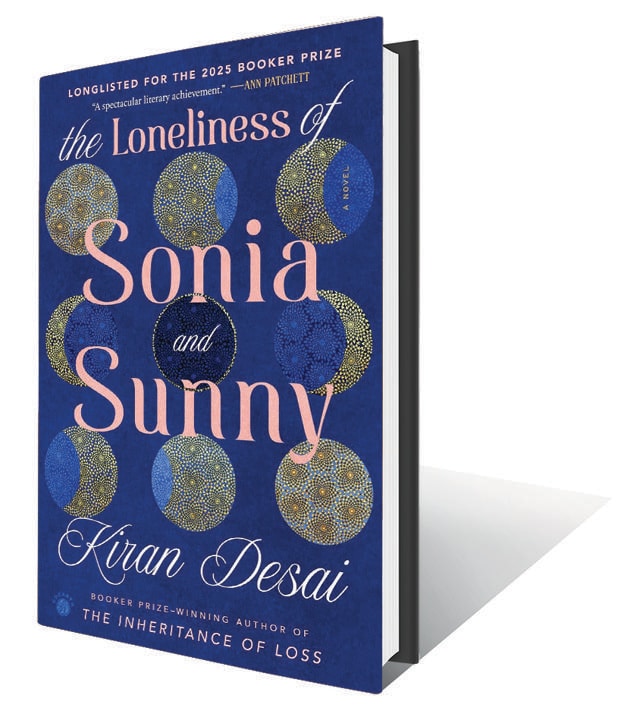
The 670-page novel begins in a rented bungalow in Allahabad, where Sonia’s grandparents, Ba and Dadaji, live with her paternal aunt, Mina Foi, whose 55th birthday is about to be celebrated. Foi, whose marriage lasted just six months, wants Sonia to “go and be lucky” unlike herself. However, Sonia isn’t doing well at all. Over a call, her father, Manav, after wishing his sister a “long life”, announces that Sonia, who is at college in Vermont, is lonely.
“In Allahabad they had no patience with loneliness,” Desai writes. This sort of malaise was not part of everyday vocabulary in India in the 1980s and ’90s; anyone battling depression or any other form of mental illness, was simply declared mental. The grandparents, part of the generation that freed itself from the chains of colonialism and had much practical work to do in building the country, don’t have much empathy for Sonia. Where does Sunny come into the picture? To cure Sonia of her loneliness, like a good Indian patriarch, Dadaji writes to the Colonel, Sunny’s maternal grandfather and his friend of over four decades, whom he had fought alongside in Kashmir and with whom he had invested in a failed business in 1986. He proposes that Sonia and Sunny meet, given that both of them are in the US. The Colonel’s wife is livid at the proposal, considering it an unworthy way of bartering away their grandson for “rupees lost in blankets and balaclavas.”
Fulfilling her maternal duty, Babita writes to Sunny about Sonia. Sunny who, unknown to his family, is living with his girlfriend Ulla, thinks nothing of it. But Sonia and Sunny do see each other in a movie-like scene on a train. If all this appears dreamlike, there’s also the novel’s most eccentric device, “Badal Baba”, the “curious amulet” that Sonia’s maternal grandmother, Anjolie Roy, had given her. Belonging to Siegfried, Sonia’s grandfather, the amulet is supposed to protect her. Here, the reader wonders if recurring dreams of a hound disturb Sonia because she wasn’t in possession of Badal Baba. Who knows? It is an unknowing of a kind that most characters of this novel must wrestle with.
Life often presents individuals with opportunities to shield themselves from dangers of all kinds, but Sonia couldn’t have considered an artist to be a threat; never those who’ve mastered the skill of offering something private in public as a gift to their audiences and deftly concealing a great deal about themselves. She meets one such man, Ilan de Toorjen Foss, who is 32 years her senior.
The novel’s narrative engine accelerates when Ilan is introduced. A well-known painter, he wants “to live inside [his] paintings”. Everything he does, says, or thinks alludes to the perennial art-versus-the-artist debate. But there’s something that he verbalises: “You give more of your life to art, you begin to subtract your life so it becomes such an emptiness you dare not look upon it.” Ilan is unable to cure himself: he inflicts harm on others for he’s emptied of everything but the need to create something from life. His victory comes at the cost of losing his humanity. At this point, it is clear that the secret theme running through this much-anticipated novel is theft.
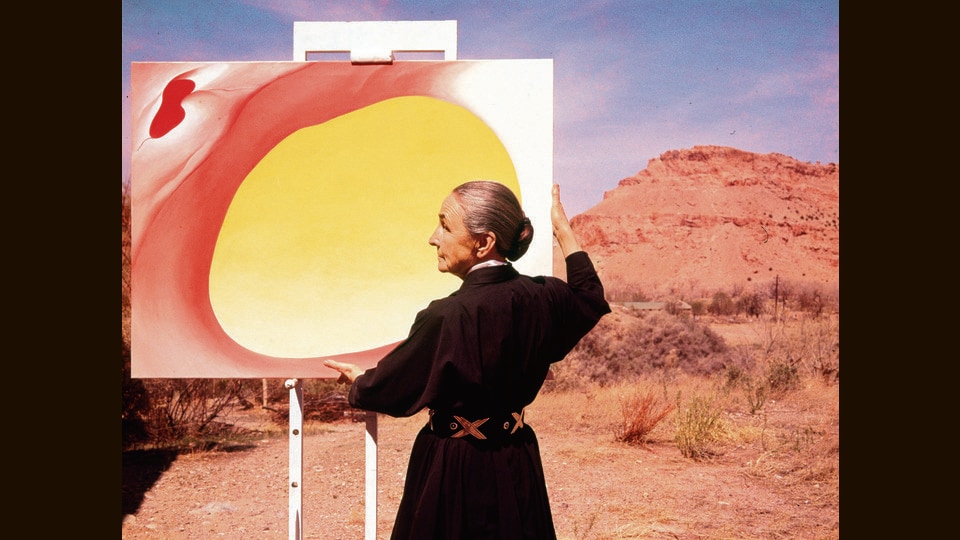
Ilan yells at Sonia, demanding to know what she is after; if she wants to “possess” him like other women do. He calls Georgia O’Keefe “phoney” on learning from Sonia that the artist, after visiting India, tended to “believe in her dreams”. He seeds Sonia with doubt, turning her into a creature full of fear. He steals her personhood. There are other thieves too – the uncles, Ravi-Rana, rob whenever the opportunity arises; Sonia’s mother, Seher, flees to Cloud Cottage in Landour to escape being robbed of her individuality in her marriage to Manav; and there’s Ba’s missing ruby from Burma.
But isn’t all art theft too? “How can you trust that art isn’t made from the bones and ashes of innocent people?” wonders Sonia. Perhaps, everything is glowing evidence of it. Each case of theft has a minimum of two stories, two accounts — one by the robbed and the other by the robber, resulting in a potpourri of fact and fiction. Several writers including Gabriel García Márquez have presented this idea in their work. Sunny, an editor at Associated Press, invokes the great Colombian author frequently, each time giving readers insights into his own character and motivations.
This could easily qualify as a book about books. After the hound incident in Goa, Sonia is reading The Brothers Karamazov: “It was a murder mystery — who was the murderer?” Desai quickly moves away from the third-person point of view to present Sonia in dialogue with Sunny. “One of the characters says something interesting,” she says, “Active love is the only way to dispel fear and disbelief.” To which Sunny, who is reading Farewell to Arms, replies: “This is essentially what my book is about as well.”
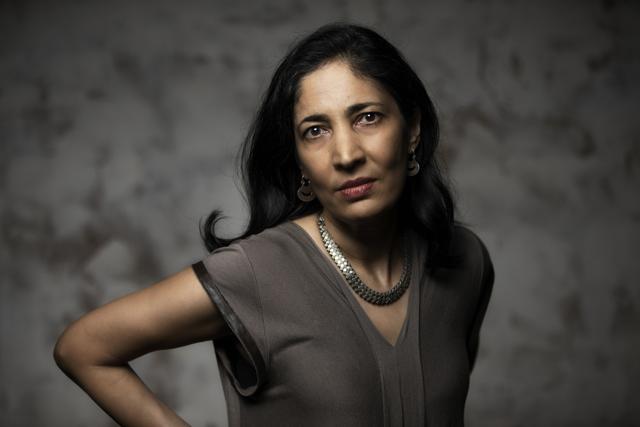
The novel also shows the porosity between fact and fiction. Sunny’s piece, The Fingernail Man, which attracts an accusatory note from its subject recalls Desai’s own interaction with the Kalimpong tailor, whose shop is mentioned in The Inheritance of Loss. In a 2007 interview with Jai Arjun Singh, she revealed that the man had written to her pointing out an inaccurate usage of horizontal and vertical lines.
Perhaps Desai has meticulously woven in many things from her own life into this novel. As Ilan notes about Sonia, “I knew when I saw you the story would not be simple.” The novel also subsumes within it the stories of the life of early 20th century Russian painter Nicholas Roerich and that of Mircea Eliade’s 1933 novel Bengal Nights.
A book that consumes the reader, The Loneliness of Sonia and Sunny makes the past interact with the present to create a “memory of the future”.
Saurabh Sharma is a Delhi-based writer and freelance journalist. They can be found on Instagram/X: @writerly_life.


