
 E-Paper



Review: The Tihar Players; A Prison Memoir by Mahmood Farooqui
The author recounts the experience of overcoming despair by staging plays with fellow inmates in South Asia’s largest jail

 Prefer HTon Google


Of all autobiographical literature, prison memoirs are the most distinctive. They take us into a sharply different world pervaded by themes of perdition, violence, and redemption. Despite their wretchedness or perhaps because of it, prisons have proved to be fecund sites for the production of confessional writing. They are at once a record, therapy, escape, and subversion of the bondage of the institution.
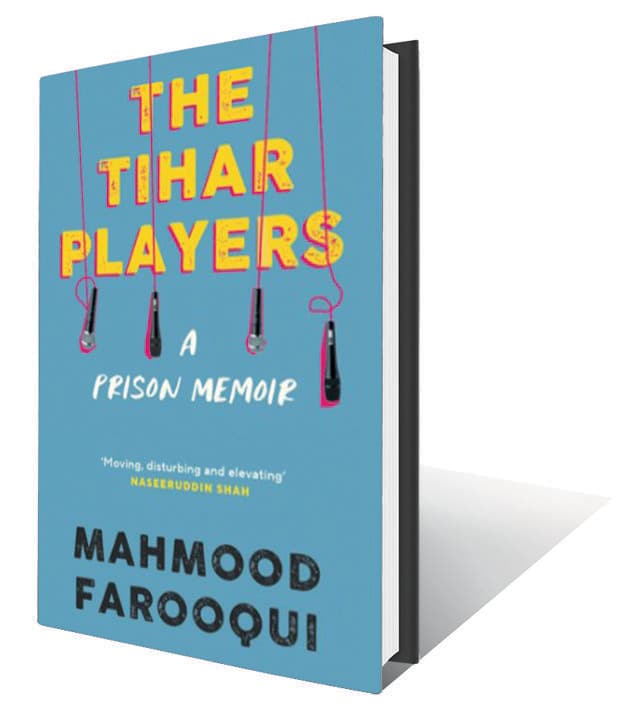
Mahmood Farooqui’s The Tihar Players is all of this and more. It stands apart from the many fine accounts of prison that have been published in recent years: Sudha Bharadwaj’s Phansi Yard, Anand Teltumbde’s The Cell and the Soul, Kobad Gandhy’s Fractured Freedom, Arun Ferreira’s Colours of the Cage, and earlier, Iftikhar Gilani’s My Days in Prison. That is because Farooqui was a different kind of prisoner. Sent to jail not for his political views but charged with rape, the most ignominious of all charges. He denied the crime and was finally acquitted. Arrest and incarceration on political grounds brings cruel hardships but not disgrace. Memoirs by political prisoners are written by those confident of their place in the world, secure also in the belief that wider society does not condemn them. The Tihar Players belongs to another order. Excoriated of all middle-class dignity and prestige as a man of arts, abandoned by friends and hangers on — always aplenty in his days of glory — reviled by both mainstream and alternative media, cognisant of his own failings in personal life, Farooqui recounts his prison sojourn from the vantage of acute fragility. But rather than rendering him self-absorbed, this experience attunes him to the vulnerabilities of others around him. The result is a memoir of powerful and singular poignancy.
Divided into two parts, Arrival and Return, each with its own cadence and mood, the memoir opens with The Mulahiza (after the prison ward for first timers). Here, the wound of humiliation is raw, the confusion and the fears (for his own future, his sanity, and for his family outside) palpable. His entry here is likened to a passage into “the jaws of Sheol… where the living are swallowed into a kind of anonymity, where you do not burn so much as disappear”. The reader learns of the ward’s rites of initiation designed to show new entrants their place, their ‘auqaat’, the shame of strip searches, and the casual degradation of body and soul that the prison imposes on inmates.
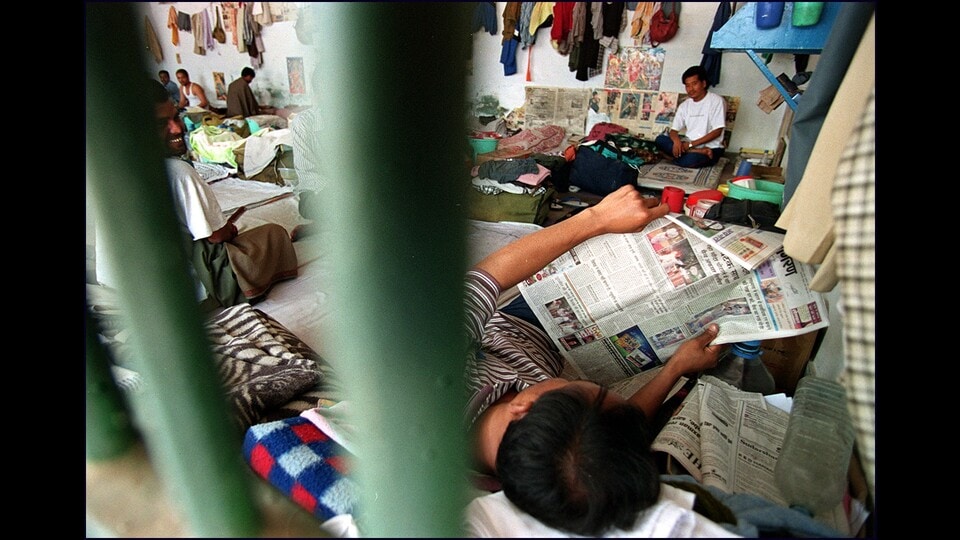
Not for a moment does Farooqui lose his writers’ eye for observation, or the humanist urge for empathy; the story of his fellow prisoners and that of Tihar emerges alongside his own tragedy. Tihar is a web of jails – each its own universe – rather than a single jail. The reader becomes familiar with the deorhi, the threshold through which inmates are processed repeatedly, the barrack, the cell, the phatta (the narrow strip within the overcrowded cell where the inmate must fit his body and find sleep), the chakki (a two-room suite with an ante chamber cornered by bhais), the chakkar (a tropical version of the panopticon), the elaborate system of wards: repeater, qasuri, buzurg (housing the elderly inmates), the convicts ward where all the factories and workshops lie, and kharja, the holding area where inmates await their turn at the courts. There is also the bureaucracy of unnecessary cruelty, from the warder to the superintendent, a mere flick of whose eyebrow is enough for minions to tango an inmate upside down, beat him, or banish him to the qasuri ward. Beneath jail officialdom is the army of inmate workers who oil the prison machinery: munshis, adjunct munshis, sevadars, chhoti police, desk-jobbers, runners and general attendants and cleaners.
This efficiency only produces more misery and more hopelessness. “One day”, Farooqui prophecies, “all the despair that is stored and pent up here will leak, dissipate, and envelop the entire city of Delhi.”
In this despair, Farooqui finds the thought of suicide oddly life affirming. But three things intercede to save him: the discovery of faith, writing implements, and the riches of the jail library. A long time atheist, he turns tentatively to reading the Quran, then the prayers, and then to fasting (and its quick renunciation). “As I prepared to fast, I waited for the morrow with an impatience I hadn’t felt since entering jail: for the canteen, for a register, for a pen.” A “foolish joy” consumes him as he touches the Urdu books in the library, which became his refuge from the noise and grime of the ward, suturing him at least for a while to a semblance of his past life. His faith is as eclectic as the sources of his dastans. He reads The Gita in the Roza barrack, wrapped in a newspaper, and chants the Buddhist mantram Om Mani Padme Hum after the Asr namaz.
In jail, time stands still, as does life itself. In the absence of watches, time can only be guessed at by hunger and orders. The stasis is overwhelming and the whole purpose of jail life is “to kill this time”. And it is filled with petty squabbling, listening to endless abuses piled one upon another, waiting for mulaqat, or any news at all of the developments in one’s case, but above all with bakwas, the meaningless ‘timepass’ banter which gives “the illusion of normalcy, of being alive, of occupying some casual, familiar space”. Within that space, Farooqui notes wryly, “my presence as an exotic director and an entertaining storyteller acquired value”.
Even in so desolate a landscape, the author never fails to be moved by the small intimations of life and love: the sighting of two bulbuls perched on a tree, his cell mate, Ajay, caring for injured crows and birds, an evening setting sun, unexpected acts of tenderness, the ready witticisms of sinners. The absurdities of Tihar don’t escape him either: the diktat to hang clothes without ropes, to clean toilets without Harpic or Lizol, the whitewashing of the barracks in a downpour, the freeing of pigeons on 15th August (“dummy freedom for dummy pigeons, who flew back to the coop”). Other absurdities are far crueller: the constant shifting and moving of inmates across cells and wards which keeps them on edge, the withdrawal of even paltry consolations such as canteen food, new officers with new ideas and new executive orders.
Both The Mulahiza and The Journal, which form the Part One: Arrival section, display a feverish, nightmare quality, reflecting Farooqui’s inner turmoil in the early days of his incarceration. The Journal ends with his conviction. The reader is certain it will spell Farooqui’s dissolution. Part Two: Return, however, has a double sense: Farooqui’s return to the jaws of Sheol, but also his return from the depths of his troubled self. When he returns to prison, it is with an air of forlorn resignation but the shift to his old ‘home’, Jail Number 3, buoys him and he then throws himself into teaching and mounting theatre productions. A reform-minded DG approves and supports his mashaqqat (the rigours required of all convicts) of training a group of enthusiasts into a theatre group. Time no longer stretches meaninglessly as it had in the past but is now structured by looming deadlines, scripts to be worked out, props to be fashioned out of materials available in the jail, and actors to be created out of men who had no training in theatre, and often no literacy either. Premchand’s Nasha, Swadesh Deepak’s Court Martial (the chronicling of its making is aptly titled, Dust to Gold), Ramleela and Charandas Chor (for which Farooqui miraculously secures permission to cast inmates from the ladies jail!) – Farooqui picks stories playing on themes of justice and fairness that would resonate with the audience in jail. It’s all delivered with a rare chutzpah. Sample this: “Basantlal played Ravana’s brother Kumbhkaran, and I knew he would bring the house down by demanding, after being awakened from his slumber, mutton, mutton and more mutton in a purely vegetarian gaol! I then had him daringly roar that if there is a shortage of booze, get it from the superintendent’s office”.
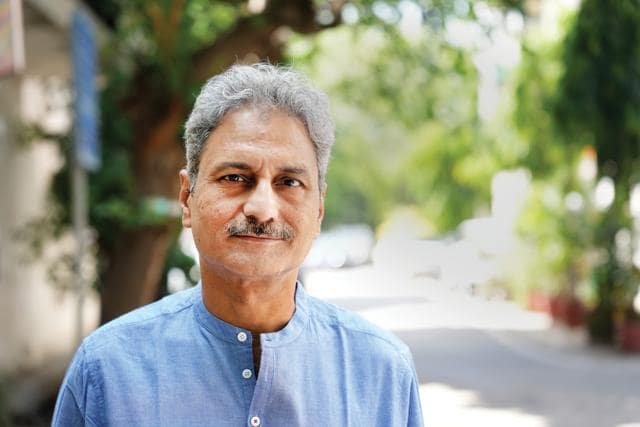
Unlike the depressive air of the early sections, a sense of resolute purpose pervades the book’s second half. Shailendra’s anthem, ‘Tu zinda hai, toh zindagi ki jeet mein yaqeen kar’ (If you are alive, have faith, life shall triumph over death and decay) becomes the running leitmotif. It is during this phase that Farooqui composed his magnum opus, Dastaan-e-Karn, based on the Mahabharata. It has now been performed to great acclaim around the world but the author maintains that the session in Tihar, where he first recited the opening lines about how the great epic came to be written to his theatre students and the superintendent, remains etched in his heart.
Farooqui writes that life in jail robbed him of the desire to be judgmental, to moralise. He comes to believe that no one is worse than the other; an individual’s charges and crime do not exhaust his personhood. There are some exceedingly tender and heartbreaking portraits of fellow inmates: Haji Sharafat (a fellow consumer of dimaag ki dawai or psychiatric drugs) accused of killing his wife with a griddle; the pure-hearted and talented Bhanu Raghav, a wedding cameraman charged with murder because of a fracas gone wrong; Badal Farazi, a Bangladeshi implicated and convicted in a murder committed prior to his entry into India, who educates himself and even argues his case in English in court.
The Tihar Players bears witness to the waste that large prisons produce. It makes an impassioned plea for alternatives such as open prisons, and for prisoners to be allowed to atone with dignity and a modicum of humanity.
In Mahmood Farooqui Tihar has got an incomparable memoirist.
Manisha Sethi is the author of Kafkaland: Law, Prejudice and Counterterrorism in India (Three Essays Press).


