
 E-Paper



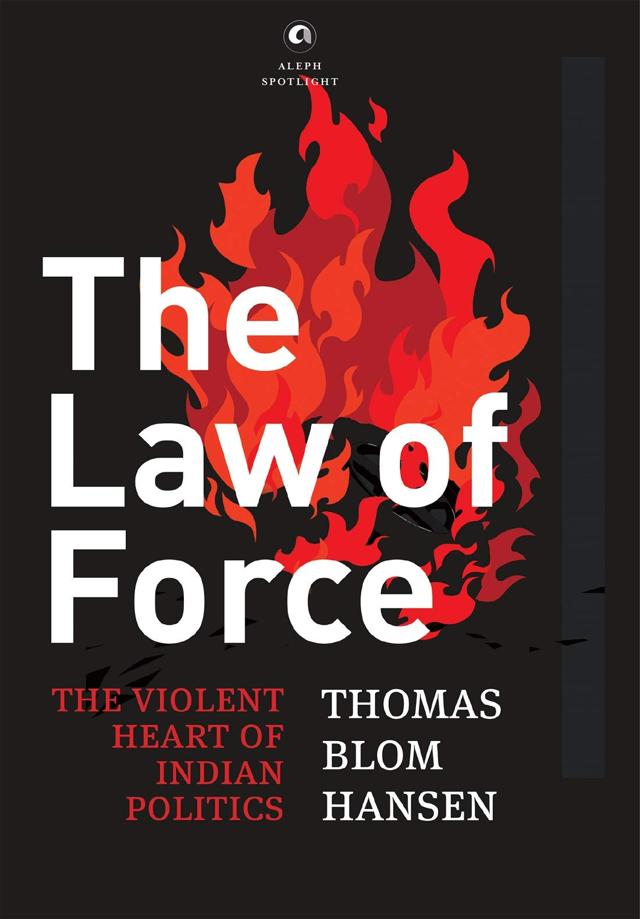
Review: The Law of Force by Thomas Blom Hansen
Beginning with three examples – from the late 1980s to as recently as a couple of years ago – the author draws you into the breadth of brutality that runs through Indian politics. The premise of The Law of Force - The Violent Heart of Indian Politics is that violence has always played a role in Indian political life

 Prefer HTon Google


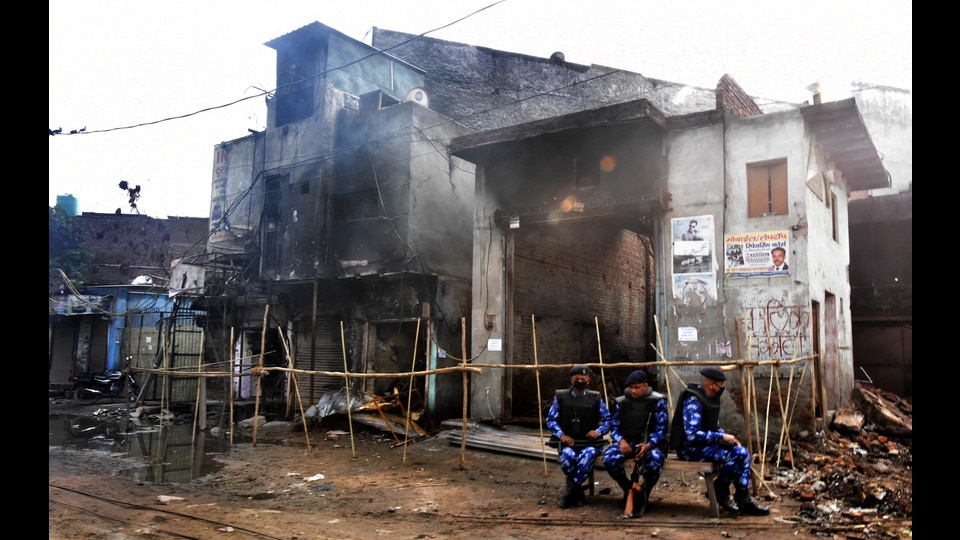
Back in 1989, Thomas Blom Hansen met a group of RSS workers who talked about shedding blood. “We will show them their place,” they said. In 1993, a Muslim friend took him around Mumbai and to a wall sprayed with “Babur ke auladon bhago Pakistan aur Kabristan (Children of Babur, leave… go to Pakistan or the graveyard)”. In 2018, he met Dalits in Bhima Koregaon after the massacre and watched a severely beaten up young man recount his story.
Beginning with these three examples – from the late 1980s to as recently as a couple of years ago – the author draws you into the breadth of brutality that runs through Indian politics. The premise of The Law of Force - The Violent Heart of Indian Politics is that violence has always played a role in Indian political life.
I recently watched Repentance, a brilliant allegory on Russian dictatorship by Soviet director Tengiz Abuladze. When the mayor explaining the need for the artist’s arrest tells him, “It’s my duty to take the position of the majority, for the majority decides”, the artist responds, “One man of reason outweighs a thousand idiots.”
Hansen does take us through a gallery of such ‘idiots’, but there is not much evidence of reasonable women and men.
The Mahatma, though, does show up often. “To Gandhi, Partition stood as a failure of his political ethos of non-violence. For the Hindu nationalists, it was an incomplete victory in their project of constructing a Hindu nation.”
This succinct observation is in fact the crux of Indian polity as it is today, although Gandhi’s non-violence too was based on the religious idea of ahimsa and its failure was persistent even while it was being practised.
Gandhi seems to be the author’s favourite metaphor and he believes that the “rhetoric of sacrifice and martyrdom remain essential to Indian political life”. It is this inherent conflict in the Indian public space that makes it inscrutable and where the ‘voiceless majority’ using violence against others can glorify it as sacrifice.

Hansen observes that the Hindu response earlier was one of reaction against injustices at the hands of Muslims, but is now more assertive about taking over. One might like to add here that the upsurge of Hindu revivalism has little to do with injustices of colonialists. Their attempts at making Muslims answerable for history is part of “politics karna” – which the author believes is what Indians do instead of rajniti – and not a righteous war.
The vocal annual objections to animal sacrifice on Eid is one such example and Hansen notes that today Muslims are the sacrificial victims of the majority.
He provides us with several on-the-ground reports of such experiences. During the bomb blasts between 2002-2008, it was customary for the cops to round up Muslim men as suspects as a “security precaution”. At a police station in Central Mumbai they were lined up and made to sit on their haunches for hours. As one inspector told the author, “These people have so many secrets…when you let them sit like that for some hours, people crack.”
Another eye-opening anecdote is about an AIMIM corporator who refused to stand up during the singing of Vande Mataram at a meeting. Members of the Shiv Sena attacked him. He was suspended and later arrested. But he was not worried, confident that like the protests carried out by his party men he might have the support of all Muslims. With much bravado he declared, “…we have already shown our ‘nuisance value’…so even if they win in court, they will lose.”
He wasn’t tried. But, ironically, he was expelled by his own party that was trying to project a “responsible” and “respectable” image.
Although there is no allusion to it, the title and content mirror Newton’s law of centrifugal force in which an acceleration is caused by a force; if there is no control on gravity the object towards which it heads will respond by also rushing to it. Would this apply to the oppressed?
Hansen often uses psychological and ethnographic methodology to understand groups. Here, he takes a deeper look at the “body” – again using the Gandhian penchant for fasting – as identity marker. Hansen suggests that majoritarian stereotypes are “focussed on fantasies about the Muslim body – its supposed strength, discipline and fertility.” He is right here, for the fantasy arises out of insecurity.
However, one is a bit sceptical about his views on Dalits. “Deploying the caste Hindu idea of the Dalit body as already half inhuman, Ambedkar simply “weaponized” Dalit bodies by directly touching and “defiling” the spaces of caste Hindus, and in doing so exposing the injustice and unreasonableness of such strictures.”
The “weaponisation” has not been of much use. Dalits continue to be tortured for everyday acts like a bridegroom riding a horse or sporting a moustache.
While Hansen points us to the ugly face of regionalism, casteism, communalism and the misplaced nationalism of Hindutva proponents, and the belief in their right as an electoral majority, one would have liked to see examples of the “anger” of the oppressed. Not doing so also works to invisibilise the marginalised, although the intent here is obviously not to do so.
Farzana Versey is a Mumbai-based writer. She tweets at @farzana_versey.


