
 E-Paper



Sanchita Sharma, Health and Science Editor, picks her favourite read of 2020
Clues to potential missteps


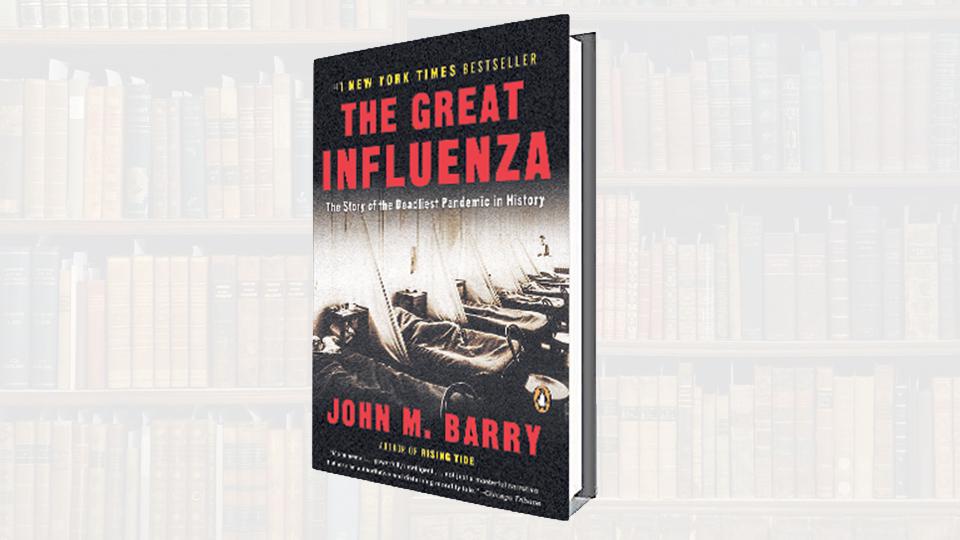
I pulled out and dusted John Barry’s The Great Influenza, the definitive history of the Spanish Flu in early January by when it had become apparent that it was only a matter of time before the yet-unnamed novel corona virus devastating China would spread to other countries and be declared a pandemic. The new corona virus was both lethal and spread easily, which made it far more deadly than the H1N1 2009/10 flu pandemic that sickened and killed thousands in every continent except Antarctica. Barry’s account provided clues to the potential missteps and early hope for course-correction as the corona virus disease (COVID-19) crossed borders and changed life as we knew it.
The Spanish Flu, also known as the 1918 pandemic (H1N1) virus, exploded in the spring of 1918 in a fragmented world fighting WWI since 1914. It is likely to have originated in the United States in early 1918, where it was first recorded in March in Haskell County, Kansas, in hospitalised soldiers at Fort Riley.
It travelled to Europe with the American troops, and from there spread to every continent, including undivided India. Since nations overwhelmed by WWI got uncensored reports of the pandemic only from neutral Spain, most people assumed ground zero was in Spain. By the end of summer, a more lethal wave surfaced in Switzerland, which was compared to “Back Death” in American intelligence reports.

The deaths were dramatic, killing mostly healthy young adults within 48 hours of symptoms. Hospitalized soldiers were covered in blood that was not from shrapnel or wounds but unstoppable nosebleeds and hacking cough, which at times tore apart their abdominal muscle and rib cartilage, writes Barry. Some turned so blue and dark that was tough to tell whether they were Black or Caucasian.
In two years, it killed 50-100 million, which is more than any outbreak in history. In India, estimates put the number of deaths at 17-20 million. The Census of India data shows that 1911-1921 is the only decade in which the country’s population registered a negative growth, with the average exponential growth rate being -0.03%.
Looking back, Barry’s unputdownable account reminds us how much worse the Covid-19 fallout would have been had not global health agencies, governments, philanthropists, industry, scientists, health workers and the public collaborated to slow its spread till treatments were identified and vaccines were ready.


