
 E-Paper



Shakun Batra: ‘We have celebrated mediocrity for a long time’
The screenwriter and director talks about his favourite film makers, about writers becoming the showrunners on OTT, and where he faltered with Gehraiyaan

 Prefer HTon Google


Would it be fair to say that you are a photographer turned filmmaker who started writing because he couldn’t find writers?
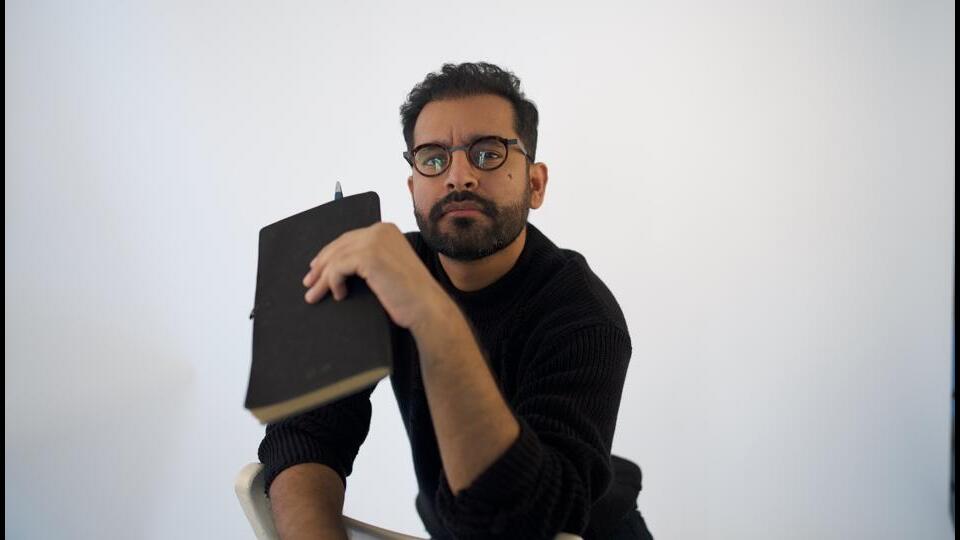
Yes, I did photography and I was quite into it. I wouldn’t say I was earning much money from it but my first love was visual imagery. From there, I became a cameraman; I went to film school to become a cameraman. Then I came back to Bombay and I started assisting directors. That’s when I realised that I actually enjoyed watching directors on set. They were the ones who were in control – of where to put the camera, the performances, and pretty much everything on set. At that time, I was pulled into looking at performances as well and realized I hadn’t paid much attention to screenwriting at school. I had to start learning again and that’s how screenwriting began for me. Film is something where I know I have to learn every day. I watch something every day and I watch it from the lens of learning screenwriting. Screenwriting is such a vast discipline that involves craft and so many nuances and different permutations and combinations that the learning never ends. After making every film, I feel that I am more sure of my direction but less sure of my screenwriting. Writing is never something that you can be sure of. Directing is interpreting something that is on the page whereas writing is not interpretation, it is creation. In the world of film, screenwriting is the real creation.
Film is supposed to be a director’s medium. Would you agree that writing is, at best, a supporting act in the world of films?
I think Spielberg said it best, “If it’s not on the page, it won’t be on the stage.” I feel that you can never say that “I am such a great director that I will make a below-average script great.” That’s not going to happen. It’s myth that a great director can save a bad script. Nobody can save a bad script – not an actor, not a director, not anyone. It’s called a director’s medium because more orchestration is what’s needed – you need to control about 50-60 different functions while making a film. A piece of writing would not make it to the screen without that person. That’s where I think direction started getting more credit on a film. Because a writer could do a beautiful job sitting in his room but unless somebody says that he is going to walk into this jungle and control these beasts, it won’t materialize. That’s where directors deservedly started getting more credit. But having said that, none of it could work without solid writing. The times are changing and you can see that on OTT, the showrunners are the writers. Over the years now, we have somehow balanced it off in the sense that great writers can now be as well-known as the directors. Maybe it doesn’t make sense to compare apples to oranges but we have realized that maybe oranges are as rare a commodity as apples are.

After Salmeem-Javed, there haven’t been any writers who are as well-known among the general public. No one says, “Let’s go watch a film because it’s written by a particular person.” Why is that?
One reason is that all the good writers are now directing. Look at Farhan (Akhtar) or Zoya (Akhtar). Another reason could be because we have not had a Saleem-Javed in a long time. We lack that kind of strong writerly voice. Saleem-Javed fought for their work and visibility. I don’t know if we have a writer like that any longer who can command that place in the industry. Now with the emergence of OTT, we’ve realized that a show cannot be sustained on direction. Writing has become more important than ever. You see a Sudeep Sharma or Raj & DK – they are commanding the respect they deserve. But I do agree that for most writers, their fame is limited to the industry and hasn’t reached the general audience. I hope that changes.
How did film school add to your knowledge of cinema?
I went to film school and made a terrible film and that was a wake up call for me. I think unlike a doctor or an engineer, film is not something that you learn much of at school. Just because you went to film school doesn’t mean you can make a film. That’s rubbish. Film school may be a great place to find out how it is done but you still need to find your own voice to make a film. Recently I met two kids from Indore and they were phenomenal. They learnt most of what they know from YouTube including editing, how to shoot, storytelling, etc. So I think training, going forward, is going to be more and more an accessible thing and it won’t require big names or infrastructure. Now you can literally shoot a film on your phone. I, for one, trained myself as a writer online. I don’t think I learnt anything that I know about screenwriting at film school.
How do you choose your themes?
Theme to me is something that I am curious about and how I explore the questions in my mind in a narrative. For instance, in Gehraiyaan, I am trying to explore how past trauma kind of plays into your choices. Infidelity is the plot and the past is the theme. I was coming out of an experience where I was questioning whether anything was in my control; if the choices I was making were really mine or just an effect of the experience. I wondered how I could explore that in the next story I would write. I try to give my characters what I am feeling in my own life. I’ve learnt that the easiest way to make something lose its control on you is by putting it on film. You explore it in a film and it goes out of you. It’s a funny thing. People who make films just to earn money are actually letting go of a terrific opportunity because making a film is the most therapeutic profession that exists. Writing for me is a one-time chance of putting my crisis into something and letting go of it.
Tell me about the process of writing Gehraiyaan.
I always wanted to explore infidelity because I’ve seen it in my house and and it’s something that has had a strong impact on me while growing up. As I grew older, I started seeing it from different lenses. I started seeing it from the man’s point of view, the woman’s point of view, the other woman’s point of view. So I was very interested in finding a darker romance and infidelity within a family. As I said, I was always interested in the idea of my past defining me. So while writing it, I said, “What if this character was dealing with something in life where her past is defining her choices?” She is trying to run away from her past but she finds herself exactly where her past was.
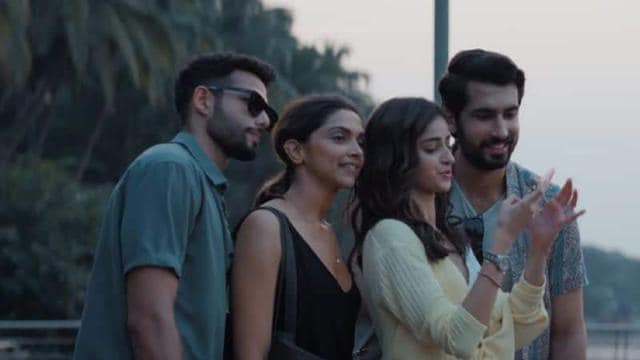
Gehraiyaan could have been an arthouse film and suddenly you had a Deepika Padukone doing this. How do you straddle the line between arthouse and mainstream?
I have always been fascinated by directors who have successfully straddled the line between mainstream and independent cinema. Like Alexander Payne, Wes Anderson, Woody Allen or Billy Wilder, who was a studio director with a very strong individual voice. I always thought I liked what they are doing because it doesn’t feel like assembly line production. It’s not a formula story. They are trying to tell a very personal story but they were doing it with mainstream stars. I always wanted to do a bit of that. Plus, I know that actors are looking for meatier parts. Even they want to run with a character and really put themselves out there.
Having said that, sometimes I wonder how it would have been if Gehraiyaan had been a small film. The moment stars come in, people view it a certain way. I think people thought it would be a relationship film where everything would be happy and nice in the end. I think I should have done better in preparing the audience for the film. I should have tonally prepared them better even in the terms of the marketing of the film.
The truth is that I always want to be the bridge between mainstream and independent. I don’t see myself doing anything that doesn’t have my voice but at the same time, I don’t see myself sitting with a three-person crew in some small town, wondering how I’m going to finish this film and put it out there. I have huge admiration for people who have made films with such difficulties; people like Anchal Mishra or the way Chaitanya Tamhane made his first film, Court. These guys just went out on a limb to make what they wanted to. They didn’t care about who is going to watch this film or this actor; they had a voice and they did it. I think that’s the part where I got corrupted. Because I started as an AD right away – with Excel Entertainment to start with, then with Aamir Khan productions, and then with Dharma. I saw the setup around me and I got very comfortable with it. But I still admire independent voices a lot.
How do you successfully pitch these complex stories to mainstream production houses that usually don’t sanction that kind of story?
Look, I may tell you about the past and death and infidelity and all that while I am talking to you but when I’m pitching, I don’t talk about any of this. I pitch mainstream. For instance, in the case of Kapoor & Sons, I told Karan (Johar) that I haven’t seen this sort of dysfunctional Indian family on screen for a very long time and that I’m going to make a film with a very funny granddad at the centre – he is going to be a laugh riot and we’re also going to have this strange, unconventional brother relationship, and that I want to do an antithesis to the Barjatiyas; I want to show an Indian family opposite of that of a family in a Barjatiya film. That’s what got Karan excited. If you can work within a certain budget, you can make these things happen. I am not playing with a budget of 100 crores. I am playing with a budget where they know they can recover this money. And I never scare the producer or the actor off by telling them the deep thing playing on my mind – it’s in my mind and I can figure that out on the edit as well. But the idea is to pitch people something that will excite not just you but also them. Once you win their trust, you show them footage that keeps the excitement going. I see a lot of young people coming in and they are not open to conversation. They are more about “This is who I am and this is how it’s going to be”, which may fly if you’re a visionary and the producer wants to invest in you but for the most part, a producer wants you to listen to them as well. And I think it’s only fair to think about the producer who is investing in you. For me, I have my producer’s interest in mind but I don’t have their voice in mind. The voice is mine. And they need to support my voice. In some way, I have been fortunate that my producers haven’t made me fight for my voice.
Where do we compare in terms of quality of cinema with Korea, Iran, Hong Kong, Europe and America? Do you think people here have low creative ambition?
Listen, I hate to say this and by no means am I saying that this applies to everyone in our industry but I think that, for a large part, we have managed to be okay with mediocrity. In fact, I think we have celebrated mediocrity for a long time. We have celebrated a mediocre film doing 200 crores. I know there are people now who are trying to push boundaries bur largely that is how we have been. I do hope, however, that the more younger people come into play, we will be more and more people who are trying to push the envelope.
We don’t have an A24 that is supporting independent voices. I don’t think we need to be in jail like the Iranian filmmakers to make good films. I just think we need more and more of our independent voices to breakthrough in such big ways that it inspires younger people to be like them and not like the mediocre filmmakers. I think so much of our industry thrives on assembly line production that the next person thinks, “Why should I put my head into this and attempt something original when I can just easily follow and do the same thing?” I think that’s what needs to change. And I think there are people like Shoojir Circar and Vishal Bharajdwaj or even a Zoya (Akhtar) or Farhan (Akhtar). If more and more great stuff comes from these people who have done very good work then the younger people might be inspired to do work like that. For instance, I wanted to come into the industry after watching Dil Chahta Hai. So, we need more and more films like that.
I also have a lot of hopes from people like Chaitanya Tamhane. I think all of us including Chaitanya, myself, Sudeep (Sharma), Abhishek (Chaubey), Guneet (Monga), Vishalji (Bhardwaj) are waiting for that one project to crossover to the west and get real worldwide recognition. I think our system is designed to be India-safe. And if your film is India-safe, then it is definitely not crossing over to the west because an India-safe film is already a mediocre film. What Guneet has managed to do so well is that she has broken out of the system. She is running her own ecosystem now, working with American producers, French producers. She has managed to not sustain on this system. I think there is a need for an alternative system that has the resources and the funding which will back filmmakers that are not doing India-safe. In the US for instance, there is an A24, the studio that funded Jordan Peele and many other exciting independent films including Hereditary. But we don’t have anything like that yet.
What are the kind of films and filmmakers that have influenced you over the years?
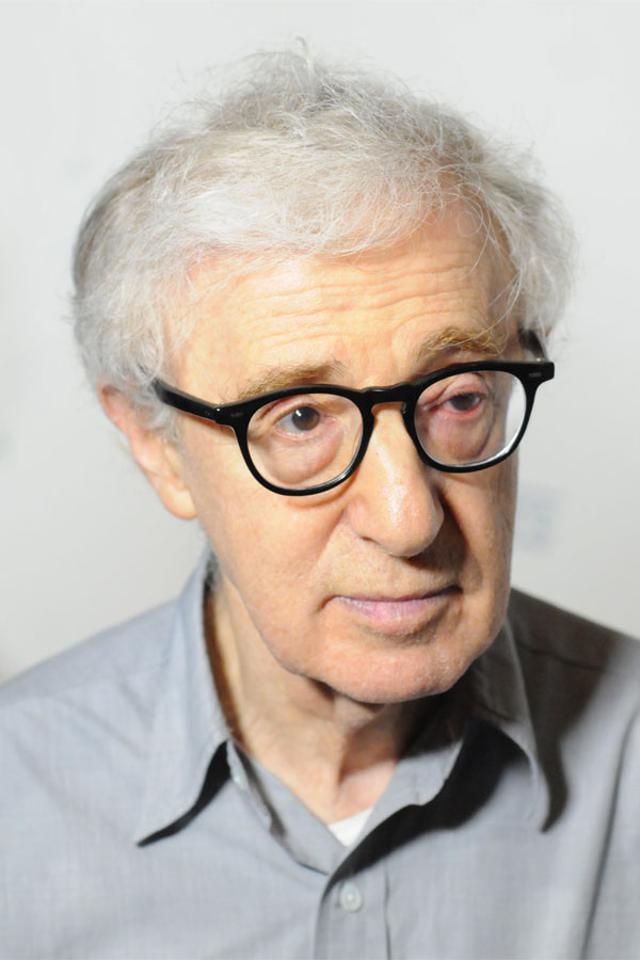
I know it’s become quite controversial to say his name now but I’d be a hypocrite if I don’t. My biggest influence would be Woody Allen. His films are ingrained in my psyche. Then there is Billy Wilder, Wes Anderson – these are the people from the US. Then I’d think that Asghar Farhadi has a huge place in my mind now. He has managed to work on narratives that are so complex and sophisticated and his structuring is so subtle that he works on a very nuanced level of cinema. That, for me, is very, very special. Then right now, I am loving Ruben Ostlund, the guy who made Triangle of Sadness.
Would you have done anything differently in any of your films?
I don’t think I have ever been satisfied with any of my films once I finished them. I always want to change this and that though I don’t live so much in my head about the things I could have done. I tell myself that I have learnt and I’ll do things differently the next time.
If you were to make Gehraiyaan in another country, say, in the US, would it be exactly the same with a different star cast?
Well, I don’t think the story would change significantly because it’s a different country, but the treatment would change. The songs may not end up being where they are. I think we were a little scared that Deepika’s character would be judged by the larger audiences in India. Maybe it would have been more unbridled in another country. Even in terms of Kapoor & Sons, we took a call of not revealing Fawad’s sexuality right away because there was a fear of people judging him. So we let people live with the character for some time, develop a liking for him and then revealed that he was gay. So if you are asking if I am confined to India while making films in India, in some ways, the answer is yes.
Mihir Chitre is the author of two books of poetry, ‘School of Age’ and ‘Hyphenated’. He is the brain behind the advertising campaigns ‘#LaughAtDeath’ and ‘#HarBhashaEqual’ and has made the short film ‘Hello Brick Road’


