
 E-Paper



Winner of the 2016 TS Eliot Prize, poet Jacob Polley, on his journey so far
British poet Jacob Polley who recently won 2016 TS Eliot prize, talks about his book Jackself , the Upanishads, how his family fuelled his interest in poetry and the clarity of language in TS Eliot’s poetry.


“When I discovered poetry as a teenager, I was rediscovering a pleasure in a power that I’d first encountered as a child. This pleasure has only increased with age,” says Jacob Polley, the English poet, who was recently announced as the winner of 2016 TS Eliot prize for his collection of poems, Jackself.
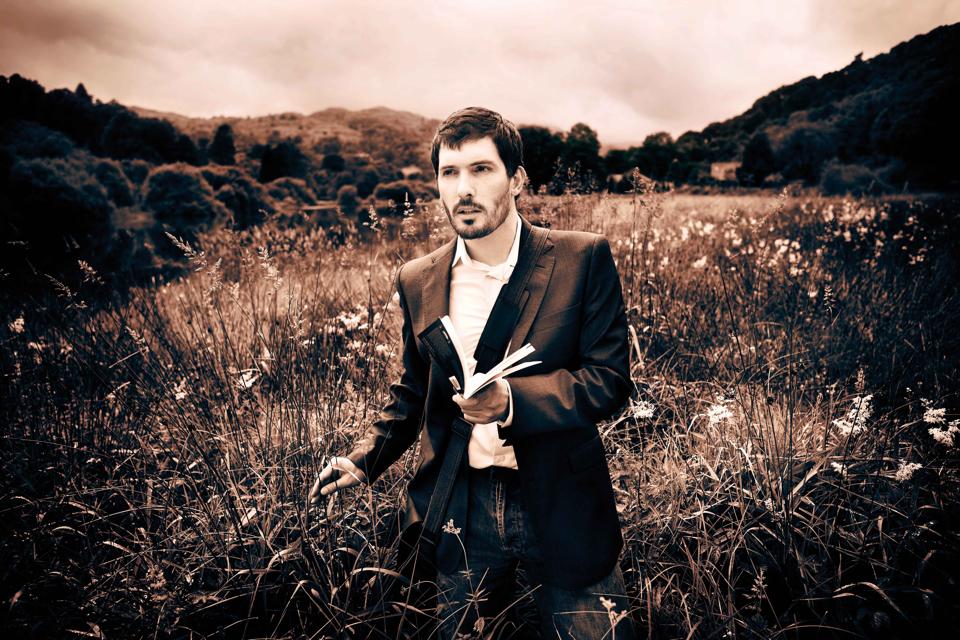
“The Jackself from my book takes his name from a poem by GM Hopkins, so not quite from that nursery rhyme world, but I was immediately drawn to Hopkins’ invocation — soul, self; come poor Jackself — which set off a poem of my own, a poem that made Jackself a specific little boy in a specific situation, as well as the kind of every-soul. I think that’s what Hopkins was gesturing towards,” says the UK-based poet.

An author of four collections of poetry, presently teaches at the Newcastle University. “My interest in stories and rhymes was recognised and fed by my family — with books, stories played on tapes, and regular trips to the public library. I’m extremely lucky to be well-fed,” says Polley, who is also the winner of 2010 Somerset Maugham Award.
In his 40s now, the poet says that his memories of TS Eliot go a long way back. He says, “My mother had a copy of TS Eliot’s The Waste Land and Other Poems, in a green hardback. I remember it vividly, partly as it was a book of my mother’s that came, as it were, from her life before me, so was inscribed with her maiden name. I remember reading ‘The Love Song of J. Alfred Prufrock’ and becoming dimly aware that here was an extraordinary clarity of language put to the service of a kind of mysteriousness, which is perhaps as good as a definition of poetry can get.”
He hasn’t ever visited India but he is acquainted with the Indian culture through the Upanishads, “As a teenager, I studied the Upanishads as part of Religious Studies A-level, which was taught by some charismatic teachers. I can never forget the experience and the joy of thinking about the vibrancy and wisdom of Indian culture, as it seemed to radiate out of verses of the Upanishads in English, in a grey classroom in the north-west of Britain.”
Follow @htlifeandstyle for more.


