
 E-Paper



The Pico Iyer interview: All who wander are not lost

 Prefer HTon Google


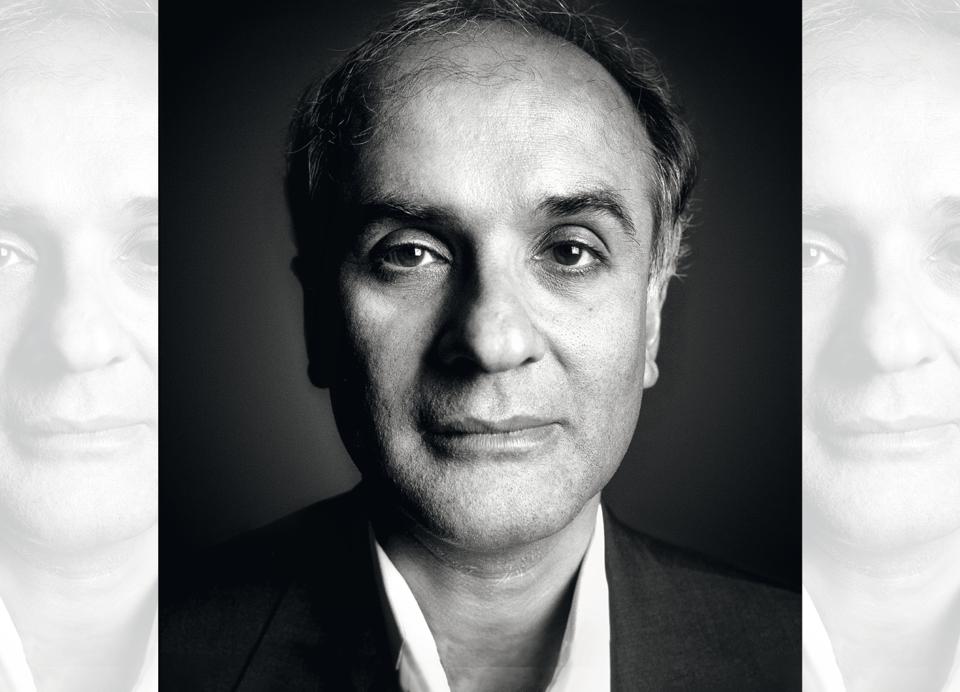
The author and essayist calls himself a “global wanderer” and going adrift is his Pico Iyer’s favourite thing. This also means he’ll stumble upon other paths home
Most travellers aren’t fond of being called tourists, but author and essayist Pico Iyer claims the label with a sense of pride. Iyer, whose travel writing over the past 30-odd years has been celebrated for its insightful observations and lyrical beauty, describes himself as a “global wanderer” who has lost count of the number of countries he’s visited. And he’s done it all on tourist visas. Even the place he lives in for the better part of the year – Japan – is one he has returned to year on year, since 1992, on a tourist visa. “I choose to be a tourist in Japan so I don’t have illusions about belonging,” says Iyer, “and because a tourist is someone who brings her or his curiosity to everything around her and doesn’t assume she knows everything.”
Iyer’s career in travel began unofficially when he was seven years old and his parents moved to America for work while he continued to attend boarding school in England. More formally, Iyer came to writing after a distinguished stint in academia, studying literature for eight years. “I had no employable skills whatsoever,” Iyer says, laughing. Over the years, writing as a profession has become difficult for many to hold down, but not for Iyer. “I stick with writing because it’s what keeps me sane. And the more difficult life becomes, the more I cherish walking into that cabin in the woods that is my writing and sitting still, processing everything around me, trying to make order out of a tangle of thoughts and impressions, striving to understand everything around me,” he says.
Age of exploration
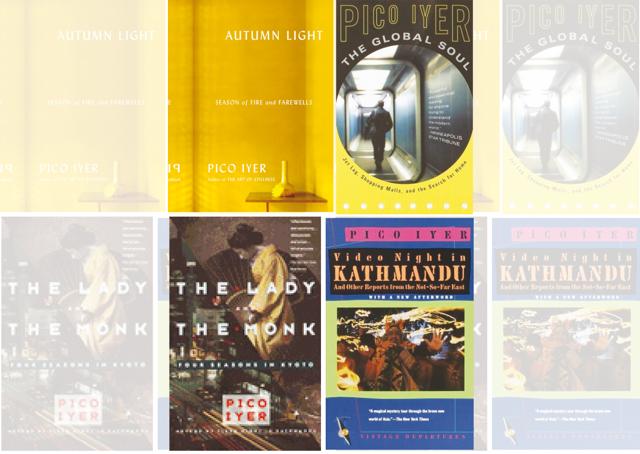
The reputation that travel writing enjoys today for inspiring epiphanies has much to do with how the genre has transformed from being utilitarian to philosophical over the past few decades. Iyer is one of the writers we can thank for that shift. Books like Video Night in Kathmandu, The Global Soul, The Lady and the Monk and Falling off the Map have helped to broaden the scope of travel writing.
While most of us would ask locals for a recommendation for a restaurant or a swim-friendly beach, Iyer – the tourist – tilts his head and wonders about the impact of American pop-cultural imperialism in Asia, or how remoteness is less about geographical location and more a psychological state or an economic condition. What emerges is a travelogue that acknowledges all the superficial attractions that would draw a tourist in, but also digs deeper into the experience of being present in this chosen location.

In Iyer’s writing, he’s always the first-person narrator, finding his way around the world he’s exploring, rather than an omniscient third person. It’s an interesting device because it urges the reader to surrender to the illusion that they’re relating to Iyer at a personal level even though few of us can lay claim to having much in common with an Oxford and Harvard-educated writer whose list of friends includes the Dalai Lama and Leonard Cohen. Iyer doesn’t ask you to ignore how privilege skews the power dynamic between a tourist and locals, but he does push himself to go to places where it is of limited practical use, like on a crowded train to Varanasi or while battling altitude sickness in La Paz.
His most recent book, Autumn Light: Season of Fire and Farewells, is a slim volume about the season in the title, ageing and ping-pong. Set in Nara, where Iyer has lived with his wife Hiroko Takeuchi since 1992, Autumn Light is a closely-observed portrait of Japanese society that Iyer hopes will relate at a personal level to non-Japanese readers too. “I took great pains not to mention Japan in either my title or my subtitle. This book has a Japanese setting and is rooted in certain particular Japanese rites and customs, but at heart, it’s about the same stories you’ll hear everywhere from Mumbai to Mombasa: Parents getting older, children scattering, all of us moving one step closer to the end,” says Iyer.
The ping-pong world
In many ways, Autumn Light feels like a companion to The Lady and the Monk: Four Seasons in Kyoto, in which Iyer wrote about falling in love with one Japanese woman in particular and Japan in general. While The Lady and the Monk is full of bright fascination, Autumn Light is slower, meditative and has more melancholy. It explores with care and tenderness the difficult relationships between ageing and change, the conflicts between elderly parents and their tired, grown-up children.
Counterbalancing the sadness are Iyer’s dazzling descriptions of autumn in Nara and the group of older folk whom Iyer meets daily for his ping-pong sessions. This collective includes immaculate housewives, gangsters and other curious characters whose real lives are put aside when they pick up the paddle. The decision to show the older folk through the prism of a sport is a considered decision on Iyer’s part. “One thing I love about ping-pong is that my friends, in their 70s or even 80s, are often more skilful than kids of 18. It reminds me that life is cyclical and doesn’t proceed in a straight line of either progress or decline,” says Iyer. Until you read Iyer’s description of the players and their styles, you won’t believe how much meaning can be layered into a commentary of this sport.
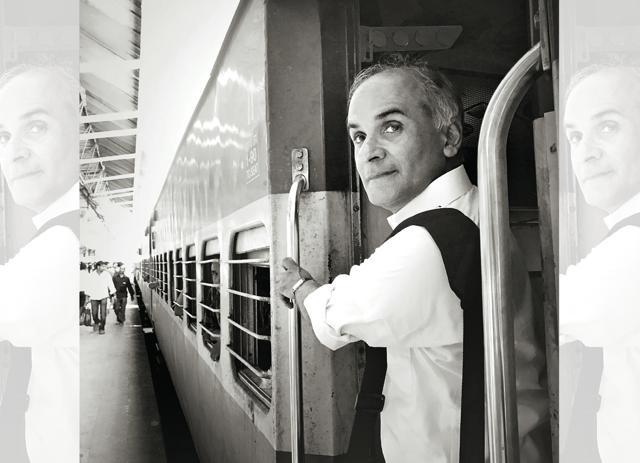
What is evident in the new book is the sense of familiarity Iyer feels in Japan, having spent more than two decades there. Yet conversely, it seems one of the features that keeps him grounded in the country is that Iyer remains an outsider in it. “I feel a very strong sense of belonging there – to a family, to a neighbourhood, even to my ping-pong community – but I never kid myself into thinking that any Japanese wants me to be part of their world,” says Iyer. “I’m the outsider stumbling into a professional orchestra without a score, and without a sense of how to play a note of music!”
What also makes his eyes sparkle is the fact that it’s a country that he gets lost in all the time. “I love being lost because it suggests that there’s always more for me to learn, I can’t take anything for granted and I can’t imagine I’m on top of things. Being lost gives me the chance of being found again,” he says.
Outwards in
In an age obsessed with youth and newness, Iyer with his analogue ways – he doesn’t have a cellphone or a digital camera; his notes are handwritten – should seem outdated. Yet he has repeatedly proved to be perfectly in sync with the times, both in the past and in the present. In the 1990s, Iyer travelled out to the farthest corners of our world, mirroring the ravenous curiosity of a generation that found itself not just free to travel practically anywhere, but also able to afford it. Since the 2000s, Iyer’s travels have been increasingly inward, focusing on internal processes, like in The Global Soul. Gauging the sense of exhaustion that characterises the contemporary, he wrote The Art of Stillness: Adventures in Going Nowhere.
In conversation and in writing, the generic pronoun Iyer uses is not “he” or “they”, but “she”. He says he doesn’t think men have “earned the right” to have “he” stand for humanity, sounding almost millennial as he rues the mansplaining that tends to dominate discourse in public spheres.
Fittingly for a writer who has managed to stay relevant over a period of dramatic change, Iyer has little interest in revisiting places, even though there are countries like Cuba that have drawn him back repeatedly. “For me places are very much like people,” says Iyer. “They lose hair, gain wrinkles, go through all kinds of dramas and changes, but fundamentally the sparkle and sense of mischief you see in a little girl of eight is usually there in the grandmother of 80.” While he’s happy to repeatedly return to certain works of literature – The English Patient, The Snow Leopard, the works of Graham Greene, the poetry of Emily Dickinson are among his favourites – the idea of returning to a place doesn’t seem to excite him. Suddenly though, his eyes light up. “I’d love to go back to Bengaluru,” Iyer says, adding that he’d last visited the city more than 20 years ago. He remembers it as a place of gardens, he says and adds that he imagines the city would be unrecognisable to him now. And suddenly there is a glint in his eye at the prospect of facing the unfamiliar again, of being a tourist.
Join the conversation using #BrunchWithPico
(Deepanjana Pal is a journalist with Hindustan Times and is author of the book Hush A Bye Baby)
From HT Brunch, April 7, 2019
Follow us on twitter.com/HTBrunch
Connect with us on facebook.com/hindustantimesbrunch


