
 E-Paper



Here’s how barley can help you cool down this summer

 Prefer HTon Google


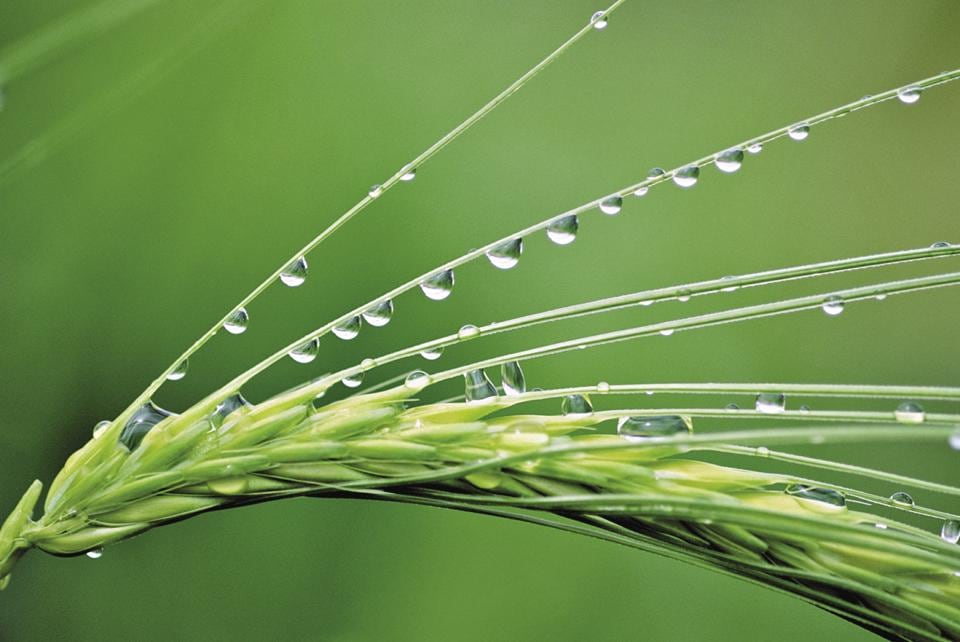
Ayurveda defines the food as cooling in nature, and here’s how you can eat it to avail its benefits
Barley (jau) is a food that has been consumed by humans for thousands of years, either as a grass or as a grain, in preparations that include barley grass juice, barley water, barley porridge (using hulled or pearl barley), khichri and roti.
Ayurveda defines it as cooling in nature, which is why it is prescribed for all inflammatory disorders of the body due to excess pitta (fire element).
Health benefits
Barley grass is rich in phytochemicals, carotenoids (the source of vitamin A), vitamins C and K, calcium and iron. This makes it a wonderful detoxifier for the liver, working on people with major cholesterol and weight issues due to low metabolism, a fatty liver and other liver disorders.
It also purifies the blood and enriches it with the right kind of iron, and helps combat acidity that results in acne, skin problems, puffiness, and weight gain. Barley is used for treating rheumatoid arthritis due to its anti-inflammatory effect, and barley grass juice mixed with vegetable juice heals all kinds of ulcers. It is also good for hepatitis, high blood pressure, asthma, weak digestion and weight loss.
How to eat it
Used regularly as a cereal before the wheat revolution, barley is available as hulled barley, pearly barley, barley flour and barley water beverages. It is very popular in India, China and South East Asia, where it is the king of summer drinks.
Eat it in a roti, mixed with wheat flour for the right consistency. This is good if you have weak digestion. Or eat it as porridge with milk and sugar for children, and minus the sugar for weight loss. A dish of vegetables, lentils and barley is also good to eat.
From HT Brunch, April 23, 2017
Follow us on twitter.com/HTBrunch
Connect with us on facebook.com/hindustantimesbrunch


