
 E-Paper



Sudarshan Shetty: the collector of untold stories
Fresh from a successful show in Delhi, installation artist Sudarshan Shetty tells HT Brunch how he is inspired by Bollywood and Bhakti poets.


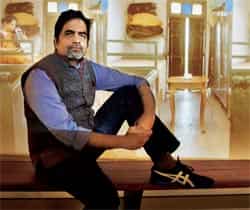
When he is not listening to Hindustani classical music set to Kabir's poetry at his windswept penthouse, Sudarshan Shetty, 52, likes to walk the older neighbourhoods of Mumbai. On an average day, says Shetty, he gets out at 10am and there is no set time for his return. His preferred haunts in Maximum City, says the celebrated installation and multimedia artist, are second-hand furniture markets such as Chor Bazaar and used-toys stores near Crawford Market.
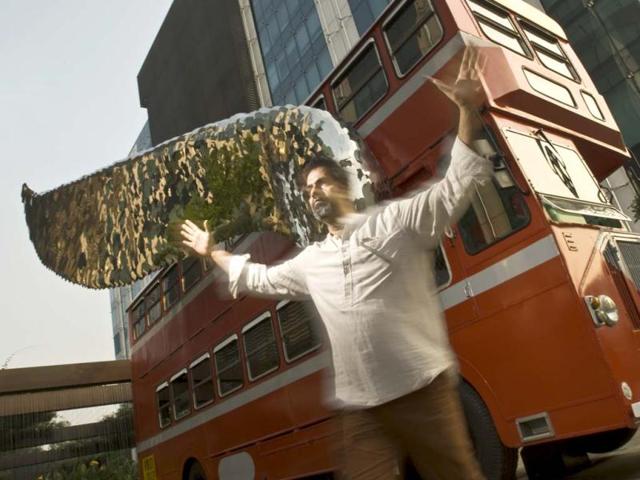
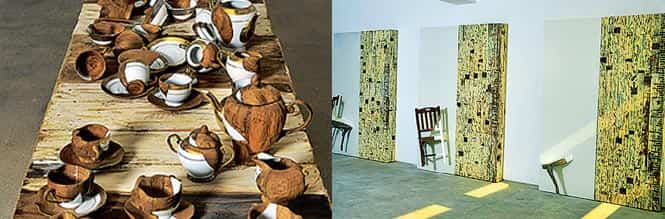
Many of Shetty's works incorporate the objects he collects. The old doors that he picked up at Chor Bazaar were used to create a hut-like Post-Modernist shrine for a recent successful show at Delhi's SKE Gallery with the inscription: 'Even God envies my mortality'. "A lot of these doors come from broken homes and dismantled chawls. Used furniture is a device to include those untold stories in my work," says Shetty.
From executing wacky projects commissioned by fashion houses such as Louis Vuitton (see box), to exhibitions mocking the senselessness of technology, consumerism and sex, is there a common thread running through his oeuvre? Shetty insists otherwise. "I don't have a style that is eminently recognisable and this is something I work towards," he says. "I draw from convention. My influences could come from the performing arts, or even cinema, apart from the plastic arts as defined in European art history."
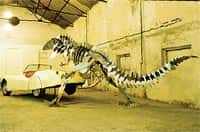
If one looks hard enough, one can, perhaps, discern Shetty's obsession with fallibility, a theme that also resonates with the Bhakti poets he loves. "Even in Bhakti poetry, in the idea of a doha, there is an image presented along with a counter image," he explains. "So, when Kabir writes Lagan bin jaage na nirmohi, the emphasis is on hard work and selfless grace. I too, try to play with polar opposite notions and introduce them into my practice."
Look back in anger
Shetty's penchant for the dramatic could be the legacy of his father, a Yaksha Gana singer, or from watching innumerable Amitabh Bachchan movies during a childhood spent in a chawl near Mumbai's Kohinoor Mill. "I grew up in a working class neighbourhood, where a lot of people were employed with mills. It coincided with the rise of the trade unions in the '70s. Many of us identified with the characters enacted by Bachchan. We thought there was a possibility to change things."
Even as an impressionable student at the JJ School of Arts in the early '80s, teachers like Prabhakar Kolte encouraged Shetty to push the envelope. "Also, informal sessions with Progressives such as Akbar Padamsee taught us - my contemporaries included artist Atul Dodiya - the nuances of cinema and filmmaking."
Shetty's parents, natives of Mangalore, moved to Mumbai six decades ago. The artist says Mumbai has grown on him so much, he can't imagine staying anywhere else. It is here that he first met his wife Seema, a classical dancer and television actress. The two fell in love and married in 2005. The couple led a bohemian, almost languorous life till last year, when they were blessed with a child. "Having a child represents a beginning of a new life. You view things differently though the kid's eyes," says the proud father.
When he is not playing doting dad, or the curator of used objects, Shetty likes to indulge his Siamese cats Rama and Krishna, or turns to his Hindustani classical CDs. "As a child, I became fond of Hindi film music based on ragas. Then I acquired a taste for the greats of Hindustani classical such as Bade Ghulam Ali Khan and Faiyaz Khan," he says. "For the last few years, my playlist features a lot of Kumar Gandharv. In fact, my group of friends has a number of Kumar Gandharv fans and we exchange music every week."
Follow @aasheesh74 on Twitter
From HT Brunch, April 13
Follow us on twitter.com/HTBrunch
Connect with us on facebook.com/hindustantimesbrunch


