E-Paper



Adobe CEO Shantanu Narayen's resignation shows how AI takes its toll
Adobe CEO Shantanu Narayen's resignation shows that guidance of steady revenue may no longer be enough to satisfy Wall Street without a clear AI agenda.

 Prefer HTon Google


Shantanu Narayen, chief executive of Adobe Inc. and one of the longest-serving leaders in Silicon Valley, has resigned, amid deepening investor scepticism over existence in an AI era.
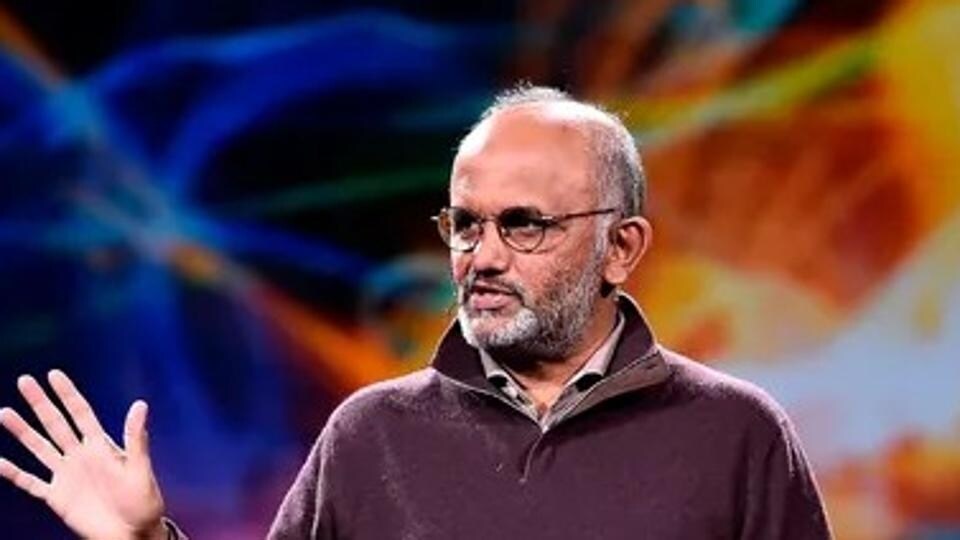
Narayen, 62, will remain as Adobe CEO until a successor is appointed and will continue to serve as board chairman, the San Jose, California-based company said in a statement. The surprise transition overshadows a quarterly fiscal report that beat analyst estimates but failed to calm nerves about a stock that has been in a freefall for much of the last two years.
The shares tumbled about 7% in extended trading following the announcement. The stock has declined roughly 23% in 2026 alone, hitting its lowest levels in three years as “AI upstarts” threaten the dominance of flagship products like Photoshop and Illustrator.
An Era of Expansion
Narayen’s 18-year tenure is viewed as legendary within the software industry. Since taking the helm at the end of 2007, he transformed Adobe from a seller of boxed desktop software into a subscription-based powerhouse.
- Revenue growth: Annual sales multiplied nearly sixfold during his leadership, reaching approximately $24 billion.
- Workforce: The company expanded from 7,000 employees to more than 30,000.
- Legacy: Microsoft Corp. CEO Satya Nadella praised Narayen for a “legendary run”, while Figma Inc. CEO Dylan Field described him as “relentless in pursuit of Adobe’s vision”.
Despite these accolades, the market’s “what have you done for me lately” attitude with regard to AI has weighed heavily on Narayen. While Adobe has aggressively integrated its Firefly AI models into its suite, competitors ranging from Google to nimble startups are offering cheaper, automated ways to generate visual media that bypass Adobe's premium price tags.
Financial Resilience vs Market Scepticism
The departure comes at a paradoxical moment for Adobe. While the stock is down nearly 40% since early last year, the company’s underlying financial metrics are resilient.
In the fiscal first quarter ended 27 February 2025, revenue rose 12% to $6.4 billion, surpassing the $6.28 billion average analyst estimate. Adjusted earnings were $6.06 a share, beating the projected $5.88.
“Adobe’s financial metrics have shown little noticeable change since early last year, yet the stock is down almost 40%—likely a key reason for the planned CEO transition,” Bloomberg Intelligence analyst Anurag Rana wrote in a note.
The search for a 'war-time' leader
The board’s search for a successor, overseen by lead independent director Frank Calderoni, will likely focus on a leader capable of accelerating AI monetisation. While Adobe’s AI-first products generated more than $250 million in sales as of September, investors are concerned about the “pace of innovation” relative to rivals.
“Investors will likely focus on whether incoming leadership maintains a balance between disciplined execution and aggressive AI investment,” Grace Harmon, an analyst at Emarketer, told Bloomberg News.
Adobe projected second-quarter revenue of as much as $6.48 billion, slightly ahead of the $6.43 billion average estimate. However, in a market where AI is viewed as an existential threat, steady guidance may no longer be enough to satisfy Wall Street without a clear, long-term visionary at the helm.