
 E-Paper



Stock brokers’ body worry shift to T+1 system may impact foreign investors
At present trades on the Indian stock market are settled within two working days after the transaction is done (T+2).


The Association of National Exchanges Members (Anmi) on Tuesday said that shifting to the T+1 settlement system would lead to India turning into a pre-funding market. It also said that the shift would cause global institutional investors to face multiple issues with the structure.
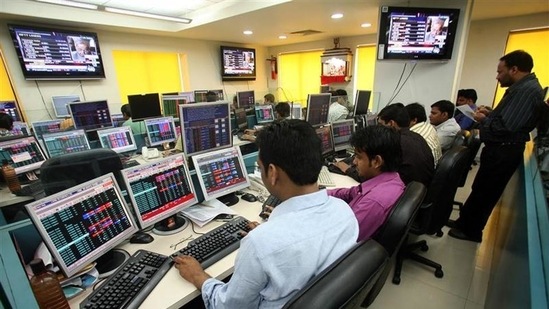
At present trades on the Indian stock market are settled within two working days after the transaction is done (T+2).
SEBI constitutes expert panel for enhancing market liquidity
Anmi’s worry comes amid reports that market regulator Securities and Exchange Board of India (Sebi) constituted an expert panel which will study the moving of the settlement cycle in the securities market from T+2 to T+1 in a bid to enhance market liquidity. Sebi chairman, Ajay Tyagi had last year proposed that stock exchanges gradually shift to real-time settlement of trades in the capital market.
Anmi cites reasons for concerns
In its letter, Anmi said the implementation of the new system would lead to an increase in working capital requirements for brokers and would enhance the workload faced by banks and depository participants (DPs). It also said before implementation of the new system several operational and technical challenges will have to be overcome. It highlighted that the infrastructure currently available with the market infrastructure institutions (MIIs) are not able to efficiently meet timely issuance of pay-in and pay-out and to send files on time.
“Whenever there is more than one settlement there is a delay in pay-in / pay-out for the second settlement. The delay is at times noticed at depository level and at times at the Clearing Corporation (CC) level,” the letter said. It also said that Securities Lending and Borrowing will have a short window to operate which could lead to spill over.
Anmi says global investor favour T+2 settlement cycle
The Anmi also said that it feels global investors prefer the T+2 investment cycle because they are able to fund settlement obligations for purchase transactions in one market with sales proceeds from another. It also said that cycle of settlement is ideal also from a funding perspective citing that foreign portfolio investors (FPIs) need to provide funds in the Indian rupee for settlement amid a regulatory environment where banks and custodians cannot fund trades on behalf of the FPIs even to cover for operational shortfalls.
“If the settlement of T+1 is adopted then the MSCI country classification methodology may look at it negatively as it is likely to result in the Indian Market being a pre-funded market. This may result in a drop in the weightage to India in its MSCI emerging market Index. This will adversely affect flows into the Indian market," Anmi noted.
Brokers get limited time
Anmi cited that the securities settlement of FPIs is a complex operation which involves coordination among multiple entities like fund managers, global and local custodians, brokers, clearing members, and exchanges. It said that for most of the FPIs, which have a local custodian, they have a global custodian whose confirmation is necessary for the local custodian to confirm the trade.
Anmi says that due to these global custodians being located across the planet in different countries and timezones, brokers and local custodians receive only a few hours to follow up and receive confirmation.
“Today also (in the T+2 regime), many a time, when the confirmation is not received from the global custodian in time, the trades result in DVP trades and the brokers face the challenge of arranging funds and also bear the burden of additional costs associated with it”, the Anmi said.
Anmi cited that such shifts will create unnecessary costs and create settlement risks for global investors. It further added that any failure in trade-matching will result in settlement obligations being borne by the brokers.
Brokers cite example of Taiwan, say system will lead to ‘hardship’
Anmi in its letter cited the example of Taiwanese stock exchange which earlier made the shift from the T+2 settlement cycle to the T+1 settlement cycle but reverted after foreign investors faced issues.
It also said that the shift could lead to tax issues for global investors. “Tax consultants typically compute tax on T+2 and T+3 days, which may lead to a situation where pay-in is received on T+1, but clients would have to hold on to their funds in Indian rupees for a day or two for pending tax computation,” Anmi said. It also expressed its concern that if the shift is made without addressing and resolving the operational issues it could put the entire "broking industry in jeopardy and cause undue hardships''.


