E-Paper



As crisis in Surat diamond industry deepens, 20-25% units stay shut after Diwali
Lalji Patel said Surat’s diamond polishing industry has been struggling for the past two and a half years, with diamond prices falling by at least 35%

 Prefer HTon Google


AHMEDABAD: At least 20-25% of Surat’s diamond industry that paused operations in late October for the Diwali break are yet to reopen due to the continuing slowdown in the industry exacerbated by Russia’s full-scale invasion of Ukraine in February 2022 and the sanctions on Russian diamonds that followed, people familiar with the matter said.
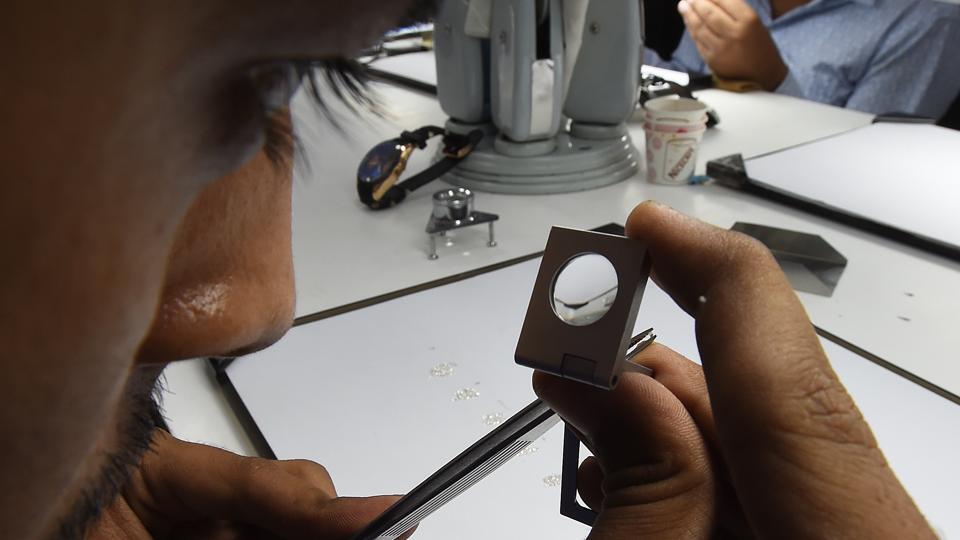
The city’s diamond industry usually takes a three-week vacation. This time, Lalji Patel, chairman of Dharmanandan Diamonds Pvt Ltd said there was an extended vacation due to the ongoing downturn. “While businesses were to reopen in the second week of November post-Diwali, they only started resuming from December 1,” said Patel.
Patel added that about 20% of diamond polishing firms are yet to reopen, preferring to wait out the slowdown. “The industry has been struggling for the past two and a half years, with diamond prices falling by at least 35%. The total value of trade for diamond companies would have halved in this period,” Patel added.
Govindbhai Dholakia, BJP Rajya Sabha MP and chairman of Shree Ram Krishna (SRK) Exports, who has been in the diamond industry for six decades, said this was the longest recession that he had seen in his career.
In a video message to industry leaders and diamond workers, Dholakia expressed hope that it would end soon. “Everyone has been very patient - both factory owners and diamond workers. We should maintain this patience and face the challenge. I hope we will soon see an upswing,” he said.
The downturn is reflected in the statistics of the Gems and Jewellery Exports Promotion Council of India (GJEPC).
The gross exports of gems and jewellery from India declined by 15% to $32.02 billion ( ₹2.63 lakh crore) in 2023-24. Gross imports also fell to $22.27 billion ( ₹1.83 lakh crore) in 2023-24, a 14% drop.
Exports of cut and polished diamonds dropped by 27.58% to $15.97 billion ( ₹1.31 lakh crore) in FY 24, while imports of cut and polished diamonds saw a sharp 46.12% increase, reaching $ 1.91 billion ( ₹15,700 crore). Imports of rough diamonds, a crucial raw material, declined by 17.85% to $14.27 billion ( ₹1.17 lakh crore), indicating a slowdown in manufacturing activity, according to GJEPC.
During April-October this year, the total exports of gem and jewellery trade in India were $ 1,6734.07 million, a decline of 9.09% over the corresponding period last year. The imports touched $11,541.35 million, a decline of 7.55% over the corresponding period last year.
Surat’s diamond polishing industry, which processed nearly 85-90% of the world’s roughs over the year, employed over 800,000 people. But the last few years have been difficult for the workers as well.
Bhavesh Tank, vice-president of Diamond Workers Union Gujarat (DWUG) said that in the last two and half years, the earnings of diamond workers have seen a sharp decline of more than 35%.
“More than 45 diamond workers have died by suicide in the last one year. As of today, only 50% of the total workforce of 8-10 lakh diamond artisans of Surat are getting work. About 35-40% of the companies have remained shut post-Diwali vacation,” said Tank, adding that there were reports that 600 children of diamond workers in Surat’s Varaccha region had dropped out of schools.
Jagdish Khunt, president of Surat Diamond Association said businesses were slowly re-opening and the migrant workers were returning to work. The Diamond Trading Company (DTC) and Alrosa, two of the largest suppliers of rough diamonds, have reduced diamond prices by about 10% in response to declining demand in key markets such as the US and China but their impact on Indian rough diamond polishing industry remains to be seen, he added.
Dinesh Navadia, a diamond baron and chairman of Indian Diamond Institute, said they hadn’t spotted any signs of an increase in demand for diamonds during the Christmas season.
“We don’t see much movement in global markets. The government should support diamond workers and their families with initiatives such as some relaxation in loan EMIs for government housing schemes and school fees, or providing medical benefits,” said Navadia.
The crisis appears to have persuaded companies to go slow in shifting base to the Surat Diamond Bourse (SDB), billed as the world’s largest office complex.
The diamond bourse, built at a cost of ₹3,500 crore, has already sold 99% of office spaces to diamond traders, manufacturers, exporters, and importers, as well as professionals involved in diamond cutting and polishing businesses. But only 200 of the 4,500 firms had moved in so far.
“Everybody knows the situation and what is hindering the business decisions. More will soon move into Surat Diamond Bourse,” said SDB chief executive officer Mahesh Shah.