
 E-Paper



Employees wary of variable pay as firms cut costs amid Covid
The first wave of the pandemic in 2020 pushed about 230 million Indians into poverty, according to a survey by the Azim Premji University. Data from the Centre for Monitoring Indian Economy showed that the second wave led to almost 23 million job losses in April and May alone.


Around two-thirds of employees either did not get any variable pay or were given a reduced variable pay as part of their cost to company (CTC) over the past year as India Inc. cut down costs in a pandemic year.
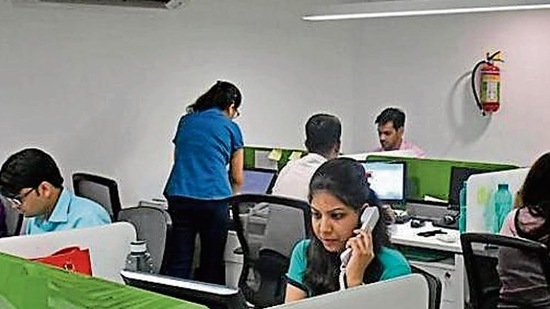
This comes against the backdrop of the coronavirus outbreak battering the job market with millions losing jobs and many more observing a pay cut or income loss.
The first wave of the pandemic in 2020 pushed about 230 million Indians into poverty, according to a survey by the Azim Premji University. Data from the Centre for Monitoring Indian Economy showed that the second wave led to almost 23 million job losses in April and May alone.
As much as 31% employees said there was no variable pay, while 33% said there was a “decrease in the percentage of variable pay” that they got, said a fresh survey by consulting firm Grant Thornton.
The loss of variable pay is pushing a sizeable portion of employees to demand a restructuring of the salary with a higher fixed pay even if that means the overall CTC is a little less, showed the survey.
Employers should consider a work-from-home allowance to reduce the office-related expenses of employees as working from home is the new normal, respondents said.
“As the need to re-look at strategy increases, work from anywhere, life/medical insurance, home office set-up and flexible hours are being sought as high-priority benefits. Over 73% of the survey respondents said that organizations must introduce long-term incentives such as employee stock options and retention bonus,” the survey respondents said.
Companies experienced higher attrition among young performers and lower or stable attrition among mid- to senior-level performers, the survey showed.
Overall, 40% employees witnessed a reduction in total pay and 45% did not see any change in overall pay over the past year. The impact on remuneration was more pronounced in mid-size companies with less than 1,000 employees in sectors such as real estate, infrastructure and hospitality. Larger companies in sectors such as consumer, retail, e-commerce, pharma, healthcare and life sciences showed higher resilience to the adversities.
“While one-third of the respondents experienced a reduction of more than 20% in their fixed pay, 40% did not see any change in fixed pay despite an overall decrease in their earnings. This highlighted that the variable pay component of the salary took a major hit,” said Amit Jaiswal, partner, human capital consulting at Grant Thornton Bharat.
“There is an increased expectation to change the current pay mix and reduce the pay-at-risk part of the compensation, specifically in the younger workforce of mid-size organizations,” said Jaiswal.
The survey said two trends are clearly emerging. First, an increased appetite for long-term incentives, especially from the younger workforce. Second, the definition of benefits is no longer restricted to medical insurance.


