E-Paper



Fuel rates surge 11th time this month; diesel price rose over ₹3/lt in May
Retail fuel rates in India are making records with every hike despite there being a fall in international oil prices this week. Benchmark Brent crude fell by over 6% on Thursday at $65.11 per barrel from $69.46 a barrel on Monday

 Prefer HTon Google


After a gap of two days, fuel rates jumped for the eleventh time in 18 days making petrol costlier by ₹2.64 a litre and diesel by ₹3.07 since May 4 as state-run retailers on Friday raised petrol rate by 19 paise per litre and diesel by 29 paise a litre.
Retail fuel rates in India are making records with every hike despite there being a fall in international oil prices this week. Benchmark Brent crude fell by over 6% on Thursday at $65.11 per barrel from $69.46 a barrel on Monday. State-run fuel retailers fix pump prices of petrol and diesel with their international rates on the previous day. International petrol and diesel rates often moves in tandem with global crude oil prices.
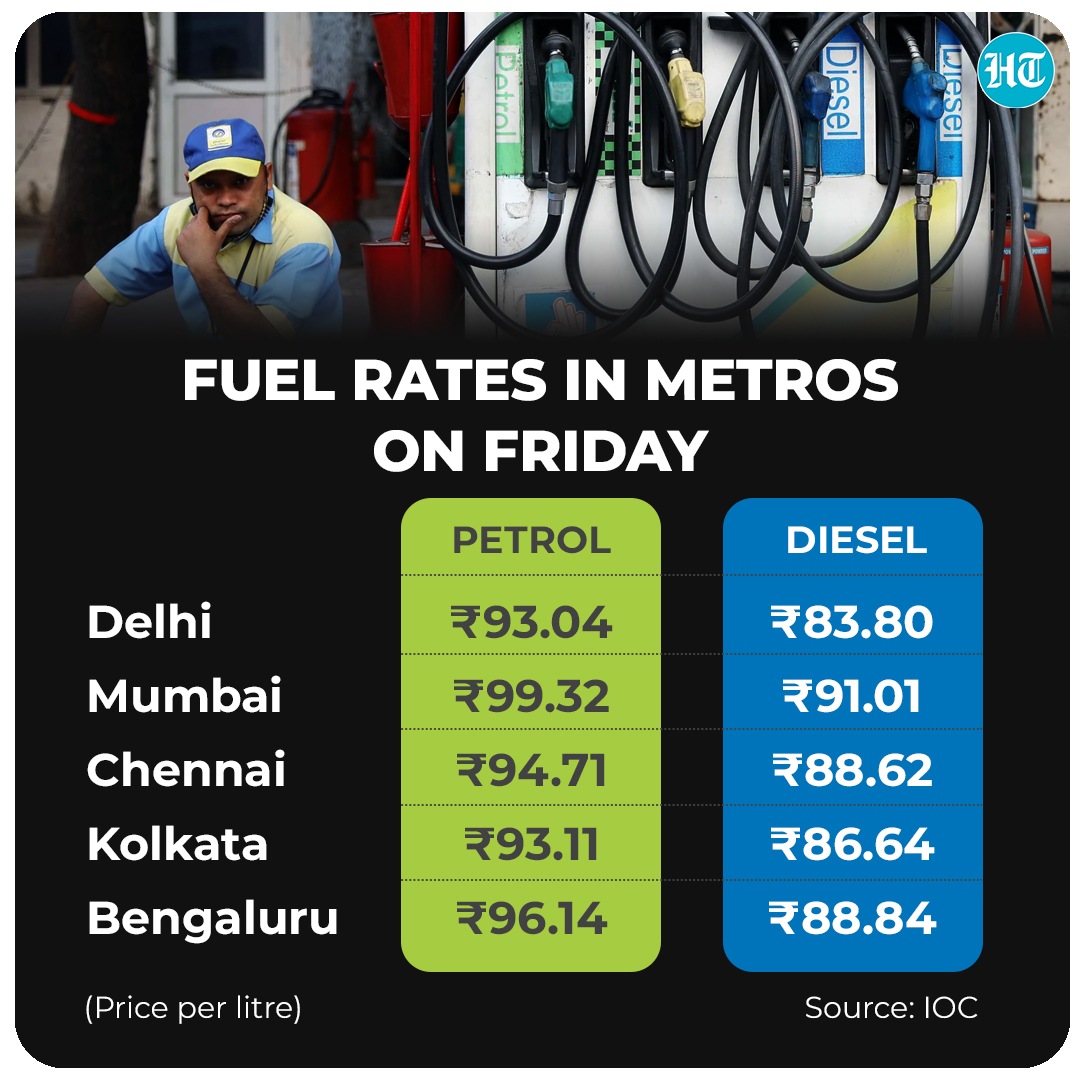
With the latest price hike, petrol is sold at ₹93.04 per litre and diesel at ₹83.80 a litre in Delhi. While fuel rates in Delhi are the benchmark for the entire country, retail prices of the two fuels differ from place to place because of variations in state taxes and local levies.
Petrol price in Mumbai ( ₹99.32 a litre) is inching towards the ₹100 mark and that of diesel is ₹91.01 a litre. Auto fuels in Mumbai are costliest among the major metros. Petrol has, however, crossed the ₹100 mark in several cities and smaller towns, particularly in Rajasthan, Maharashtra and Madhya Pradesh. Some of the cities selling the fuel over ₹100 per litre include, Ratnagiri, Parbhari, Aurangabad, Indore, Bhopal, Gwalior, Jaisalmer, Ganganagar and Banswara.
There are two key reasons for higher petrol and diesel rates – taxes on auto fuels and a spike in international oil prices. To be sure, much of the retail price is taxes. For instance, in Delhi, on May 16, central taxes accounted for 35.5% of petrol’s price, and state taxes, 23%. On diesel, central levies are over 38.2% while state taxes are about 14.6%. Through 2020, as global crude prices fell, the central government raised excise duty on the fuel to shore up its finances. States too followed suit -- with revenue hit on account of the pandemic.
International oil prices and rupee-dollar exchange rate impact domestic pump prices as India imports over 80% crude oil it processes and pays in dollar. While Brent crude on Friday opened low at $64.9 per barrel, it gained 0.26% at $65.28 during the intraday trade.
Also Read | Capacity utilisation at IOC slips to 84% due to restrictions
According to executives working in state-run oil marketing companies, pump prices are also high because companies are recovering their past revenue losses. State-run oil marketing companies had occurred revenue losses for keeping any upward price movement of the two politically sensitive fuels under pause for 66 days since February 27 because of assembly elections in four states and a Union Territory. The pump price rally in India started a day after poll results on May 4.
During the 66-day pause on rate hike, state-run retailers had reduced petrol and diesel rates by 77 paise and 74 paise a litre, respectively in four small doses. But, the entire gains to the consumers were quickly reversed in the first four consecutive rounds of rate hikes starting from May 4.
HT wrote on April 28 that fuel rates would move north after polls and their pump prices would start seeing small increments as state-run fuel retailers had been losing about ₹3 a litre on sale of the fuel because of higher international oil rates and depreciation of rupee against the dollar.
The government deregulated the pricing of petrol on June 26, 2010 and diesel on October 19, 2014. Accordingly, state-run retailers are free to change pump prices every day. Public sector retailers — IOC, Bharat Petroleum Corporation Ltd (BPCL) and Hindustan Petroleum Corporation Ltd (HPCL)— controls almost 90% of the domestic fuel retail market.