E-Paper



Sensex, Nifty 50 smarting from Iran war, India VIX spikes highest since June
Investors are unwilling to take fresh bets on Sensex, Nifty 50 amid acute uncertainty stemming from the Iran war and surge in crude oil prices.

 Prefer HTon Google


Dalal Street in Mumbai was engulfed in panic on Monday as India's benchmark indices Sensex and Nifty 50 cratered at the opening bell, with investors unwilling to take fresh bets amid acute uncertainty stemming from the Iran war.
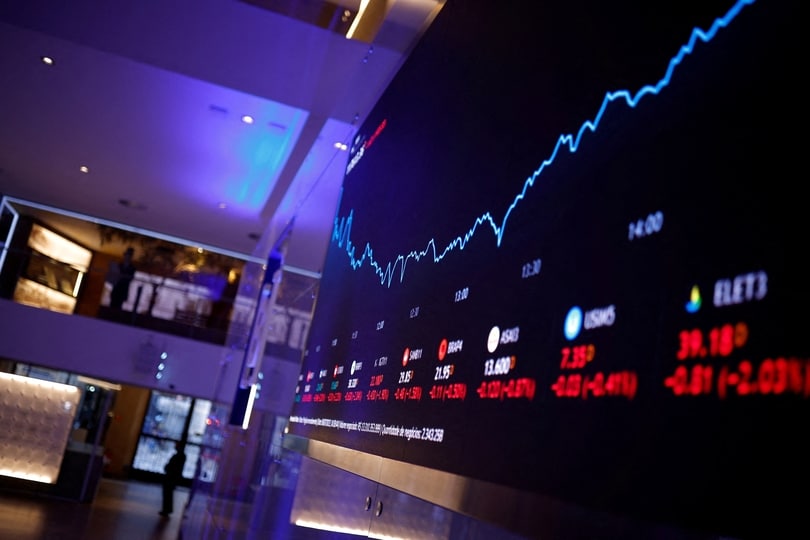
The 30-share S&P BSE Sensex fell as much as 3.38%, or 2,743 points, to open at 78,543 points, while the broader NSE Nifty 50 cracked 519 points, or 2.06%, to 24,659. By mid-morning, both indices had clawed back some losses but remained firmly in negative territory.
“The uncertainty related to the (Iran) war will loom large over the market in the near-term,” V.K. Vijayakumar, chief investment strategist at Geojit Investments Ltd., told Hindustan Times over email. “The major risk from the market perspective is the energy risk arising from the surge in crude.”
Every $1 increase in crude oil prices raises India’s annual import bill by $2 billion. A higher import bill translates to a weaker rupee and higher inflation. That, in turn, raises bond yields which eventually compresses equity multiples. The impact on trade, by way of higher logistics and insurance costs, is not even priced in yet.
The crude shock of the Iran war
Joint military operations by Israel and the United States killed Iran's Supreme Leader Ayatollah Ali Khamenei over the weekend, triggering a retaliation by Tehran that's engulfed much of the Middle East.
The Strait of Hormuz, a 21-mile shipping channel to Iran's south responsible for nearly 50% of India's oil imports, is virtually choked. Brent crude surged 2.45% to $72.48 per barrel. Brent jumped 6.4% to $77.57 a barrel, though it had briefly topped $82.00 at one stage.
Key Stocks in Focus
Underperforming:
- IndiGo, SpiceJet: Shed 4.67% at the open as aviation turbine fuel costs threaten to spike on higher crude oil prices. Hundreds of flight cancellations are also weighing on the stocks.
- HPCL, BPCL, Indian Oil: India's oil marketing companies face rising crude import costs and potential under-recoveries if retail prices are held.
- Nifty IT (−2.5%): Down over 20% through February, Monday's risk aversion deepened the rout.
- Nifty Realty: The worst-performing sector at open, down 1.5%–2.5%, alongside auto, oil & gas, and PSU banks.
Outperforming:
- Bharat Electronics: The only Sensex constituent in the green at open, gaining 0.48%.
- Paras Defence: Led the broader defence pack with over 13% intraday gains. The Nifty India Defence index was up over 1%.
- ONGC, Oil India: Upstream producers benefit from elevated crude realisations.
- Gold & Silver ETFs: Safe-haven demand surged as both metals hit multi-month highs.
The Macro Threat
For India, the Iran war is a direct macroeconomic stress test. Elevated import costs are likely to widen the current account deficit and further strain the fiscal deficit through increased subsidy obligations.
The rupee slipped to a multi-month low of around ₹91.26 per dollar. The dollar index surged 0.5% to the 98-level as investors feared a crude-driven inflation spike could prompt a more hawkish Fed stance.
FIIs sold equities worth ₹7,536 crore on Friday. Domestic institutions provided a partial buffer, buying ₹12,293 crore, but the scale of Monday's selloff may test their absorption capacity. The Sunday Guardian
How low can Nifty 50, Sensex go?
- Nifty support: 24,500 is the next major level. The index needs to hold 25,000 to avoid further deterioration. Upside resistance sits at the 50-EMA zone around 25,600.
- Bank Nifty: Testing key rising trendline support. A breakdown targets 59,500. Resistance at 61,000–61,500.
- India VIX: Jumped 18.2% to 16.20 at open—elevated fear gauge levels typically suppress recovery attempts.
- Broader markets: BSE Midcap and Smallcap indices crashed as much as 6% each at open.
What to Watch
- Strait of Hormuz: Any confirmation of closure would be the single largest catalyst for a further crash.
- Brent at $76: If crude stays around $76, equities may stay weak but a big crash is unlikely—beyond that, the calculus changes sharply LatestLY
- FII/DII flows: NSE provisional data in the afternoon will show the institutional tug-of-war.
- RBI: Any emergency forex intervention or statement can stabilise the rupee.
- Holi holiday: BSE and NSE close for Holi on 3 March 2026.
ALSO READ | Indian refiners eye Russian oil after crude shock from Iran war
Follow our live blog for live updates throughout the trading day. This article is for informational purposes only and does not constitute investment advice.