
 E-Paper



Suzuki Chairman Osamu Suzuki dies at 94: A look at his journey
Suzuki sold about 3.2 million vehicles worldwide in 2023-24, with over half sold in India, trailing just behind Toyota, the largest automaker in the world

 Prefer HTon Google


Osamu Suzuki, the Chairman of Suzuki Motor Corp, passed away from lymphoma on Wednesday, December 25, 2024. He was 94.
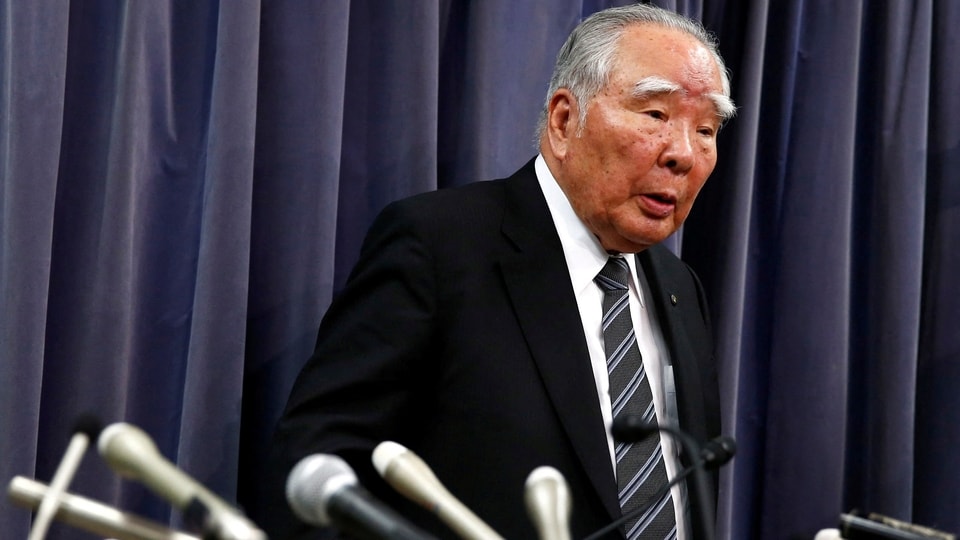
He ran the company for several decades, driving its global expansion. The company is currently India's largest automaker. Osamu Suzuki also formed partnerships with General Motors Co. and Volkswagen AG to sell vehicles in North America and Europe, and a capital alliance partnership with Toyota in 2019, according to a Bloomberg report.
“If I were to listen to everybody, it would make things too slow,” the report quoted him as having said in “I’m a Small-Business Boss,” a Japanese-language memoir published in 2009. “Never stop, or else you lose.”
Also Read: 10 lesser-known facts about former PM Manmohan Singh who just passed away
He was also the longest-serving head of a global automaker, though he had passed the presidency of the company to his son Toshihiro Suzuki in June 2015.
He still held the Chairman and CEO title, eventually dropping the latter, which he did so due to a fuel-economy misstatement, with the company admitting to using unapproved methods to test the fuel-mileage of its vehicles in Japan. He took responsibility, and apologised in a room full of reporters and also undertook a 40% paycut for this, according to the report.
However, he had a very unconventional start. He was born Osamu Matsuda in January 20, 1930, as the fourth son in a farming family. He studied law as he was an aspiring politician and worked in a bank.
What changed everything was his marriage to Shoko Suzuki, a granddaughter of Michio Suzuki, who founded the Hamamatsu-based auto giant, initially as a loom manufacturer in 1909.
Also Read: 'Don't fall for it': Radhika Gupta of Edelweiss Mutual Funds on India's ‘startup romance’
He then took on his wife's surname which is the Japanese custom when there are no male heirs to a family business and joined it in 1958. The rest is history.
The automaker sold about 3.2 million vehicles worldwide, with over half sold in India in the financial year 2023-24, trailing just behind Toyota which is currently the largest automaker in the world.
His greatest achievement was thus, the joint venture with the Indian government which gave birth to the Maruti 800. At that time, he acquired a 26% stake in the state-owned Maruti Udyog.
Also Read: How will sale of used cars will be taxed under new GST rules? A simple guide
This happened after he came across a newspaper article about the Indian government’s search for an automaker partner and in 1982, he met with a team in a Tokyo hotel.
Suzuki is also now one of the top global motorcycle manufacturers, selling around 1.9 million units over the same 2023-24 fiscal.


