E-Paper



Tata Motors PV banks on Punch, Sierra to outsell the wider SUV market in 2026
All three cylinders in Tata Motors PV's SUV segment are doing well, CEO Shailesh Chandra says referring to the Punch, Nexon-Curvv-Sierra and Harrier-Safari.

 Prefer HTon Google


Tata Motors Passenger Vehicles Ltd. is confident of outperforming the wider car industry in India, which itself is expected to grow at 10% in 2026.
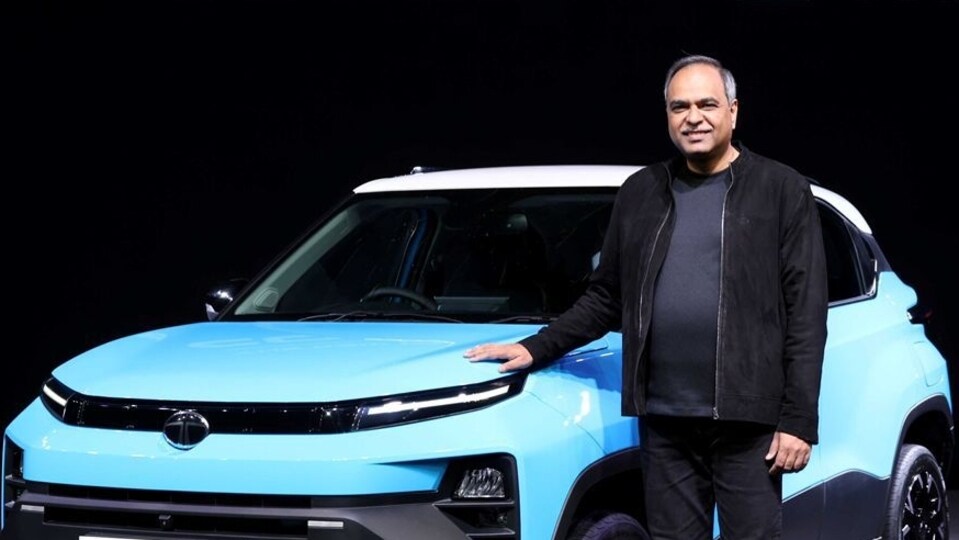
“The first eight months of 2025 were a decline for the (car) industry, whereas post GST reforms, it has been upwards of 20% growth. Even December was very strong,” Shailesh Chandra, chief exeuctive officer at Tata Motors PV, told PTI during a launch event in Mumbai on Tuesday (13 January 2026). “I hope January will be even stronger. So we are seeing that for 4-5 months these growth rates are sustaining in double digits.”
“Even if it stabilises a bit going forward, I feel quite optimistic that the industry has the ability to grow in double-digits…about 10%…plus-minus 2%...”
On Tuesday, Tata Motors PV launched the 2026 Tata Punch sub-compact SUV at a starting price of ₹5.59 lakh. That car, along with the recenlty launched Sierra compact SUV as well as the petrol variants of Harrier and Safari are expected to draw in the volumes for the Mumbai-based carmaker in 2026.
“As far as Tata Motors is concerned, this is an intense (product) launch calendar (year) for us. I believe that we will be doing industry-beating growth,” Chandra said. “After having ranked No.2 in Q3 of the ongoing fiscal, we became ranked No.2 in VAHAN. So we have exited (2025) well.”
GST 2.0 and SUV-fication of India's car market
On 22 September, the government reduced GST rates on soaps to small cars and SUVs in the biggest indirect tax reforms since Goods and Services Tax first came into effect on 1 July 2017.
- Small cars (<4 m length, <1,200 cc engine) attract 18% GST vs 28% earlier.
- SUVs (>4 m length, >1,200 cc engine) attract 40% GST vs 28% earlier. Since the GST compensation cess has been done away with, the overall tax has reduced.
- Electric cars attract 5% GST.
The move spurred sales of cars of all shapes and sizes, but the outsized demand for oversized cars has outpaced hatchbacks—66% of all cars sold in India are now SUVs.
Against that backdrop, Tata Motors now has a well-defined spread on offer:
- Base: Tiago, Altroz and Punch
- Mid: Nexon, Curvv and Sierra
- Top: Harrier and Safari
“So all three cylinders in the SUV segment are doing well,” Chandra said. “This product (new Punch) will have the potential of definitely improving our sales, as well as expanding the pie for the sub-compact SUV segment.”
The GST rationalisation reduced tax on sub-compact SUVs by 10 percentage points, which spurred sales in a segment that was stagnating.
“Therefore, growth has tremendously come back in the segment, to the extent of nearly 70%-80% in Punch sales,” Chandra said. “Whereas before GST (rate cut), this segment and the whole entry segment were declining more than the average decline of the industry.”
Tata Punch vs Skoda Kylaq vs Hyundai Exter
The sub-compact SUV segment, where the Punch competes with the likes of Hyundai Exter and Skoda Kylaq, is currently witnessing cumulative monthly sales of about 40,000 units.
“This segment has the potential to continue to expand... At one stage, it would have been 20,000 (units per month), which went to 30,000 and now 40,000,” Chandra said. “I clearly see that—on one hand—the industry will grow faster than what we had been seeing last year.”
With the new Punch coming with a strengthened value proposition, freshness, and contemporariness, along with more powertrain options, Chandra expressed confidence that the models “will be a winner in the market”.