E-Paper



Tech Tonic | EA’s buyout may unlock cultural power with sovereign wealth, or not
Andrew Wilson will continue as CEO, and an infusion of funds under the new ownership is expected to bring a faster pace of innovation

 Prefer HTon Google


Electronic Arts, or EA, the video game giants, this week agreed to a $55 billion acquisition that’ll take the company private. The Consortium that’s agreed to a deal to take over EA consists of Saudi Arabia Public Investment Fund (PIF), Silver Lake, and Affinity Partners. This deal is expected to be completed by the end of June next year with regulatory approval milestones along the way, which would mark EA’s 2027 financial year. It’ll mark the end of EA’s 35-year run as a publicly traded company.
As far as leveraged buyouts go, this deal potentially surpasses (subject to completion, of course) the 2007 transaction for TXU, or Energy Future Holdings, believed to be in around $48 billion. If you are remembering the Hilton Hotels acquisition by The Blackstone Group, also in 2007, that was to the tune of $26 billion. If you’re wondering what a leveraged buyout is, this is defined as a financial transaction in which a company is acquired using a significant amount of borrowed funds, with the acquired company’s assets often used as collateral.
Last time on Tech Tonic:OpenAI, Nvidia and a $100 billion desperate hype pivot
EA says the transaction for its acquisition will be funded by a combination of cash from each of PIF, Silver Lake, and Affinity Partners as well as roll-over of PIF’s existing stake in EA, constituting an equity investment of approximately $36 billion, and $20 billion of debt financing fully and solely committed by JPMorgan Chase Bank, N.A., $18 billion of which is expected to be funded at close. The PIF already had a 9.95 stake in EA, which will be rolled forward.
My first observation would be an intent of continuity, which seems to be the stand at this time. Andrew Wilson will continue as CEO, and the headquarters will remain in California. But what this infusion of funds under the new ownership is expected to bring, is a faster pace of innovation. By going private, EA essentially gets freed from the quarterly earnings cycle pressure, and returns focus to game development. This could theoretically mean the luxury of longer development cycles, something certain titles do require — but time is a luxury no one seems to have these days. Could we see more creative risk-taking?
We could return to a time when EA had an aura around it, and that’ll only make a comeback of the gaming giant realigns to invest in what it used to do best, that is experimental titles and bold themes, without Wall Street analysts questioning every decision. I’m not entirely sure if this means moving away from the increasingly aggressive monetisation tactics of recent times, and what it means for the EA Play game subscription service.
But there will be potential flip sides too, and let’s be realistic — a consortium doesn’t spend $55 billion out of altruism. They’ll want returns, and timelines will be discussed in the boardroom and over emails with product managers. The new ownership may not want immediate returns to their investment, but they will begin asking the questions, at some stage. The pressure of quarterly earnings dissipates, but that doesn’t mean the pressure disappears altogether. Just because EA is no longer publicly traded, it’ll just be less visible.
Another angle to this, audiences and gamers may perhaps have even less insight into EA’s decision-making processes. But I wouldn’t worry about it as much, if the games EA delivers in the next few years, deliver on expectations. And those expectations will be sky high, mind you.
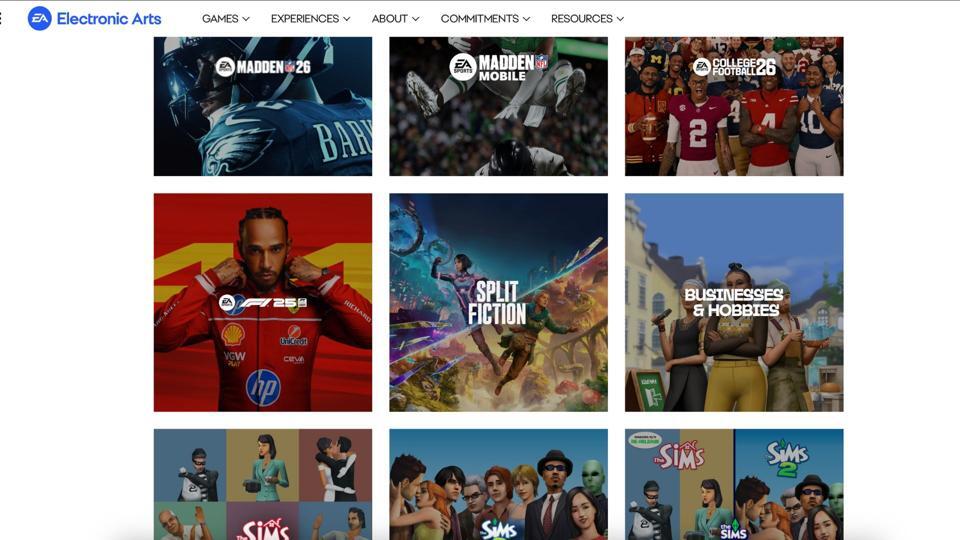
The gaming industry is at an inflection point, trying to balance cloud gaming, AI in game development, subscription services, and evolving business models. EA owns some of gaming’s most valuable IP — from FIFA (now EA Sports FC) to The Sims, from Battlefield to Apex Legends. In private hands, these franchises could either flourish and/or be milked for every penny they’re worth.
And I’d label this as yet another consolidation in the industry, which in recent years has seen Microsoft’s acquisition of Activision Blizzard as well as Sony’s various studio purchases. Whether this benefits consumers and gamers is debatable, but could very well be good news for development.
The Saudi Arabia Public Investment Fund, as an investment vehicle, is playing a crucial role for the country’s Vision 2030 strategy framework (this was launched in 2016) to give the economy more levers beyond its strong position with oil. Tourism (there have been moves to open up to international visitors, and developing resort destinations), entertainment (realigning focus on cinemas, concerts, and sporting events), and finance (becoming a regional financial hub and making a case for fintech innovation) are important elements for Vision 2030. As is technology and gaming, with an eye on the future.
It is often argued that the Kingdom’s human rights track record casts a long shadow over anything it does, and it cannot be ignored, but it would be equally fallacious to ignore reforms that are being implemented rapidly. There seems to be an intent to change things at the base. Women’s right reforms (military jobs, greater workforce participation among many changes), economic reforms (diversification beyond oil; unemployment rate for Saudi nationals declined to a record low of 7% in 2024) and the context that technology will provide in the coming years, is why the investment bears the tag of the largest leveraged buyout ever. I believe it is too early to hazard a guess on what influence, if any, the new ownership will have on game development and weaving in often complex themes in a title’s storyboard.
But, does the new EA prioritise financial growth or game development? We won’t have an answer for the next few years. But one thing is certain as day after night — the EA that emerges from this process will be fundamentally different from the one we’ve known. Whether that’s cause for optimism or concern depends largely on your outlook on life.
Vishal Mathur is the Technology Editor at HT. Tech Tonic is a weekly column that looks at the impact of personal technology on the way we live, and vice versa. The views expressed are personal.