
 E-Paper



‘Treacherous to navigate regulatory byways if you are not Adani, Ambani’: Ex-CEA Arvind Subramanian tells NYT
The Washington Post article claimed there is a hitch to India's growth story.

 Prefer HTon Google


Economist Arvind Subramanian -- who served as the chief economic adviser (CEA) of the Narendra Modi government between 2014 and 2018 -- appeared to criticise India's regulatory rules in a recent Washington Post article, claiming it could be "treacherous to navigate India’s regulatory byways" if "you are not the two A's -- Adani or Ambani".
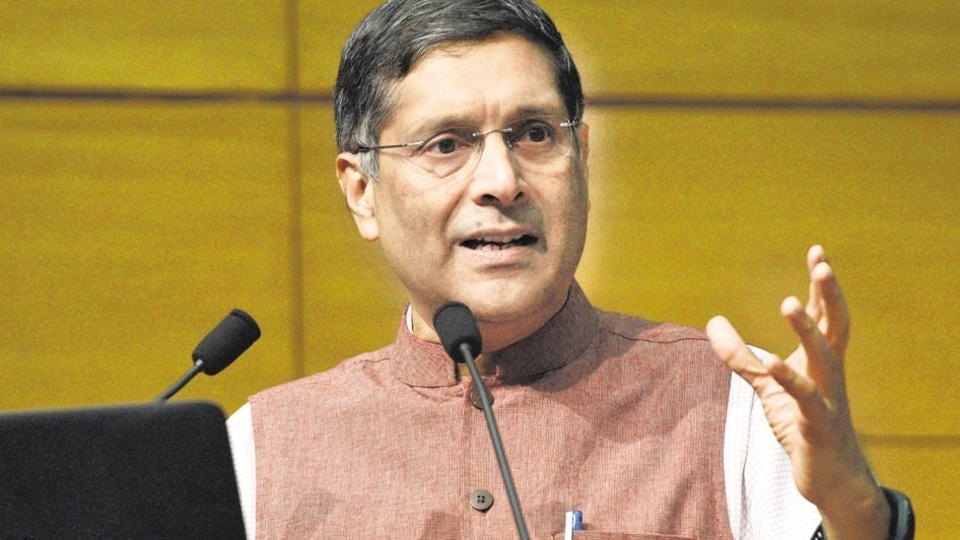
The Washington Post article titled 'India Is Chasing China’s Economy. But Something Is Holding It Back', Subramanian, an economist at Brown University, also accused the Indian economy of having what he called the "Modi phenomenon", which creates "a lot of hype and bluster and manipulation".
"If you’re not the two A’s” — Adani or Ambani — it can be treacherous to navigate India’s regulatory byways. Domestic investors feel a little bit vulnerable," he told the American newspaper.
“What is really complex and interesting about this Modi phenomenon is that there’s a lot of hype and bluster and manipulation. But it’s built on a core of achievement," he added.
The Opposition often accuses the Central government of favouring India's mega conglomerates at the expense of the public good.
Hinting that the Indian economy has been bogged down with ‘red-tapism’, he said there is no evidence at the moment that "investors are feeling reassured about India.
India's GDP grew by 7.2 percent in the financial year 2022-2023. In the April-June quarter this year, it logged a 7.8 percent acceleration year-on-year. However, many economists have said to become a developed country by 2047, India must sustain a growth momentum of 8-9 percent.
Also read: Chief Economic Advisor against Universal Social Security for India. Why? He says…
“We should keep our minds open,” Subramanian said, espousing hope.
The Washington Post article claimed there is a hitch to India's growth story.
"Investment by Indian companies is not keeping pace. The money that companies put into the future of their businesses, for things like new machines and factories, is stagnant. As a fraction of India’s economy, it is shrinking. And while money is flying into India’s stock markets, long-term investment from overseas has been declining," it claimed.
"No one expects India to stop growing, but a rise of 6 percent is not enough to meet India’s ambitions. Its population, now the world’s biggest, is growing. Its government has set a national goal of catching up to China and becoming a developed nation by 2047. That kind of leap will require sustained growth closer to 8 or 9 percent a year, most economists say." it added.
Also read: Chief economic adviser Arvind Subramanian resigns, thanks ‘dream boss’ Jaitley
Mukesh Ambani and Gautam Adani are the richest people of India who run separate conglomerates that have interests in petroleum products, gas, telecom, media and retail.
The Opposition claims the Modi government has a bias towards the Adani Group.
Last year, American short-seller Hindenburg's report claiming stock manipulation by the Adani Group had wiped out a significant chunk of the conglomerate's market value. The conglomerate, buoyed by two Supreme Court verdicts and gigantic investments by India-American Rajeev Jain, has bounced back on the stock markets.


