E-Paper



Vivo X200 FE review: Flagship-esque power, when size doesn’t matter
Even before building on the specifics, it is not difficult to imagine pricing gives the Vivo X200 FE a strong footing to be on, in competition with the Xiaomi 14 and the OnePlus 13s

 Prefer HTon Google


It is a positive shift that serious flagship smartphone portfolios, are no longer complete unless there is a genuinely compact option available for consumers who don’t exactly like large slab phones. There’s the Xiaomi 15, then came the OnePlus 13s, and now, Vivo’s adding the X200 FE to its X-series flagship line-up that in India also includes the X200 Pro, the X200 and the upcoming X Fold5 foldable. Across the competition landscape, the 6.3-inch screen sizes (or thereabouts) are common, and yet, enough care taken to ensure these don’t fall short in terms of the specs albeit some see slight realignments in approach, and therefore experience.
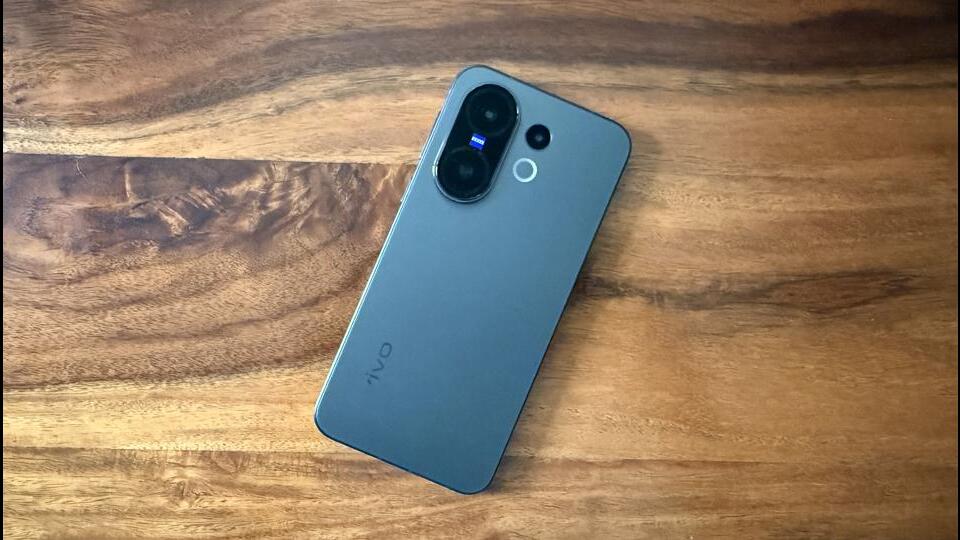
The foundations of a compact phone are found in reworking the innards alongside smaller than usual (I’d say the norm now is around 6.7-inch displays) screens to allow for a more pocketable footprint. Conventional wisdom, in the not too distant past, would dictate lesser physical space for components would mean a notch lower hardware in use. That’s no longer the case, a collective of improved chips for instance, denser battery tech, and slimmer display panels. Of course Vivo had to eliminate the wireless charging hardware from the X200 FE (though the Xiaomi 15 retains that), but that isn’t at all a compromise in the wider scheme of things.
Even before building on the specifics, it is not difficult to imagine pricing gives the Vivo X200 FE a strong footing to be on. There are two variants that go on sale, at ₹54,999 for the 12GB memory and 256GB storage config, and ₹59,999 for the 16GB + 512GB option. My belief is, it is the former that will get potential buyers interested, but a large number of that demographic will find it prudent to spend that bit extra for more memory and storage. And rightly so, for the sake of longevity.
Vivo’s pricing works favourably, amidst a competitive landscape that includes the impressive OnePlus 13s (this is priced ₹54,999 onwards) and for now, undercuts the Xiaomi 15’s ₹64,999 price tag. Expect some pricing changes from the house of Xiaomi in the coming days, though perhaps not directly, but as payment offers or discounted bundles.
It is important that the Vivo X200 FE has retained the flagship credentials with form factor not having a bearing on potential. Except wireless charging. The beating heart is the MediaTek Dimensity 9300+ chip, with either 12GB or 16GB of memory. We are firmly in an era where MediaTek’s flagship chips are at par with its closest competitor, Qualcomm. The configuration of this particular chip pegs it slightly behind the Snapdragon 8 Elite that also does duties in Android flagships — that role is the Dimensity 400’s, that powers the X200 Pro.
There is still enough in terms of performance with the X200 FE and the Dimensity 9300+, either while gaming or multitasking, for this to stake its claim at the same table as its flagship siblings, and the competition. Reducing clock speeds ever so slightly was essential, considering the smaller innards and a balance of thermals. To that point, the X200 FE runs surprisingly cool for an equally surprisingly long duration whilst gaming, before the back panel starts to get tepid. But one could argue that Vivo could have taken Samsung’s approach and held chip continuity through the flagship portfolio — Samsung uses the specially customised Qualcomm Snapdragon 8 Elite across the Galaxy S25 squad.
Cameras are where there is definitive parity though. At least for the most part. While the X200 Pro and the X200’s camera troika each has a 50-megapixel wide, a 50-megapixel ultra wide and a 50-megapixel periscope telephoto, the X200 FE swaps to an 8-megapixel ultra wide. And doesn’t have the V3+ imaging chip either. With continuity for the other sensors and therefore the image processing algorithms as well as Zeiss imaging optimisations, there is enough gravitas for it to compete with Leica’s smartness on the Xiaomi 15. The OnePlus 13s gave the Hasselblad colour calibration a miss, for all that its worth.
If you are any more than a cursory photographer, the Zeiss Style Portraits (Cinematic style bokeh and cine-flare portrait style stand out), available within the Camera app, are worth trying. As are the vintage film styles. Across lighting conditions, the X200 FE’s main camera reproduces some excellent daytime photos, with balanced dynamic range and rich colours that remain well separated. Little in terms of distortion or soft frames ruining the perfect shot, though one could argue that often, the image processing is very restrained and you may need to quickly jump into edits to dial the sharpness up a notch. Hardly a drawback, in my book.
A large 6500mAh lithium silicon battery in a relatively compact form factor (5850 for the Xiaomi 15 and 5240 for the OnePlus 13s in comparison) has been achieved with what Vivo calls the 3rd generation Silicon Anode composition that has higher density and the redone architecture reduces its thickness by as much as one millimetre (which inside a phone, is worth every bit of it). Stamina, also dictated by under-the-hood improvements to Vivo’s Funtouch OS, returns a healthy 13 hours or thereabouts of screen time with medium usage.
There is a sense that Vivo had a clear vision with its compact flagship phone, and this wasn’t an afterthought. Battery has been taken care of, an otherwise long-standing gremlin that kept us away from genuinely usable compact Android phones, for years. The flagship credentials don’t stop there, with Zeiss optimised cameras, a powerful chip and fantastic display making up the foundation for the experience. It feels great to hold and use, and that single hand usability aspect is more than taken care of. No longer are compact flagships, an insignificant thing.