E-Paper



Why diesel cars deliver better fuel efficiency than petrol vehicles
The simple, non-negotiable truth is this: when it comes to outright fuel efficiency, the diesel engine is, mechanically and chemically, superior.

 Prefer HTon Google


The Indian automotive market has been the domain of fierce competition for years, an intricately woven play of consumer preference, shifts in policy, and technological advancement that never seems to stop. Yet, amidst the electric push and the ubiquity of the reliable petrol engine, the diesel powertrain continues to hold a near-sacrosanct position in the minds of those who track their kilometre-per-litre figures with an almost religious zeal.
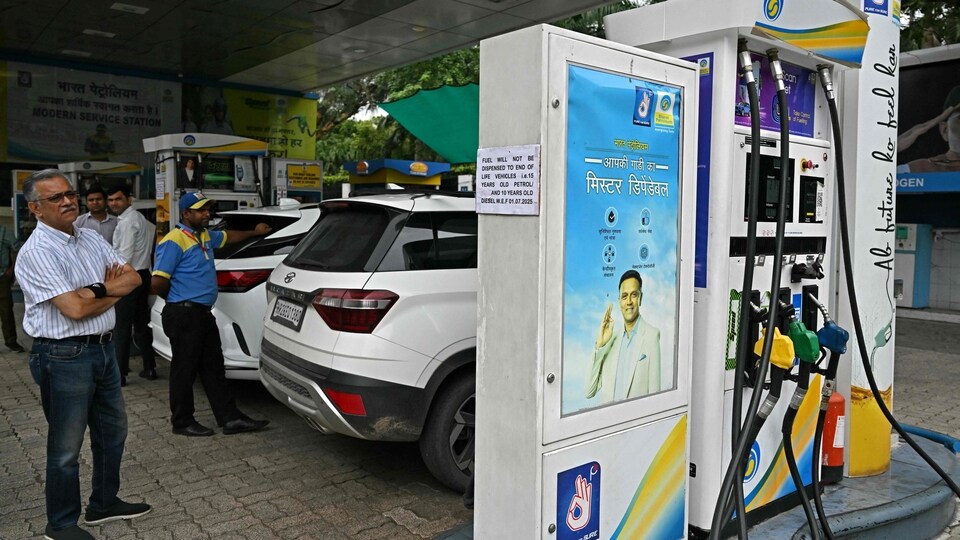
The simple, non-negotiable truth is this: when it comes to outright fuel efficiency, the diesel engine is, mechanically and chemically, superior. This isn't just about the price differential at the pump; it's a deep-seated engineering advantage.
The chemical advantage
The key differences begin, however, not under the hood, but rather in the chemical makeup of the fuel itself. Diesel fuel is basically a heavier, longer-chained hydrocarbon than petrol (gasoline), with an extremely high energy density. To put it into perspective, a litre of diesel contains approximately 10 to 15 per cent more energy than a litre of petrol.
This is the bedrock of the diesel engine's fuel economy superiority. More latent energy packed into every drop of fuel means the engine requires less volume of that fuel to generate the same quantum of kinetic output. This built-in trait delivers an essential, undeniable chemical head-start to the combustion event before the engine is even cranked.
The mechanical discipline
Now, above and beyond the chemistry of the fuel is the mechanical discipline of the engine itself. The diesel engine showcases its superiority in the "compression ignition cycle," aka. CI cycle. Petrol engines work on the Spark Ignition, or SI, principle, with compression ratios usually between 9:1 and 12:1. Push this ratio higher, and the engine starts facing the debilitating problem of knocking, or uncontrolled combustion.
In contrast, a diesel engine does not count on a spark plug but relies on the heat of compression to ignite its fuel. This results in much higher compression ratios, typically in the range of 14:1 to 25:1. This, in itself, directly relates to high thermal efficiency. The greater you compress the air-fuel mixture, the more usable work you will extract from the expansion stroke. It is simply the very heart of the thermodynamic cycle: the higher the compression, the better the efficiency of energy conversion.
Furthermore, diesel engines operate with a far greater ratio of air to fuel, known as a lean-burn mixture, especially under part-load conditions. They regulate power by varying the amount of fuel injected into a consistent volume of air. In contrast, petrol engines primarily regulate power by restricting the air intake (throttling), which introduces pumping losses—a major contributor to reduced efficiency. The diesel engine does not have this parasitic loss at all, making it extremely efficient in real-world, everyday driving, where the engine is rarely under peak load.
The torque trajectory and driving dynamics
And finally, let's talk about the driving experience and its more-subtle link to economy. The nature of diesel engines inherently provides more low-range torque than a similarly sized petrol counterpart would. That high torque at low Revolutions Per Minute allows a diesel vehicle to use taller gearing and shift up sooner. The engine spends more time operating in its most efficient, lower-RPM range, thus reducing the driver's need to constantly ring the throttle for acceleration.
This dual advantage of superior fuel energy density coupled with the mechanically efficient high-compression, lean-burn operation cements the standing of the diesel engine. Notwithstanding the recent market shift towards alternative energy and hybrid architectures, it is the tried-and-tested CI engine that remains the benchmark for pure, internal combustion fuel economy-a critical metric for the Indian driver whose focus invariably is on sustained running costs and the long-term profitability of the vehicle proposition.