
 E-Paper



All with flu symptoms to be tested for Covid-19 in Chandigarh
The administration has decided to adopt the testing protocol of the Indian Council of Medical Research which was updated on April 9.


With the Union health ministry declaring Chandigarh a Covid-19 hotspot (red zone), the UT administration has decided to test all those with Influenza like Illness (ILI) for the virus. Also, the administration decided to start thermal scanning on city’s border of all the people entering the city.
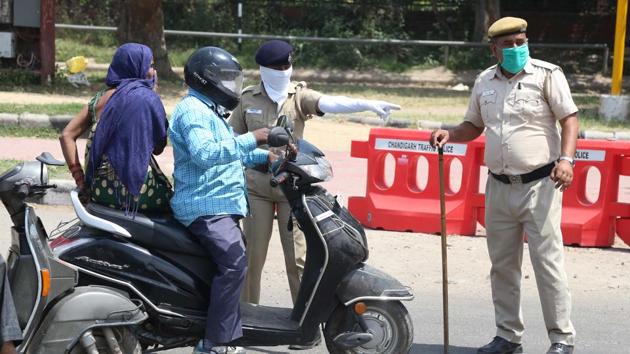
The administration has decided to adopt the testing protocol of the Indian Council of Medical Research which was updated on April 9.
UT’s principal secretary, health, Arun Kumar Gupta, said the patients with ILI —a person suffering from fever, cough, sore throat and running nose — will be tested for the virus.
“It is as per the protocol developed by ICMR that persons with ILI should be tested within seven days of developing the illness and it will be adopted in Chandigarh in the same manner,” he said.
Regarding the other condition of ICMR which says that after 7 days of illness, the test should be repeated using anti-body test and if it is negative, it should be reconfirmed by reverse transcription polymerase chain reaction, he said it will not be required at the moment as they should be able to conduct the test within the 7 days of the illness.
Earlier the protocol for testing involved symptomatic patients who have undertaken an international travel, and the contacts of the confirmed cases. Later, it was extended to patients with severe acute respiratory illness.
PGIMER director Dr Jagat Ram said the tests will conducted as per the policy framed by the UT administration and it will be adopted by all city institutes.
NO FRESH CASE FOR FOUR DAYS
Meanwhile, the city reported no fresh case for the fourth consecutive day, while 17 people of a joint family were quarantined in Sector 15. They are all contacts of the Covid-19 positive cases in Sector 15, Panchkula. Of the 17 people, two have been sampled. Results are awaited.
Meanwhile, the police department has been provided with the 60 thermal scanners for examining people entering the city. In the review meeting, the administration also decided that all the staff of municipal corporation, including vendors, vehicle drivers, sanitation workers etc. must be medically screened, sanitised and provided safety gears.
The permissions granted to all the online home delivery agencies would stand cancelled if they failed to follow similar measures stipulated for the MC staff. Cooked food home delivery services will continue to be banned.
Also, UT adviser Manoj Kumar Parida held discussion with Punjab and Haryana governments to run their offices in Chandigarh with minimal staff, since the entire city has been declared as hotspot district and is under curfew.
RELAXATIONS CITY SET TO MISS AFTER APRIL 20
From April 20, additional activities will be allowed “to mitigate hardship on the public” in the country except areas under red zone. Chandigarh will miss out on these relaxations:
- Hospitals, nursing home, clinics
- Services provided by self-employed persons, for example electricians, IT engineers, plumbers, motor mechanics and carpenters.
- Production units which require continuous process and their supply chain.
- Manufacturing of IT hardware
- Manufacturing units of packaging material.
- Construction of roads, irrigation, buildings and all kinds of industrial projects including MSME in rural areas.
- Construction of renewable projects.
- Continuation of works in construction projects within MC limits.
- Private vehicles for emergency services.
- Movement of all trucks and other goods carrier vehicles.
- IT an IT-enabled services with up to 50% strength.
- E-commerce companies, vehicles used by e-commerce operators with necessary permissions.
- Courier services.
- Private security services and facilities management services for maintenance and upkeep of office and residential complexes.
- Hotels, homestays, lodges and motels, which are accommodating tourists and stranded persons.
- Shops of agriculture machinery, its spare parts (including its supply chain) and repairs.
- Movement (inter and intra-state) of harvesting and sowing related machines.
- RBI regulated financial markets and entities.


