
 E-Paper



Begging ring? ‘Political pressure’ to hush up case
Almost two weeks after two beggars, aged six and eight, after being rescued by the UT Child Welfare Committee (CWC) revealed that they were just pawns in a bigger racket, the police have failed to lodge a first-information report (FIR). A post on the CWC Facebook page now talks of political pressure to hush up the case.


Almost two weeks after two beggars, aged six and eight, after being rescued by the UT Child Welfare Committee (CWC) revealed that they were just pawns in a bigger racket, the police have failed to lodge a first-information report (FIR).
A post on the CWC Facebook page now talks of political pressure to hush up the case.
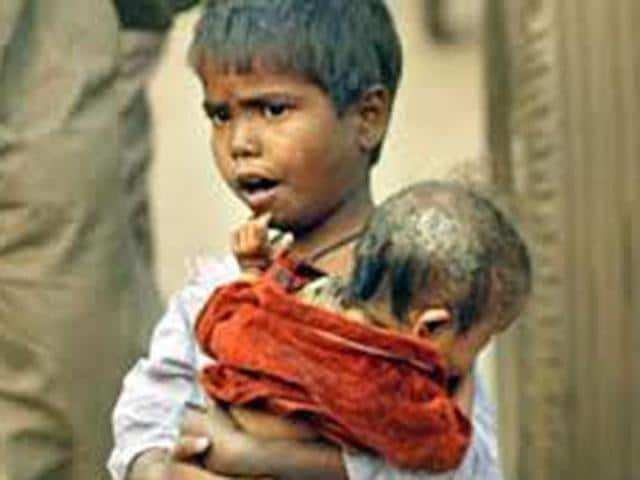
“Two children were rescued while they were begging in Sector 19, Chandigarh, in a joint initiative by UTCPS (UT Child Protection Society) and WCHL (Women and Child Helpline). During a counselling session, the children revealed that a person by the name of ‘Bengali’ used to make them beg and then in the evening used to snatch the money and also give them fluid to smell and something to drink, which used to make the children feel intoxicated…” said the FB post, put up at 11.01pm on Saturday.
“Ever since, the DCPO (district child protection officer), Chandigarh, and staff of the (shelter) home (where the kids are kept) have been getting calls to drop the case and restore the children (to their parents). There is pressure from local politicians, police personnel on both the parents and the staff to hush up the case,” it added.
When contacted, DCPO Umesh Pandey explained that the kids lived with their families, who had small jobs, in Sanjay Colony slum in Industrial Area, and ‘Bengali’, the alleged handler, was also learnt to be a minor (aged 14 or 15) from the same area.
“I have been getting calls from policemen, from other high offices, and also politicians, including a senior councillor,” he said, claiming that, “There appears to be a larger racket behind it, and only the police can now crack that.”
It was on March 7 that the children were rescued, Pandey said, and the Sector-19 police station was approached for an FIR on March 10.
On March 21, Pandey went to the police station but his requests were not heeded, he alleged.
According to the Juvenile Justice Act, if the committee suspects such a case, the police need to act immediately.
The frustration was also apparent in the Facebook post on social activist Neil Roberts-led committee’s page: “The children have not been attending school for the past one year and the home and their familiar environment seem to be unsafe. This is Chandigarh […] I cannot even imagine other places. But we will continue to fight the good fight…”
In the latest from the police side, Pandey and the panel have got an appointment with senior superintendent of police (SSP) Sukhchain Singh Gill for Monday.
Meanwhile, as the CWC has magisterial powers to decide on the future course of action in regard to the kids, a social inquiry report as per the rules is scheduled to be submitted on Tuesday, Roberts said.
Future action on the fate of the children, per se, would be taken on that basis as well as depending on what the police do.
Sources in the social welfare department said the parents, who were labourers, were initially in favour of a rehab and schooling plan for the kids and even shared who ‘Bengali’ was; but later said they knew no ‘Bengali’.
There was similar delay in January when the CWC found information regarding child trafficking after three beggars, natives of Jharkhand, were rescued in the city. A Hallomajra-based woman was eventually arrested as she allegedly paid the parents to use the kids. That case is on.


