
 E-Paper



Chandigarh admn bungled as Covid cases surged in September
Centre’s expert panel that visited city last month found glaring shortcomings in contact tracing among other issues

 Prefer HTon Google


As the Covid-19 pandemic surged in Chandigarh in September, the UT administration was not able to get in touch with those testing positive within 24 hours of reporting, which further delayed contact tracing.
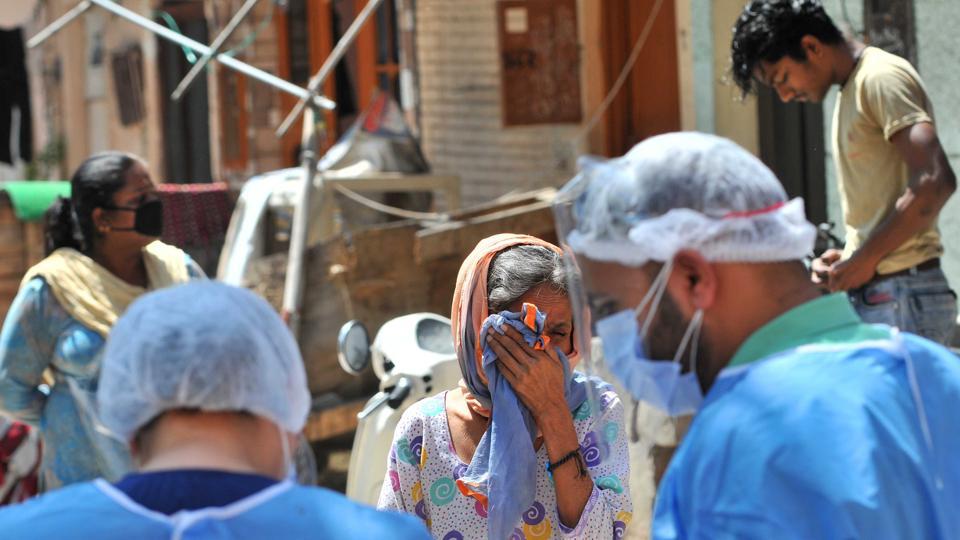
This along with many other issues was highlighted by a team of two experts deputed by the central government in early September to find gaps and assist the local administration in dealing with the pandemic.
Last month saw a major surge in infection, with the record being set on September 13 (449 cases) while the highest number of active cases (3,171) was reported on September 16.
Though the number of cases started declining in the last couple of weeks, the month accounted for 61% (7,266) of the cases reported between March 18 (first case) and September 30. Also, in comparison to 41 deaths in August, Chandigarh witnessed 106 deaths in September.
The central team observed that initially in the zones where there were less number of cases or during the initial phases of the epidemic, the authorities were able to contact all positive cases in 24 hours.
However, as the cases were surging, not all patients were being contacted within 24 hours of reporting, and this also resulted in delayed testing of their household contacts. Some positive patients even complained that the health department did not contact them and they didn’t even know whom to contact in case of any problem.
The experts also found that asymptomatic household contacts were being tested the very next day (after exposure), resulting in negative results in many instances, and contacts were developing symptoms at a later date.
Negative reports tend to give false reassurance to those tested, and mixing of these asymptomatic cases after the end of the quarantine period could also lead to spread of the disease, the team had observed.
Testing issues at GMCH, PGI
Also, the testing capacity at the government’s tertiary level hospital was only 150 a day, which led to a huge backlog.
“The RT-PCR testing capacity of Government Medical College and Hospital, Sector 32, was only about 150 samples a day, which was hindering testing of household contacts. There was a huge backlog of testing of household contacts in the south zone, because of a large number of positive cases and limited testing capacity of GMCH,” the committee noted.
Also, the non availability of rapid antigen testing at the PGIMER Emergency led to intermixing of positive and negative cases for a period of at least 10-12 hours, which is an average turnaround time for RT-PCR results, it was observed. The PGIMER has since started rapid antigen testing in the Emergency.
Covid care facilities poorly managed
When it comes to Covid care, the facilities are categorised into three levels. Level-1 is for asymptomatic or mildly symptomatic patients, Level 2 is for mild to moderately symptomatic cases, and Level 3 is for critical patients needing ICU or ventilator, including pregnant and aged patients.
The expert committee found that the Level-2 centre at GMCH had cases that could be stepped down to Level 1 and cases in Level-3 centre at the civil hospital in Sector 48 could be managed at a Level-2 facility.
“Covid hospital was being burdened with asymptomatic stable patients but requiring treatment for non-Covid problems, which can be easily handled at Level-2 centres,” the report further stated.
It was also observed that Covid care centres maintained by the UT health department were better managed as compared to those maintained by GMCH.
‘Need for more such studies’
The detailed report was procured under the Right to Information (RTI) Act by RK Garg, president of Second Innings Association.
He said the two-member team was the only one that made on-the-spot study and was able to find out the details. “More such teams should be deployed once again to assess the prevailing situation, and to see if recommendations have been implemented and are working perfectly,” he said.
UT adviser Manoj Parida said: “We have gone through all suggestions made by the central team, and all departments involved in Covid-19 management in Chandigarh are complying with them. Various indicators, such as recovery rate and fatality rate, have improved due to steps taken by the administration.”
As reported recently, the doubling time of new Covid-19 cases in the city has improved to 130 days from 19 days in mid-September. A higher number suggests slowdown in spread of infection .
However, cases per million in Chandigarh stand at 11,519, double the national average of 5,621.
Other issues
Duplication of work as three different departments (SDM, MC and health) chased for the same information from patients.
Though positive patients were being contacted, the negative reports were not being provided to people, leading to confusion.
Active surveillance on daily basis not being carried out in containment zones. In some buffer zones, thermal scanners and sanitisers were not present at the entry and exit points.


