Chandigarh: ‘Walls on rent’ reflect failure of drives in rehri markets
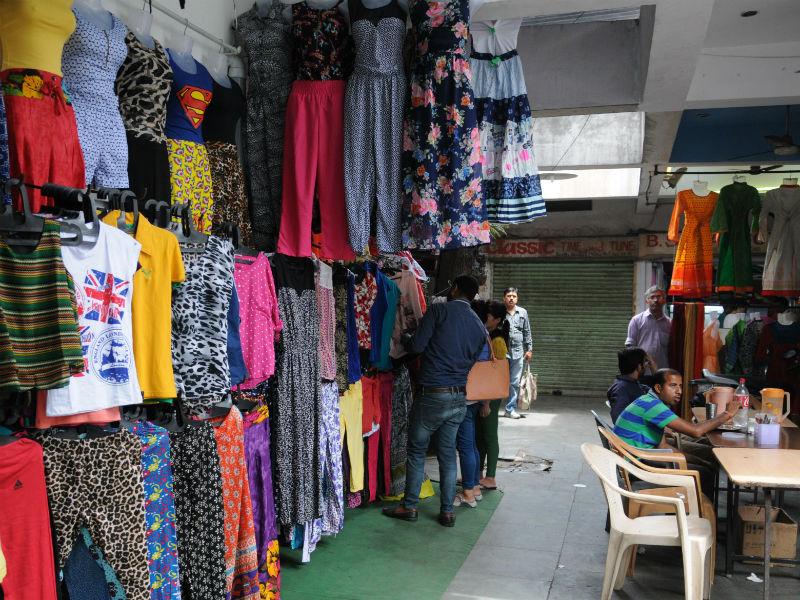
Not giving two hoots about the authorities’ claims of anti-encroachment drives, traders in the rehri markets of the city continue to violate norms, so much so that even walls have been rented out at up to Rs 30,000 a month!

A visit by HT revealed the pathetic situation barely 10 days after a “month-long special drive” conducted by the municipal corporation (MC), and also the threat of misuse notices by the Estate Office. Last month, the enforcement wing of the MC had carried out periodic drives in Sector 22 and issued 40 challans too. But as of Tuesday, it was business as usual.
Corridors were again used for displaying wares, while the peripheral wall of the market too had the ‘shops on the wall’. Kashmira Singh, superintendent of the enforcement wing of the MC, did not take calls when HT sought to know the action plan ahead, particularly since the administration, using a large number of MC staff, had recently targeted encroachments and violations in a prime lane of Sector 17.
An enforcement official in the estate office, not authorised to speak with the media, claimed that their men along with those from the MC had been deputed for several checks a day in Sector 22 in the last month. “But even then, the situation used to go back to square one as soon as we left even for a break,” he acknowledged.
The situation is not very different in Sector 19.
Meanwhile, reflecting the state of affairs, the trend of renting out walls has spread to Sector 15 over the past few months. This has been a practice at Shastri Market in Sector 22 for years.
“The rent is collected on daily basis, as the shop owner does not want to lose money in case of enforcement action removing the wares on the rented-out wall,” said a dhaba owner in the Sector-15 market.
ABOUT THE AUTHORAarish ChhabraAarish Chhabra is an Associate Editor with the Hindustan Times online team, writing news reports and explanatory articles, besides overseeing coverage for the website. His career spans nearly two decades across India's most respected newsrooms in print, digital, and broadcast. He has reported, written, and edited across formats — from breaking news and live election coverage, to analytical long-reads and cultural commentary — building a body of work that reflects both editorial rigour and a deep curiosity about the society he writes for. Aarish studied English literature, sociology and history, besides journalism, at Panjab University, Chandigarh, and started his career in that city, eventually moving to Delhi. He is also the author of ‘The Big Small Town: How Life Looks from Chandigarh’, a collection of critical essays originally serialised as a weekly column in the Hindustan Times, examining the culture and politics of a city that is far more than its famous architecture — and, in doing so, holding up a mirror to modern India. In stints at the BBC, The Indian Express, NDTV, and Jagran New Media, he worked across formats and languages; mainly English, also Hindi and Punjabi. He was part of the crack team for the BBC Explainer project replicated across the world by the broadcaster. At Jagran, he developed editorial guides and trained journalists on integrity and content quality. He has also worked at the intersection of journalism and education. At the Indian School of Business (ISB), Hyderabad, he developed a website that simplified academic research in management. At Bennett University's Times School of Media in Noida, he taught students the craft of digital journalism: from newsgathering and writing, to social media strategy and video storytelling. Having moved from a small town to a bigger town to a mega city for education and work, his intellectual passions lie at the intersection of society, politics, and popular culture — a perspective that informs both his writing and his view of the world. When not working, he is constantly reading long-form journalism or watching brainrot content, sometimes both at the same time.Read More

E-Paper