
 E-Paper



October gone by was warmest in six years in Chandigarh
The weatherman attributed it to more sunny days and improved air quality

 Prefer HTon Google


Even as there is a nip in the air with winter knocking on the door, the October gone by was warmest in the past at least six years.

According to data readily available with India Meteorological Department, average maximum temperature in Chandigarh in October was 33.7°C, highest in the past six years. The weatherman attributed it to more sunny days and improved air quality.
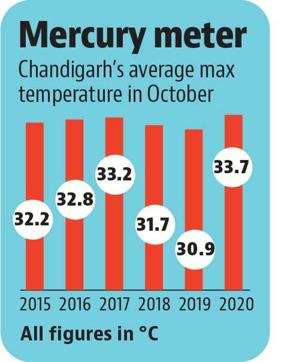
“The higher maximum temperature this year can be attributed to more sunny days during the month. Cloud cover remained scanty and we had bright sunny days almost every day,” said IMD, Chandigarh, director Surender Paul. “The comparatively improved air quality also had a role to play. Pollutants in the air, especially particulate matter, reflect sunlight, which is why smog can reduce the temperature. The cleaner air this year led to more sunlight reaching the surface and thus higher temperatures during the day.”
The month also remained dry, with no rain recorded on any of the days, as both western disturbances and low-level easterly winds, which cause light showers during October, remaining elusive this year.
Mercury to plunge post Diwali
October’s average minimum temperature of 17.6°C was a notch below that recorded in previous years. After Diwali on November 14, it is expected to drop below 10°C.
Minimum temperature on Monday went down to 12.5°C from Sunday’s 13.6°C . Even maximum temperature fell to 29.5°C from 30.5°C, dropping below the 30°C mark for the first time since the end of monsoon. In the next three days, the maximum and minimum will remain around 29 and 13 degrees, respectively.
Meanwhile, the air quality index (AQI) continues to remain between 110 and 130 according to the monitoring station in Sector 25, much lower than 280 recorded on November 2 last year. With no rain likely in the first two weeks of November, it is expected to go up after Diwali.
The IMD has predicted an “average winter” this season, with the peak period likely to start towards the year end.


