
 E-Paper



PGIMER puts plan in place for suspected patients with no travel, contact history
To admit patients exhibiting symptoms of Severe Acute Respiratory Infection (SARI), which are similar to those of coronavirus disease, after scoring them based on their symptoms


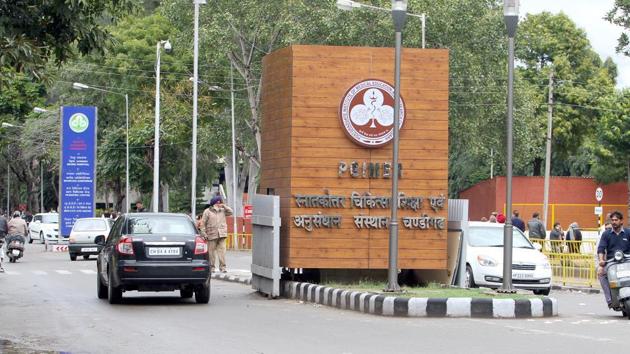
The Post Graduate Institute of Medical Education and Research (PGIMER) has put in place a protocol to admit patients exhibiting symptoms of Severe Acute Respiratory Infection (SARI), which are similar to those of coronavirus disease, but with no established link with positive Covid-19 patients.
SARI is an acute respiratory illness of recent onset (within seven days) with symptoms like fever, cough and shortness of breath or difficulty in breathing requiring hospitalisation.
The protocol is in line with national guidelines for Covid-19 testing, which along with symptomatic foreign returnees and their high-risk contacts, also cover people with SARI.
For this, the emergency wing’s area 22 has been converted into a dedicated SARI ward. The area also includes two orthopaedic wards and three operation theaters.
“There has been difficulty in screening patients with no travel or contact history. So we have established a SARI ward, where we will admit patients according to the PGI SARI Scoring Scale and test for common etiology of acute viral pneumonias,” the protocol report states.
HOW IT WORKS
The SARI scale (with scores up to 8) will shortlist a patient for Covid-19 testing based on their symptoms and X-rays.
The patients will be scored for fever, shortness of breath, cough, high-risk individuals, SpO2 level (amount of oxygen in the blood) and chest X-ray.
The high-risk individuals include patients aged above 60, pregnant women, and persons with diabetes, cardiovascular diseases, chronic lung disorders and history of steroid use.
If the SARI scale count is above 5, the patient will be admitted and tested for H1N1 and Covid-19, and admitted in the exclusive Covid facility if tested positive for it.
If the scale count is between 2 and 4, a chest X-ray will be conducted to determine if the patient requires Covid testing, and if the count is 1 or below, the patient will be evaluated for other cardio-respiratory diseases.
So far, at least two patients, who had exhibited SARI symptoms, have died in the emergency ward of the institute and later tested positive for Covid-19. Due to no travel or contact history, the patients were not suspected for the infectious disease at the early stage. Among the two patients was a 69-year-old man from Mohali district’s Nayagaon town, and a 70-year-old Delhi woman, who was staying at a guest house in Solan, Himachal Pradesh.
FOR NOW, NO PLANS FOR ANTIBODY TESTING: UT
The UT health department has no plans to introduce rapid antibody-based blood testing for deducing Covid-19 patients in the city for now.
Unlike the reverse transcription-polymerase chain reaction (RT-PCR) test that detects the virus’s genetic material (RNA) in throat and nasal swabs to diagnose a current Covid-19 infection, rapid antibody tests indicate if a person has been infected in the past and has developed immunity to the virus.
UT adviser Manoj Parida said that introducing this test depends on the number of cases and their location. “If the cases are localised then we will adopt the procedure,” Parida said. So far, Chandigarh has recorded 18 cases of Covid-19, out of which seven have been treated.
Another senior UT official, wishing not to be named, said that the Indian Council of Medical Research (ICMR) has advised that rapid antibody testing should be introduced if a high number of cases from a particular geographical area is reported. So far, there has been no such instance in the city, he said. A simple blood test (using a finger prick) that takes 15-20 minutes to give results identifies people who were infected at least a week before the test, and also those who were infected but never diagnosed, helping map undetected infections and giving the correct extent of the spread.
Director health service Dr G Diwan said the administration is waiting for guidelines from the Government of India on antibody rapid testing.


