
 E-Paper



Residue to riches: Stubble no trouble for Punjab’s change agents
Every year, environmentally-sound disposal of paddy residue turns into a point of discord. As the issues boils over, there are always people who offer workable, green solutions.

 Prefer HTon Google


Every year, environmentally-sound disposal of paddy residue turns into a point of discord. As the issues boils over, there are always people who offer workable, green solutions. HT brings you some of these change-agents, who have built-up profitable businesses, where everybody saw trouble.
Green concern at heart of big plan
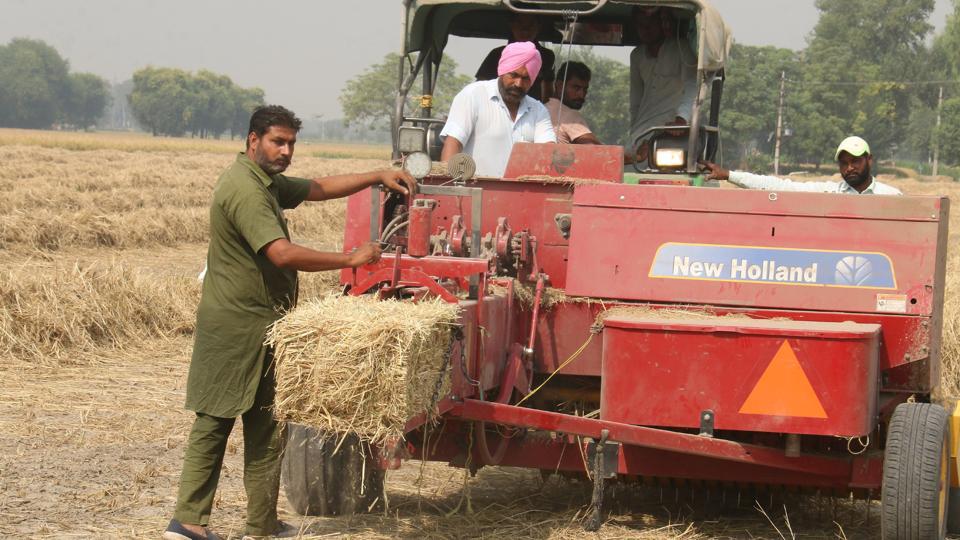
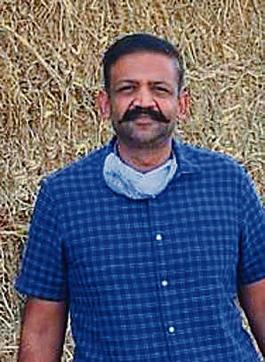
A visit to Amloh, an industrial town in Fatehgarh Sahib, will showcase a simple, unique solution. Industrialist Han Raj Garg, 38, an MBA, thought of using paddy straw as fuel in his factory in 2014, and the idea has clicked. Farmers earned more (some even earned in lakhs by making bales of straw for Garg) and Amloh has the lowest number of farm fire incidents in Punjab today.
“My concern for environment and farmers led me to monetise straw,” said Garg, whose units manufacture edible oils under the name, Shree Ganesh Edibles Pvt Limited.
Garg added there was no-cost effective in-situ (without transport) stubble management formula as yet. Farmers will shun the illegal practice of burning, if they get money for handling straw.
“In 2014, I started with 25,000-tonne of paddy straw. For the past three years, I am purchasing 72,000 tonne of stubble and paid Rs 11 crore to farmers.”
“In 2019, the Supreme Court ordered Rs 100 per quintal as compensation for farmers for handling straw. I have been doing it since 2014,” he says, adding that nearly 1,000 farmers directly or indirectly (mostly marginal) collect straw from other farmers’ fields. “I know a farmer who collected paddy straw from 3,000 acre in 2019 and made a profit of Rs 30 lakh,” Garg added.
“For six years, I am not selling straw from my own fields, but collecting from neighouring fields. Who will burn paddy straw when you will Rs 100 per quintal for it?,” said Harinder Singh, a farmer.
Garg added that the major issue in using paddy straw as fuel was its silica content, which led to a snag in industrial boilers. “With research, plus experience, we have been running our factory on rice straw for seven years. For the past two years, we have been supplying 0.5 MW power to the Punjab State Power Corporation Limited,” he said.
“Our process is environment-friendly in two ways. We don’t use fossil fuels in factory and are also resolving the unregulated burning of agricultural waste, that causes air pollution,” he said.
“If the government supports me, I can invest more and will purchase stubble from the 1.08 lakh acre under paddy in Fatehgarh Sahib district. Government officials, however, are not receptive and not allowing me to run a 15MW co-gen plant for factory on rice straw, even as a proposal has been submitted,” he says. —VISHAL RAMBANI
Progressive farmer Sukbir Singh Dhaliwal, 46, is scripting a success story with his venture that converts crop waste into products that can be used as fuel in industries. Dhaliwal and some of his friends began the start-up, Farm2Energy, in 2016 to convert paddy stubble into bio-coal. Bio-coal is a carbon-neutral fuel that can replace ordinary coal in industrial processes.
Last year, he and fellow entrepreneurs Kamaljeet Singh, Sandeep Singh Shergill and Preet Singh Chandoke lifted stubble residue from 20,000 acre.
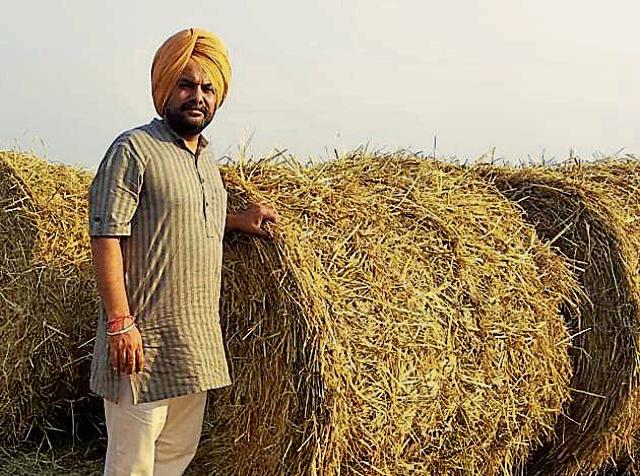
Over the past four years, they have also set up a pellet-making factory in Khanna. “Not only paddy residue, our unit processes paddy straw, corn stover, sugarcane trash and wheat straw and supplies it to biofuel, bio-power and bio-based industries. We also help farmers in managing biomass,” said Dhaliwal. “The industry has huge potential, as the world is progressing towards cleaner energy solutions,” he claimed.
“The automobile industry is concentrating on Compressed Natural Gas (CNG), and stubble can be used to make it. Due to the lack of any government initiative, such ventures are not coming up. We are sitting on a gold-mine of opportunities. We are burning it away and polluting the environment. Farmers cannot be blamed as they have limited resources,” added Dhaliwal.
This year, the chances of him getting the raw material are bleak. Many farmers who had converted to crop residue management have yet again cleared their fields by burning. The majority of the farmers are either protesting on railway tracks or selling the crop in mandis, triggering labour shortage. “We are facing problems in collecting residue as farmers are angry,” added Dhaliwal. —MOHIT KHANNA
‘Lucrative, eco-friendly way to earn money’
When Hardeep Singh, 48, a farmer of Sathiala village in Baba Bakala subdivision, decided to sell his stubble to a sugar mill as opposed to setting it alight, little did he know that it would soon become a lucrative business opportunity, harvesting a handsome dividend of ₹5 lakh per season.
The entrepreneur, who owns 10 acre of agricultural land, says, “In 2016, I used a baler machine to manage my stubble for the first time and sold the residue to a sugar mill. Before that I used to burn crop residue, the same as other farmers. The mill paid me a decent sum and I saw a business opportunity. I started managing stubble for other farmers in my village and selling it to cardboard-making firms and sugar mills in the state.”

Hardeep says, “Private firms pay us ₹130 per quintal of stubble and we are able to extract around 24 quintal from one acre. We manage the stubble in the form of squares, weighing 20kg a piece.”
“Earlier, I had one baler machine attached to a single tractor, now I have two. With two balers and four tractors, I have been managing stubble over 1,000 acre,” Hardeep says. A baler is used to compress stubble into compact bales that are easy to handle, transport and store.
Hardeep charges ₹1,000 per acre from the farmers for management and transportation of crop residue. He employs 45 labourers for management and transportation of stubble and has six tractor-trailers for transportation. “Sometimes, we help poor farmers free of charge,” says Hardeep, adding that the business is both lucrative and environment-friendly. Daljit Singh, a farmer of Gurdaspur district, says farmers spend around ₹2,500 per acre on stubble
Hardeep has applied for subsidy for purchasing more balers, but he has, so far, not been granted the same by the agriculture department. – ANIL SHARMA
‘Business expansion can curb stubble burning’
For farmer Gurshiwender Singh, 38, management of paddy waste turned out to be a golden opportunity for enhancing his income. Last year, he earned ₹31 lakh in around 50 days by selling stubble to a biomass generation plant.
Gurshiwender, of Mehma Sawai village, around 35km from district headquarters, says he sells organic waste to a private biomass generation plant at Sedha Singh Wala village and made a profit of ₹7 lakh in 2019.
“After Sukhbir Agro Energy Limited set up a biomass energy generation plant in Bathinda in 2017, I invested in one baler, which cost ₹15 lakh and availed a 40% subsidy. Now, I have two bailers and six tractors and collect paddy straw from Mehma Sawai and three other adjoining villages. The biomass plant management pays ₹130 per quintal. Last year, I had supplied 24,000 quintal of dried crop waste,” says Gurshiwender. He supervises stubble management over 8 acre.
“The technology is inexpensive and farmers have to pay a nominal price for safe disposal of crop residue. The government should promote multiple biomass plants in each district to eradicate stubble burning,” he says.
Gurshiwender’s family owns six acre and he cultivates rice over another 10 acre of leased land, employing 100 people.
He adds, “Unfortunately, a section of paddy growers continue to burn stubble. I charge ₹500 per acre, the same amount that a farmer pays to a straw-reaper operator and for setting crop residue on fire. The agrarian community is aware that burning stubble damages the microorganisms present in the upper layers of the soil.” —Vishal Joshi
Farmer-turned-entrepreneur for five years
For Nakodar farmer, Kewal Singh, the leap from a farmer to an entrepreneur was driven by a concern for environment and to do something for the worsening pollution.
Kewal set up a 6MW capacity bio-mass-based power plant Green Planet Energy Pvt Ltd production unit at Bir village in 2015. The model was simple, he purchased stubble from fellow farmers, used it to generate electricity and sell it to Punjab State Power Corporation Limited (PSPCL). He soon got 15 baler machines that visit farmers’ fields to get the straw in order.
“All my machines have been at work for 24 hours of day for the past month. The plant has the capacity of 75,000 tonne of paddy straw,” said Kewal, adding he earns handsome profit each season.
“On an average, a machine generates 3 tonne paddy straw and I pay Rs 1,350 per tonne to a farmer,” Kewal added.

Joga Singh from Tut Kalan village in Jalandhar said he had been selling 4-5 tonne of paddy straw to the electricity generation plant and getting Rs 135 per quintal for straw bales.
Another farmer, Sukhdev Singh from Talhan village, said he along with five other farmers, purchased baler machines last year after the state government provided them subsidy.
“We have been selling the stubble to the unit and earning enough profit, while this process has also led to increased fertility in the soil,” said Sukhdev. District agriculture officer Naresh Gulati said a machine with a baler lines up the scattered straw/stubble for bales to be easily made. — JATINDER MAHAL


