
 E-Paper



Number of vehicles double in Bengaluru since 2015 but road network stays stagnant
Bengaluru faced a traffic nightmare as its road network stagnated at 13,000 km, while vehicle registrations soared, doubling in a decade.

 Prefer HTon Google


Even as the city’s boundaries keep stretching outward and planners repeatedly revise growth blueprints, Bengaluru’s road network has barely grown, remaining stuck at roughly 13,000 km for nearly a decade. However, during the same period, the number of vehicles on these roads has almost doubled, while public transport capacity has seen little to no expansion.
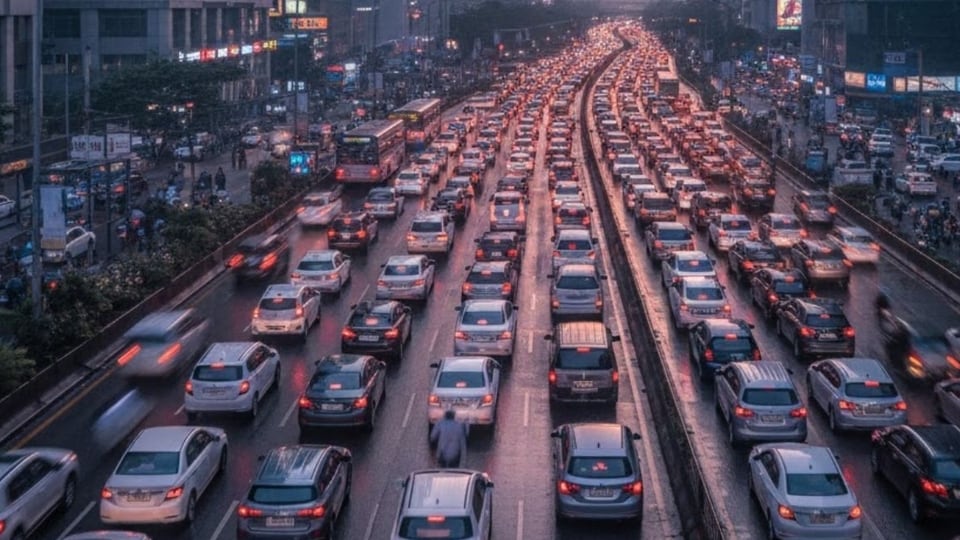
The mismatch between growth and infrastructure is increasingly visible, with traffic slowing to a near standstill across large parts of the city on most days, The Times of India reported.
ALSO READ | FIR against 22 students, outsider for ragging juniors, assaulting staff in Bengaluru college
Vehicle registrations almost doubled in past decade
Data from the transport department revealed a sharp surge in vehicle registrations, from 64.4 lakh in March 2015 to over 1.23 crore by December 2025, marking an increase of nearly 90 per cent. On average, about 1,500 new vehicles are added to the city every day, steadily intensifying congestion.
ALSO READ | Bengaluru man surprised to learn Rapido driver owns 2BHK flat, works at international firm: 'This is crazy'
The pace of new registrations is expected to accelerate further this financial year, driven in part by GST-related incentives, the report stated.
Early signs of this spike were seen in October, when an average of 2,700 vehicles were registered daily. December 2025 followed a similar pattern, with 53,398 vehicles added in a single month, roughly 1,722 every day, far above the usual trend.
Private vehicles account for the overwhelming majority of this growth. Of Bengaluru’s total vehicle population, more than 1.1 crore are privately owned. Two-wheelers form the largest segment, with their numbers more than doubling over the decade, from 41.8 lakh to 84.6 lakh. Car ownership has also surged, rising from 14.2 lakh to nearly 24.4 lakh in the same period, the report noted.
ALSO READ | Man flags ‘Bengaluru virus’ of autopilot living despite 30 to 40 LPA salaries: ‘We are just buffering’
Transport officials and mobility experts said that the core issue lies in the slow expansion of public transport. The city currently has just 96 km of operational Metro corridors with 83 stations, while the BMTC bus fleet has stagnated at around 7,000 buses, a number widely considered inadequate for a city of Bengaluru’s scale and density.


