E-Paper



Black Fungus treating injections led to adverse reactions in MP, stopped
Doctors said the patients showing adverse reaction to the injection complained of fever, vomiting, chills and fluctuation in blood pressure.

 Prefer HTon Google


Madhya Pradesh government has stopped the use of Amphotericin B injections of a particular batch after 77 Mucormycosis infected patients in Sagar and Jabalpur districts suffered serious reactions following its administration, said a health department official. Amphotericin-B is used for treating patients suffering from severe mucormycosis or black fungus infections.
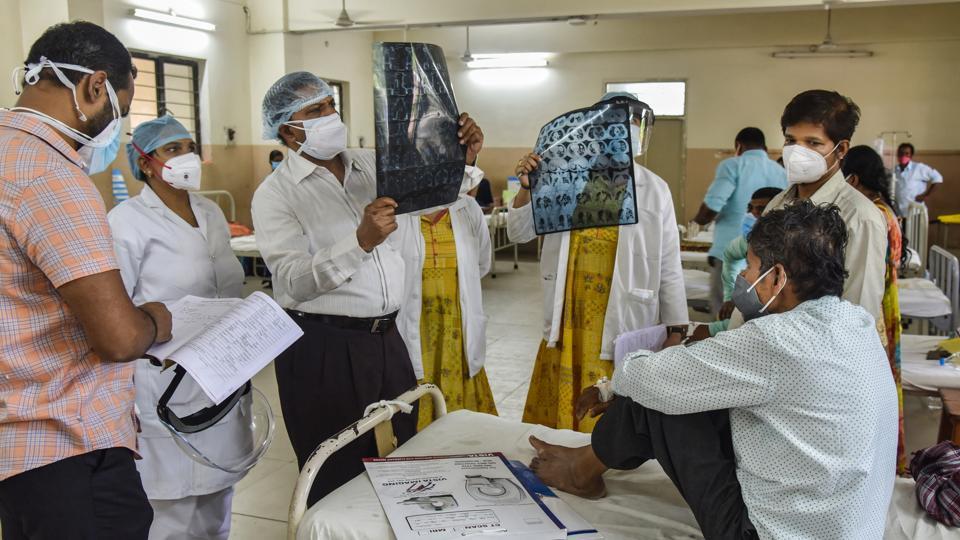
The injections in question were supplied to two government hospitals in Sagar and Jabalpur district on Friday. Adverse reactions were first reported among 27 patients at Bundelkhand Medical College on Saturday night and among 50 patients at Netaji Subhash Chandra (NSC) Medical College in Jabalpur on Sunday. Hospital staff said patients fell ill a few minutes after Amphotericin B injection was administered to them, said the official, who didn’t wish to be named. He confirmed that all these injections were manufactured by the same company and belonged to one batch.
“The patients showing adverse reaction to the injection complained of fever, vomiting, chills and fluctuation in blood pressure and were finally stabilised through symptomatic treatment,” said Dr Umesh Patel, public relation officer of Bundelkhand Medical College.
Head of ENT (Ear, Nose, Throat) department at the NSC Medical College in Jabalpur, Kavita Sachdeva said, “We came to know that patients at BMC Sagar fell ill after an injection was given to them on Sunday. We immediately stopped the use of the antifungal injections, but [by then] about 60 patients had already [been] given the dose. Out of them, 50 complained of chills, fever, breathlessness and nausea. We started their timely treatment and all are in stable condition.”
The state government provided new injection vials to both medical colleges on Sunday night and ordered an inquiry into the reasons behind the adverse reactions, said medical education minister Vishwas Sarang.
With the rise in black fungus cases in the country, the demand for Amphotericin-B injections has shot up considerably. Several states have already started to witness its shortages. As per data available on Saturday, MP had 1,005 active patients of black fungus disease. CM Shivraj Singh Chouhan had also stated that there was no shortage of the injection, considered critical in saving lives of patients suffering from severe infection. Earlier last week on Tuesday, the Centre imposed curbs on its export to meet the domestic demand.
(with inputs from Anupam Pateriya)