
 E-Paper



11,400 devotees reach for Vaishno Devi pilgrimage, 71 travellers test positive
Last year, the shrine had been closed on March 18 and re-opened on August 16 after a hiatus of almost five months


The nine-day Navratri festival began on a cautious note in the wake of the pandemic as 11,400 pilgrims reached Katra, the base camp to the holy cave shrine of Vaishno Devi in Reasi district of Jammu and Kashmir, on Tuesday.
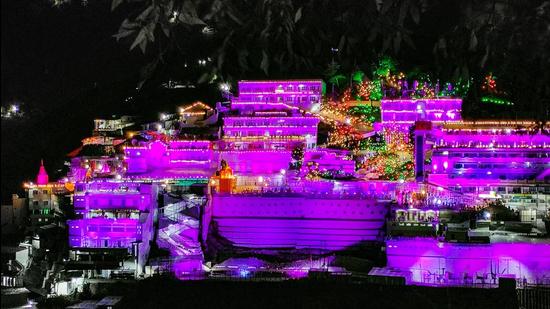
Earlier, around 25,000 to 30,000 pilgrims would throng the cave shrine per day. “From 5am to 6pm on Tuesday, 11,400 pilgrims had obtained yatra slips—4,400 offline and 7,000 online. The figures are significantly low as compared to the pre-pandemic time,”an official said.
Last year, the shrine had been closed on March 18 and re-opened on August 16 after a hiatus of almost five months. A health official said 71 travellers had tested positive in Katra on the first day of the festival.
“On Tuesday, we detected 85 new cases in Reasi, which included 71 travellers, 11 locals and two staff members. So far, 498 people have tested positive in Reasi,” he said.
The travellers who tested positive were either sent back in specially designed cabs to Pathankot or kept in isolation.
“Largely, travellers who tested positive preferred to return home, for which the administration has kept seven to eight cabs. For those, who choose to remain at Katra, the administration has the provision of paid quarantine in Katra and government quarantine at Panthal,” the official said.
Sources within shrine board said inviting devotional singers while the second wave of the pandemic is sweeping through the UT was irrational.
“Considering the surge in cases, the morning and evening aartis should have been left to the priests and singers of the shrine board,” they said.
At 5,200ft, the cave shrine is one of the holiest Hindu pilgrimages and devotees from all over the country and abroad visit the shrine on auspicious days.
The administration has fixed a ceiling of 25,000 pilgrims a day. Pilgrims arriving in trains to Katra will undergo rapid antigen tests (RATs) at the Katra railway station where Covid kiosks have been set up. Those arriving via road will undergo the test at Lakhanpur—the gateway to Jammu and Kashmir.
Local devotees will be tested at Banganga and flying in will be tested at the Jammu airport.
However, it is advisable for pilgrims coming from outside J&K to bring their Covid-19 negative reports, preferably RT-PCR test, not older than 72 hours. The cave shrine was visited by 13,089 pilgrims on April 11. Last year, in August, the figures had dipped to 7,253 and 27,427 in September before picking up momentum in October when 1,21,661 pilgrims visited the shrine followed by 1,03,749 devotees in November and 2,07,533 in December.
In January, 4,08,061 pilgrims had visited the shrine, 3,89,549 in February and in March the count was around 3.5 lakh.
Meanwhile, shat chandi maha yagya commenced at the cave shrine on first day of the festival amid chanting of vedic mantras and performance of other religious ceremonies. The maha yagya, which is being performed during navratras for peace, prosperity and health of humanity, will conclude with a purna ahuti on Ramanavami.
Board CEO Ramesh Kumar said elaborate arrangements have been made to facilitate the pilgrims who are expected to visit the holy cave shrine.


