
 E-Paper



75 years of Bhakra-Nangal train: Keeping the world of wooden coaches & vintage engines alive, one free ride at a time
Set up in 1948 to ferry heavy machinery and employees to the then under-construction Bhakra Dam, which brought electricity to millions of homes across five states, the Bhakra-Nangal train continues to offer free travel for all

 Prefer HTon Google


“Said to be the only train ferrying passengers for free in India,” reads a board welcoming passengers at the Bhakra Beas Management Board (BBMB) workshop station. Leave the job of invoking further curiosity to the old wooden coaches and vintage diesel engine. So, how far does one go to trace the origins? Roll back to 1948, the Indian government was faced with a tough task of ferrying heavy machinery and employees up the Shivaliks to the site of the then under-construction Bhakra Dam. That’s when the railway link, survey work for which had begun a couple of years ago, materialised. The rest, they say, is history.
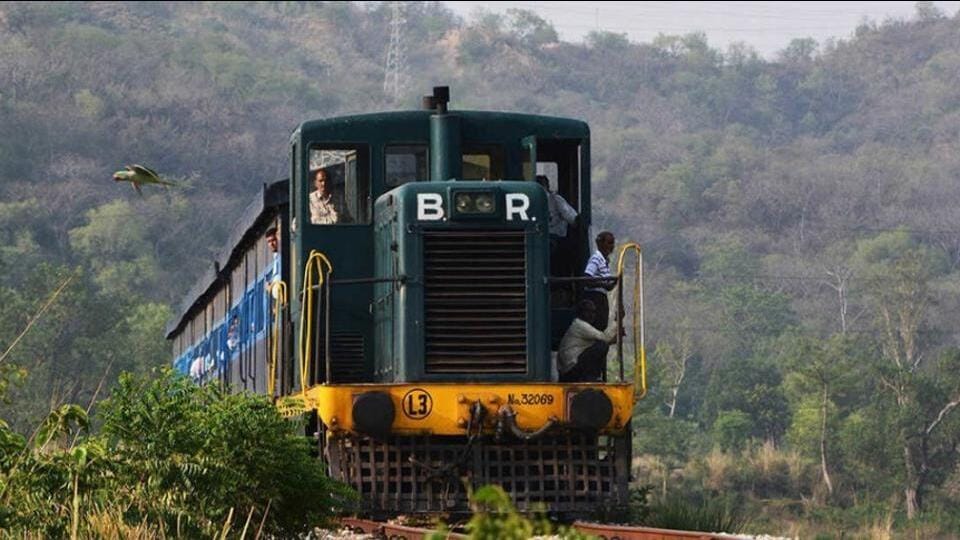
The project, which now celebrates its 75 years, has seen the train leave Nangal at 7.05 in the morning and 3.05 in the afternoon nearly every day without fail. Residents of the sleepy town would testify to as much. It traverses 27.3 km to-and-fro over its 30-minute trip through the scenic Shivaliks, two horse-shoe shaped tunnels and a 158.5-m high rail-cum-road bridge.
All while picking up and dropping off the odd 100-120 passengers — mostly residents of local villages and schoolchildren — at the stations of Labour Hut, Barmala, Nahla and Olinda. The last of the lot is where all non-BBMB employees get off as the train trots to its final stop, the Bhakra Dam.
Karachi, London & Pennsylvania stamps
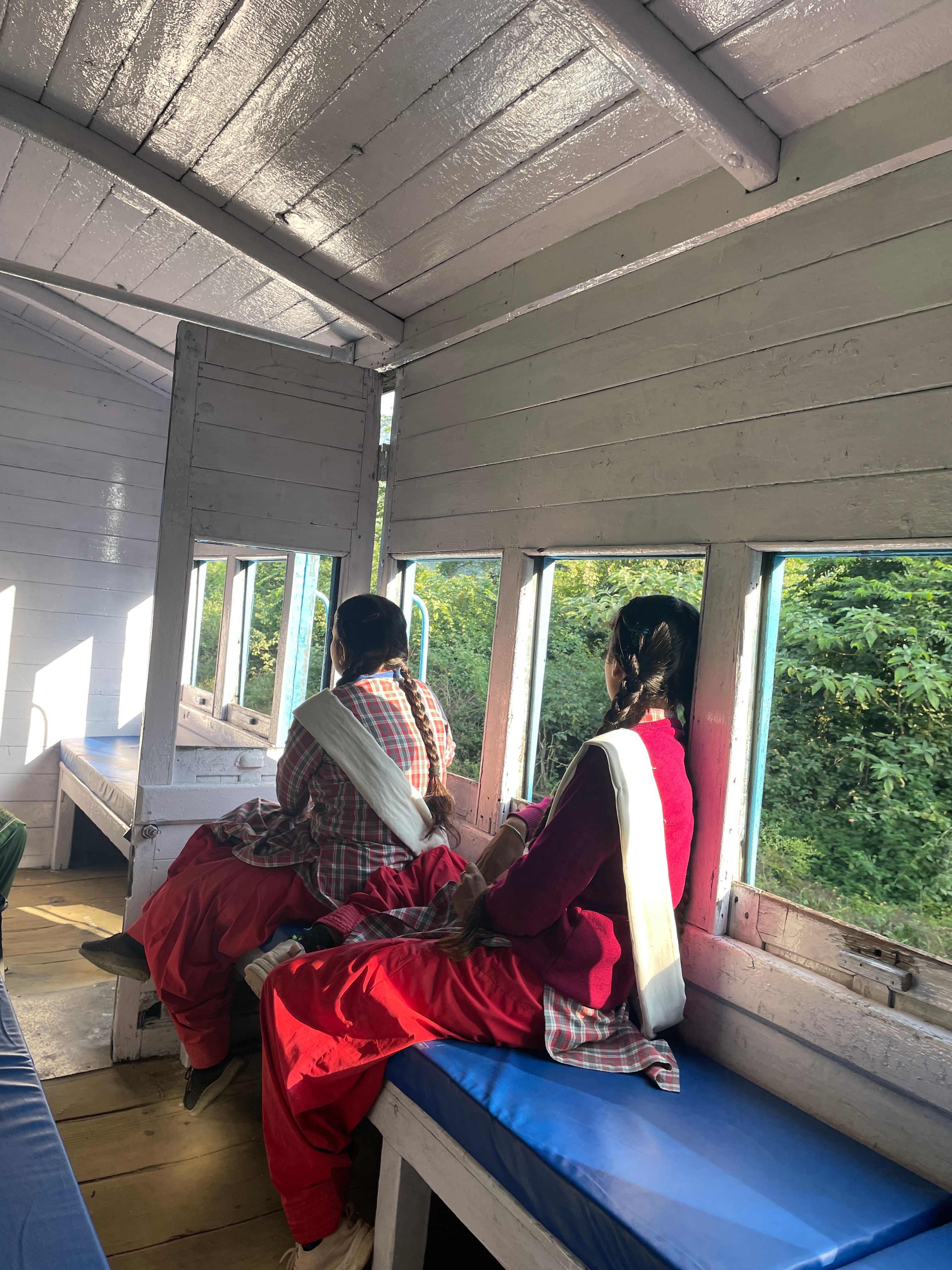
Once aboard the train, passengers can take a seat on the long beam-shaped benches in all-wooden coaches. The peculiar design dates traces its origin to Karachi, where the coaches were made by repurposing old Colonial furniture.
Chugging ahead is the vintage US-made (Pennsylvania) diesel engine that replaced the earlier steam variant in 1953. Don’t be fooled by the worn-out look on the old beast. Bearing the iconic stamp of the American MNC General Electric, the engine boasts of 400 horsepower.
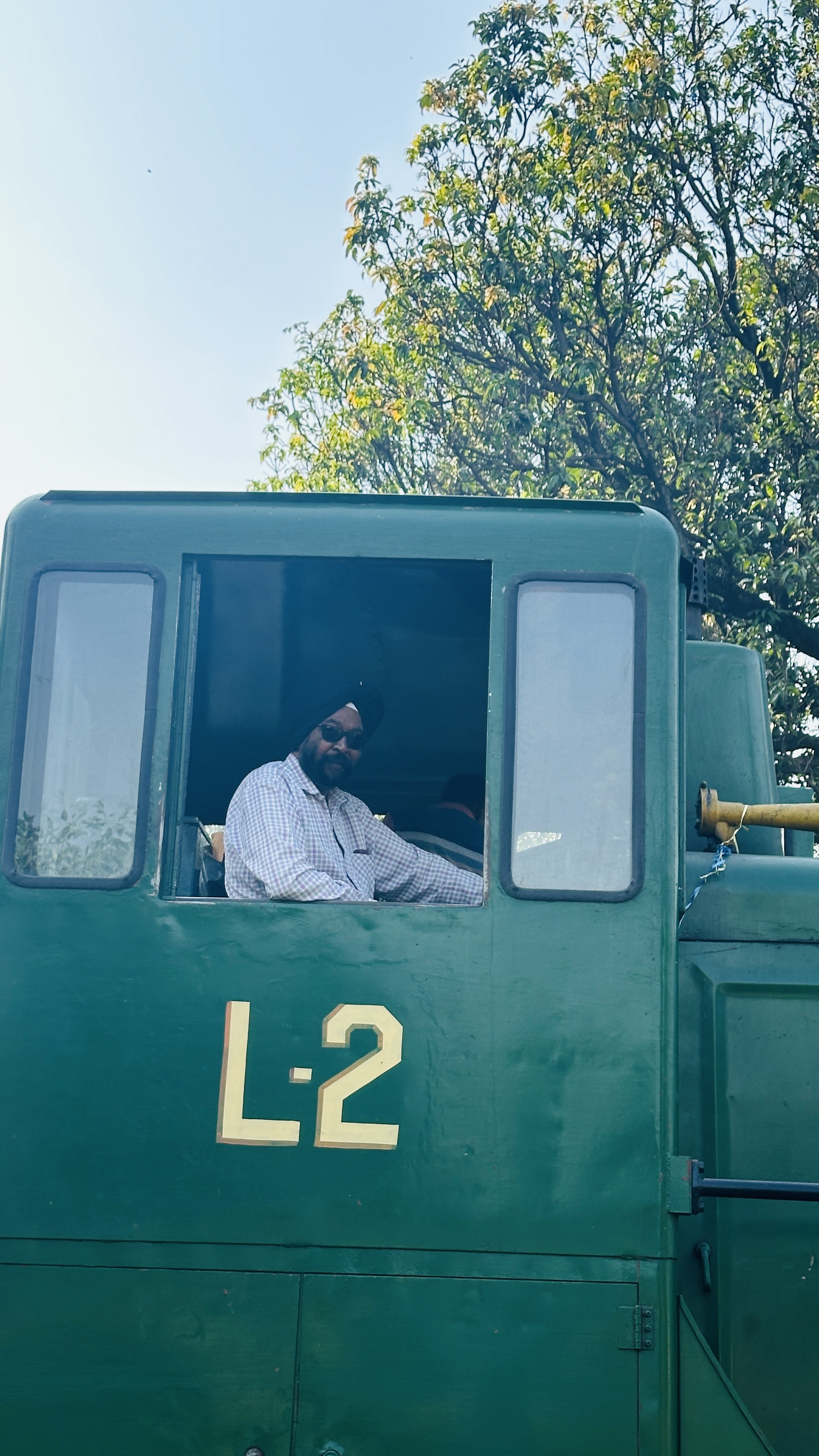
“We have three engines that alternate for duty. These are more than capable of pulling up to 9-10 coaches,” says the proud train operator Atma Ram.
All aboard
Over the 75 years of ferrying men, women and often their goats and bicycles, the train has come to hold a special place in the hearts of those who use it for their daily travel.
Schoolgirls Aarti and Shalu, who boarded the train at Olinda during the return journey, say, “We make sure to be on time to get a window seat for the best views of the Sutlej. If we miss it, it’s a long walk to our school in Nahla and that’s no fun.”
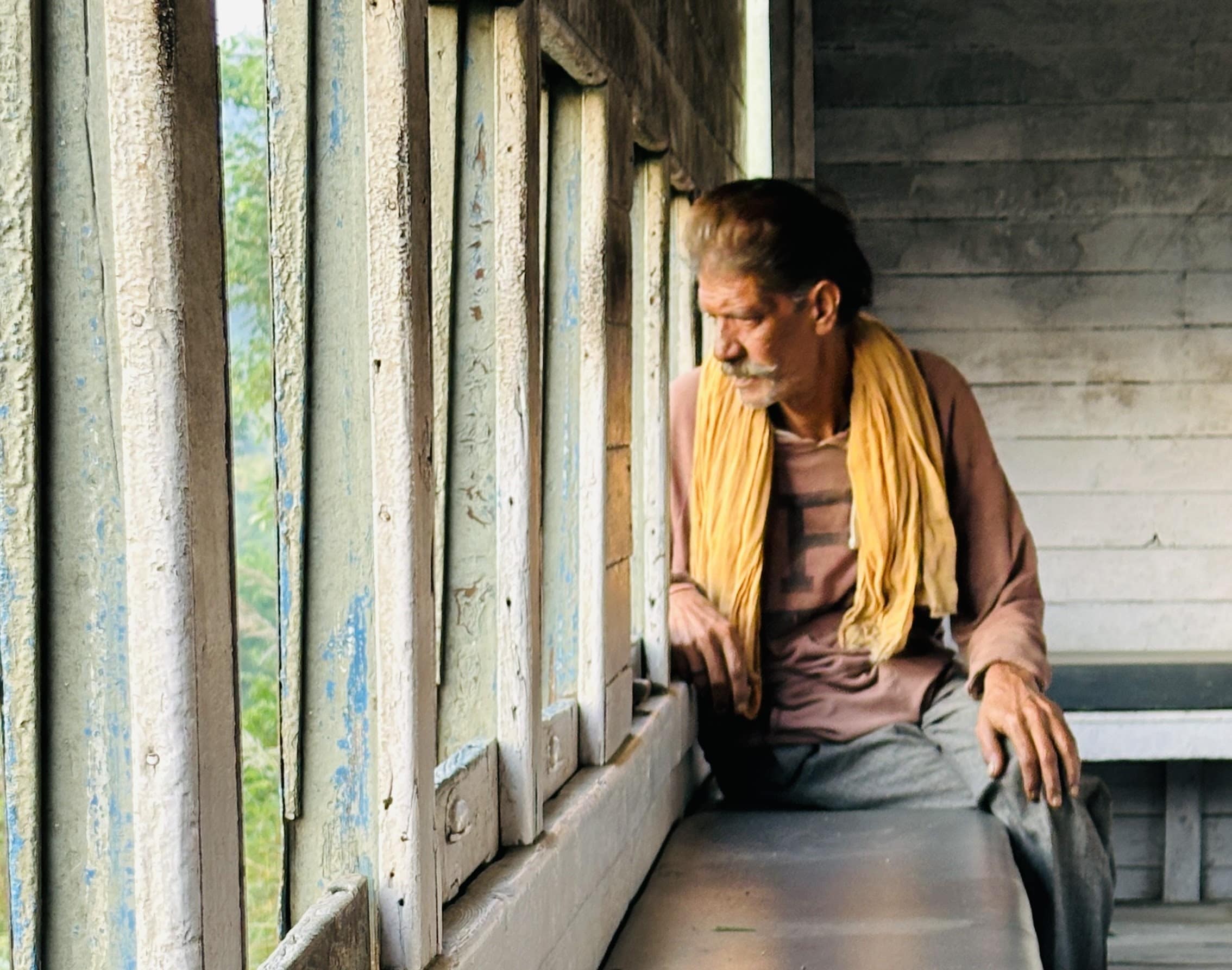
Rajan, a BBMB employee on board, has been travelling in the train for the past 27 years. Long enough for him to develop a deep enough connection with the traditions, he says, while standing guard with the conductor at the Olinda station to make sure all non-Bhakra employees get off.
Then there are the less-frequent travellers like Vaibhav, Vidushi, Neha and Anupama, who made the trip from Chandigarh for a leisure ride.
The memories, however, are just as vivid. Sulindra Rani, now in her 70s, recalls the time when her family would make the trip to Barmala from Nangal.
“My sons would go take a dip in the pond while we went for a walk. We would be back in time for them to get ready for school as the train was never off-schedule,” she says, with her face lit up.
Punctuality. That’s the other old-world quality that the train has kept alive. Sisters Neelam and Babita recall their mother, Sheela Rani, narrating tales of when she moved into their home in Nangal as a young bride after her marriage to armyman Rajinder Singh.
“She would tell us all about feeling out of place. But then every morning, at 7.05, as the train announced its arrival at the Labour Hut station with a whistle, she would have tea with her new family — something that developed into her own little tradition that made her feel at home,” they say, emphasising that the story is from a time sans wall clocks.
The ‘temple’ of New India
A BBMB finance committee had in 2011 suggested that the train, among other public utility services at Nangal, be shut down, citing the financial burden the free rides were costing them.
BBMB member irrigation MK Gupta, however, shot down the proposal, saying the services acted as a “lifeline” for the countless locals — many of whom had given up their homes and ancestral land to pave way for the Bhakra Dam project or the “temple of New India” as the then Prime Minister Jawaharlal Nehru liked to call it.
The ride has not always been smooth, as Atma Singh, the man who has been operating the train for the past 22 years, points out, “It is harder to find spare parts for the old diesel engines. Only the foremen who have been in service for years can fix the faults with stop-gap measures, but even that can only take us so far.”
“The BBMB takes care of the maintenance and some of the coaches got a fresh coat of paint recently. At the same time, one of the engines broke down recently so every day is a mixed bag,” says Sumit Saini, a supervisor at the workshop.
The owner of the Sharma Sweet Shop in Olinda adds, “Today, everyone has a bike or a car so they can travel at their own convenience. The number of employees travelling in the train has come down significantly, but there’s still those who make the trip and stop by for a cup of tea here every now and then.”
Looking at the odd group of youngsters coming from afar to document the train or just asking a curious question about its working, however, renews Atma Singh’s zeal. “It feels good to see that the work still holds meaning for so many,” he says while warming up the engine for yet another afternoon trip.


