
 E-Paper



A sip of serenity: Plans brew to take Kangra tea tourism forward, stakeholders bat for state policy
Production has plummeted in recent years and hovers around 9 to 10 lakh kg, down from 17 to 18 lakh kg produced a few decades ago


A growing number of visitors are now heading to tea estates in Himachal’s Kangra district, bolstering the nascent tea tourism that has only recently seen estate owners realise the industry’s true potential.
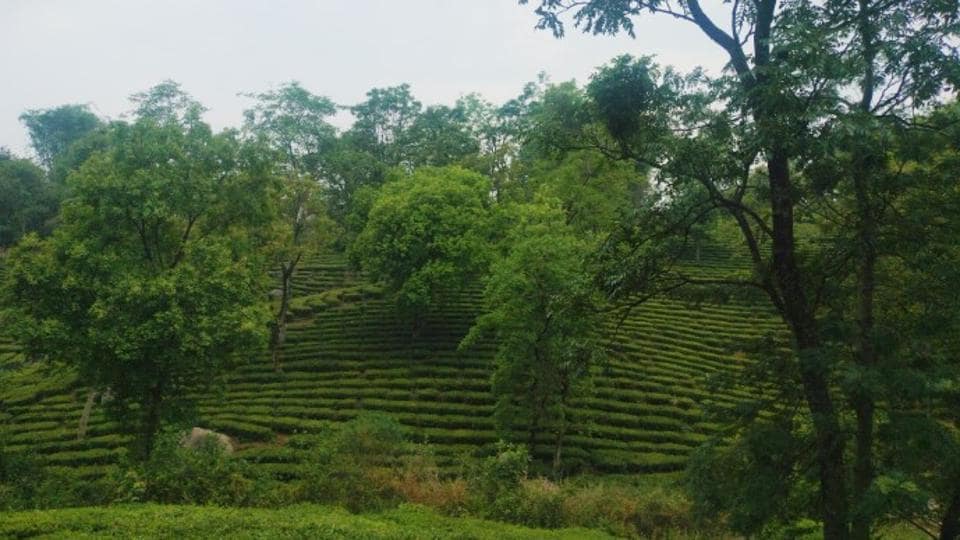
An increasing number of tea planters are now embracing tea tourism as an alternative to keep the struggling tea business afloat amid dwindling production. The area under tea cultivation has shrunk in recent years and estate owners are now promoting Kangra tea, known for its distinct flavour, through on-site visitors.
Activities on offer include guided tea garden tours, tea tasting sessions, factory tours, and education on tea manufacturing, immersing visitors in the tea culture of the sprawling estates.
Kangra tea is known for its unique aroma and traces of fruity flavour. Milder than the Darjeeling tea in terms of flavour, it has more body and liquor. The tea is grown 900-1,400 m above sea level on the slopes of the Dhauladhar mountain range in the western Himalayas.
Taking a page out of other states’ model
Tea planters have highlighted that despite the historical significance of Kangra tea and the economic potential of tea tourism, the state government has yet to formulate a policy unlike in states like Assam and Kerala.
Wah Tea Estate director Surya Jai Prakash, who offers visitors guided tea tours, factory visits, tea tasting sessions and insights into the history of tea plantations, said, “Tea tourism has a lot of potential and can be a better option to promote Kangra tea and the government should permit some hospitality activities to promote tea under a defined policy as seen in Assam, Darjeeling and Kerala.”
He added that the number of visitors to their gardens has increased, with even school and college groups being organised often, highlighting the industry’s potential.
A senior administration official in Kangra said there attempts have been made to formulate a policy during the past years but that did not yield desired results.
Kangra Valley Small Tea Planters Association president Suksham Butail added, “We cannot carry out commercial activities on plantation land. We have been demanding the government should allow us to utilise a fixed area for tea tourism.”
“States like Kerala, Assam and West Bengal realised that cultivation alone was no longer enough to help sustain livelihood and brought tourism into the mix. We need a policy to help do that in Himachal as well,” he added.
In West-Bengal, 15% of the total area is allowed to be utilised for tourism and allied businesses activities, under tea tourism and allied business policy.
Taking note of the idea’s novelty in the region, Kangra tourism deputy director Vinay Dhiman said, “Tea tourism would be a new concept and there is great potential to promote Kangra tea as a standalone product as well.”
Stopping the spiral
According to data shared by Tea Board of India officials in Palampur, 2,310 hectares of land is under tea cultivation on paper. However, only around 1,400 hectares is currently being used. The Karga tea has lost favour and production has plummeted in recent years. The annual production hovers at around 9 to 10 lakh kg. That, however, is far less than 17 to 18 lakh kg produced a few decades ago.
Notably, people often abandon tea cultivation, as the land holdings get smaller from generation to generation, making it a non-profitable business for them.
Rakesh Butail, who runs a homestay in Sungal at Palampur, said, “We demonstrate the technique of tea preparation from the plucking of leaves from the garden to sipping and savouring the tea to the guests. People here have started realising the potential of clubbing tea with tourism. As the land holdings get smaller from generation to generation, tea tourism is the only way forward.”
“People who come to our tea garden are given factory tours. They learn about the set-up. The tea industry is tourism friendly and the government needs to step in to promote it,” Rajiv Sud, owner of Palampur-based Himalayan Brew Tea company, said.
Mayur Sud, who runs Himalayan Adrenaline in Palampur, said, “The younger generation is coming up with innovative ideas to promote tea because we know tourism and tea can go hand in hand. The government also needs to increase the visibility of Kangra tea.”
Once popular in Europe, Central Asia and Australia, and even Afghanistan and Pakistan, the Karga tea has lost favour and production has plummeted in recent years. Dr Jameson, then superintendent of the Botanical Tea Gardens, had in 1849 spotted the region’s potential for tea cultivation. Being one of India’s smallest tea regions makes Kangra green and black tea more exclusive. While the black tea has a sweet lingering aftertaste, the green tea has a delicate woody aroma.


