
 E-Paper



After PEC, NIPER to also ditch convocation robes
Established in 1994 on 130 acres in Sector 67, NIPER is an Indian public pharmacy research university and a part of seven schools under the Union ministry of chemicals and fertilisers


Taking a cue from Punjab Engineering College (PEC), Chandigarh, where at the convocation on October 9 the western graduation robes were ditched in favour of traditional Indian attire, National Institute of Pharmaceutical Education and Research (NIPER), Mohali, has decided to follow the same route at its convocation on January 7.
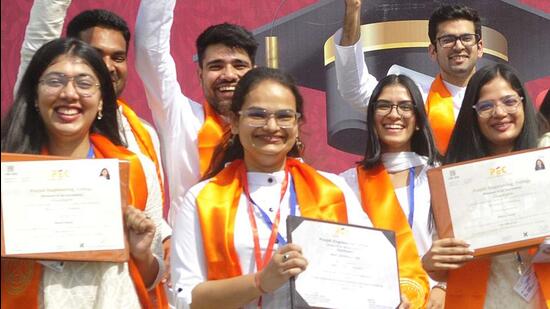
Established in 1994 on 130 acres in Sector 67, NIPER is an Indian public pharmacy research university and a part of seven schools under the Union ministry of chemicals and fertilisers.
For the institute’s 13th convocation, authorities have decided that male students will be wearing white pajama-kurta with a black jacket, while female students will be wearing blue saris. As many as 283 students, including 33 PhD scholars and 250 post-graduates, will be awarded degrees at the ceremony.
NIPER director Dulal Panda said, “Instead of the usual western robes, this time, we have decided to go for traditional attire. The students receiving the degrees are also excited about it.”
A student, not wishing to be named, said, “It is a welcome move, as convocation gowns are a British tradition. Students will experience greater pride in donning attire that is reflective of the Indian culture and climate.”
In June 2019, the University Grants Commission (UGC) had issued a circular to all universities and colleges, asking them to wear traditional attire made of Indian handloom during convocations. For example, women in Punjab could wear traditional salwar-kurta, those in Kerala and Tamil Nadu could wear traditional saris, and students in Himachal Pradesh could don the traditional cap and costume of the region, the circular had stated.


