
 E-Paper



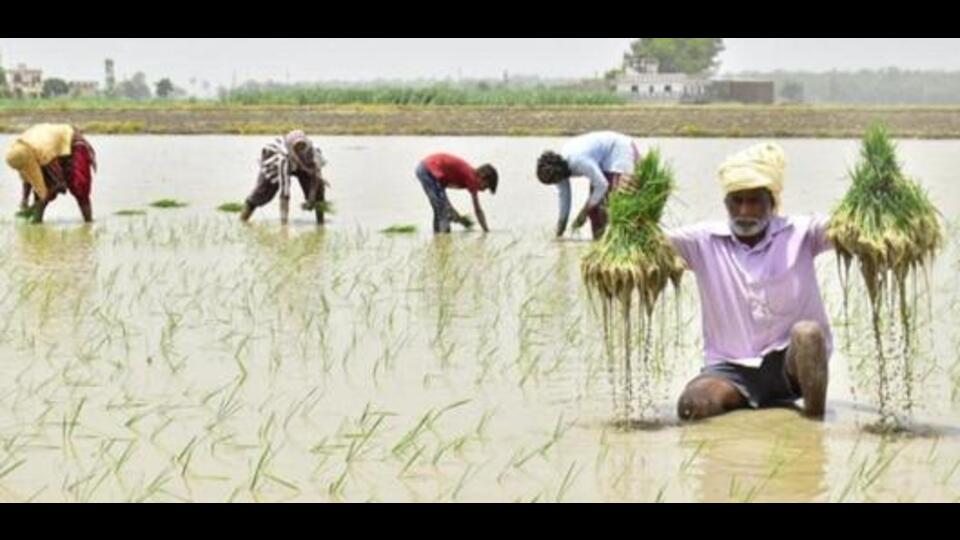
All set for conventional paddy sowing in Punjab, claim agri dept, PSPCL
A senior Punjab agri official said irrigation department has been asked to flow water in all canals, rajbahas and other water channels to support paddy sowing with the conventional method

 Prefer HTon Google


The Punjab state power corporation limited (PSPCL) and the agriculture department on Monday announced that all arrangements are in place for paddy sowing with the conventional puddling method in the state that begins from Tuesday.
“Our department is ready with supplies of urea and pesticides. At least 15 lakh tonne of urea is required and we have supplies available. We have formed surveillance teams under the joint director rank officers to oversee paddy transplantation,” said agriculture director Gurvinder Singh.
He said that the irrigation department has been asked to flow water in all canals, rajbahas and other water channels to support paddy sowing.
Farmers depend on canals for about 30% of total irrigation and rest 70% is subsoil water, which is pulled with the support of over 14 lakh tube wells.
At least 29 lakh hectares of land is expected to be under the kharif season paddy crop, out of which premium aromatic variety basmati has been pegged to be sown over 6.5 lakh hectares against last year’s area of 4.85 lakh hectares.
The state government had proposed to double the area under water conserving non-conventional method of directed seeded rice (DSR), taking it to 12 lakh hectares. However, the state farmers have not shown much enthusiasm as the figures by the state agriculture department show that so far one lakh hectares have been sown with the new method.
The state government this kharif season has divided the entire state into three zones – the farmers who own lands beyond the border fence were allowed to start paddy transplantation from June 10.
Districts Hoshiarpur, Jalandhar, Nawanshahr, Kapurthala, Pathankot, Gurdaspur, Amritsar, Taran Tarn, Rupnagar and SAS Nagar will start paddy sowing from June 14 and the remaining areas of Bathinda, Barnala, Faridkot, Muktsar, Patiala, Sangrur, Barnala, Malerkotla, Ludhiana, Fatehgarh Sahib, Ferozepur, Mansa, Moga and Fazilka will begin the transplantation from June 17.
Showing concern over the fast-depleting ground water level, Chief Minister Bhagwant Mann has asked the farmers to make judicious use of water for irrigation and cautioned them to desist from reckless water wastage.
The CM, according to an official spokesperson, has already given instructions to the PSPCL to ensure power supply to other categories of consumers, especially the household along with the agriculture pump sets.
Real test for PSPCL from June 17
According to a top engineer in PSPCL, the real test for the state power utility will begin from June 17 when transplantation will begin in the entire state.
“The demand for power then is expected to shoot to 15,000 MW, as the agriculture sector alone will require 5,000 MW. PSPCL will divide the entire state into three zones to give 8 hours uninterrupted supply. The domestic and other sectors have already peaked to 10,000 MW,” he added.
According to him, the quantum of power is required until July 31, and if rainfall there is enough rainfall, the demand is expected to fall.
The PSPCL has made arrangements for the power required for paddy sowing and other consumers, the engineer said. To meet the peak demand, the state has enhanced its transmission capacity to import power from outside states to 8,500 MW as against 7,100 MW last season and the remaining power of 6,500 MW is being arranged from the sources within the state.


