
 E-Paper



Bhakra Dam level rises 3 ft in 24 hours, triggers flood alarm downstream
Bhakra Dam water level touches 1676.3 ft for the first time this season, just 3 ft below danger mark of 1,680 ft

 Prefer HTon Google


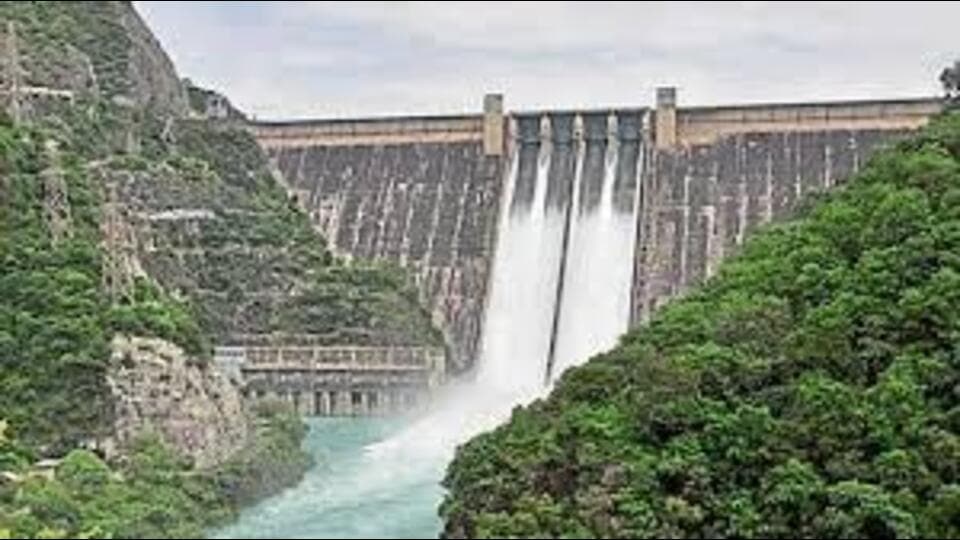
The water level at Bhakra Dam rose by nearly three feet within 24 hours, prompting authorities to issue alerts in downstream districts along the Sutlej river, including Ropar, Nawanshahr, Ludhiana, and Jalandhar.
Presently, all three rivers — Sutlej, Beas, and Ravi— are in spate, along with other seasonal rivulets, and have flooded large parts of Punjab following heavy rain in their catchment areas in Himachal Pradesh and Jammu and Kashmir.
The level in the Bhakra Dam’s reservoir, Gobind Sagar Lake, on Tuesday was recorded at 1676.72 feet, a rise of 2.71 feet in the past 24 hours. The level is just 3.28 feet short of the danger mark of 1680 feet. The water level at Bhakra had touched 1,674 feet on Monday, just six feet short of the 1,680-foot danger mark.
“Though the dam can hold water 10 feet beyond the danger level of 1,680 feet, but this might pose a threat to its safety,” an official of Bhakra Beas Management Board (BBMB) said, pleading anonymity.
On Tuesday, the Jalandhar administration sounded an alert and asked people residing on the banks of the Sutlej in Phillaur, Lohian, and Shahkot areas to move to safer places.
Education minister Harjot Singh Bains, who is MLA from Anandpur Sahib, said that due to heavy water flow, 12 breaches have occurred in the Anandpur Sahib and Rupnagar belt.
“The local residents have been asked to stay alert for the next 24 hours as heavy rainfall is predicted on Wednesday and Thursday,” Bains added.
Correspondingly, last year the water level in the Bhakra reservoir was 1639.66 feet, which is 37 feet less than the current levels.
“This difference is cause for worry for us, and still there are 18 days to go until the filling season ends on September 20,” the above-quoted BBMB official added.
Bhakra dam reservoir receives 70% of its water from the melting of snow in the catchment areas, in the upper reaches of the Himalayas, and 30% from rain.
The inflows into the Bhakra stood at 1.07 lakh cusecs, while 56,000 cusecs of water is being released downstream through the dam’s turbines and spillway gates.
“Unlike the previous seasons, this year, rainfall has largely contributed to the water in the reservoir,” the official said, adding that with the dam filled to 97% of its capacity, the remaining 3% is expected to be filled within 24 hours if the incessant rains continue in the catchment areas. The floodgates of the dam have been open for the past 10 days as nearly 28,000 cusecs of water is flowing through them.
The water level in the Pong Dam over the Beas river is being maintained stable at 1,390.63 feet even though its danger mark is 1,390 feet.
The dam is receiving 96,777 cusecs of water, and 95,836 cusecs is being released downstream. BBMB opened floodgates at Pong Dam more than 15 days ago, inundating vast swathes of low-lying areas and farmland in Kapurthala and Hoshiarpur districts.
At Harike headworks, built on the confluence of the Beas and Sutlej rivers, the discharge surged to 2.84 lakh cusecs, compounding the situation in flood-hit Ferozepur and Fazilka districts.
As per the government bulletin, 10,000 hectares of agricultural land was inundated in 24 hours, taking the total inundation from 1.38 lakh hectares to 1.48 lakh hectares.


