
 E-Paper



Bird flu resurgence: Sanctuary at Pong Lake closed amid avian deaths
Since March 25, 72 birds have died in the sanctuary; five samples sent to Jalandhar lab test positive for H5N1 strain


With the avian death toll mounting by the day amid a resurgence of bird flu in Himachal Pradesh, all activities were banned in the Pong Lake Sanctuary area.
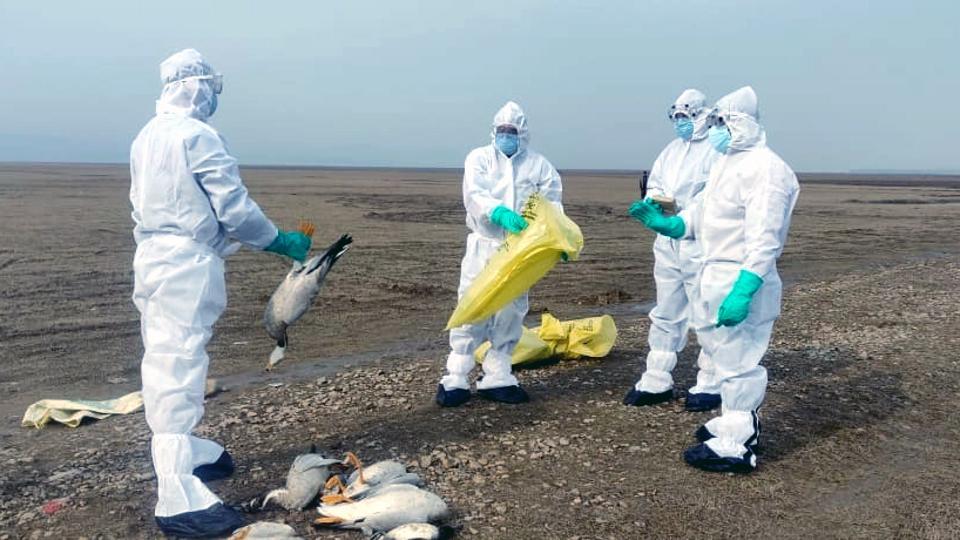
Since March 25, 72 birds have died in the sanctuary. Divisional forest officer, wildlife, Rahul Rohane, said, “Ten more birds were found dead in the sanctuary on Friday. They have been disposed off as per protocol.”
Kangra deputy commissioner Rakesh Kumar Prajapati said five samples sent to the North Zone Regional Disease Diagnostic Lab, Jalandhar, had tested positive for the H5N1 strain. The report of carcass samples sent to ICAR’s National Institute of High-Risk Animal Disease Laboratory, Bhopal, is awaited.
“The lake has been closed for visitors. We are taking all precautionary measures. We are conducting a throrough surveillance of the area,” Prajapati said, adding that there was no ban on movement of people in peripheral areas.
The last bird flu outbreak in December had claimed the lives of at least 5,000 migratory birds in the sanctuary.
The highest mortality has been observed in bar-headed geese that migrate from Mongolia to Pong Dam in winter. This season, 40,570 bar-headed geese were spotted at the lake, making it the most populous bird species on the lake.
Birds from the south may have brought the infection: Officials
Forest officials suspect that birds flying from the south may have carried the infection. These birds use Pong Lake as a stopover while returning to their homeland.
The Pong wetland in Himachal Pradesh’s Kangra district is one of the largest man-made wetlands in North India. It was formed after the construction of a dam on the Beas river in 1974. This wetland offers a transitory resting reserve for migratory birds coming from the trans-Himalayan zone in winter when the temperature plunges in wetlands of Europe and North and Central Asia.
Flocks of waterfowls that breed in these areas in summer undertake migration to Pong wetlands to spend winter in congenial climatic conditions from October to March every year.


