The city recorded 23.9 mm rain on Sunday, making it the wettest January day since 2022, when 45.9 mm rain had lashed the city on January 23.
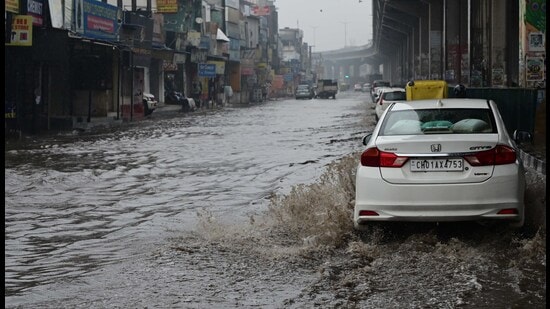
According to the India Meteorological Department (IMD), 18.4 mm rain was received overnight and 5.5 mm later during the day on Sunday, taking the total precipitation to 23.9 mm. At 65 mm, January 7, 2017, holds the record for the wettest January day in Chandigarh’s history.
With a fresh Western Disturbance (WD) arriving this week, more rain is likely on Wednesday and Thursday, as per IMD.
While IMD had predicted rain on Saturday, most of it was received on the intervening night between Saturday and Sunday. Rain continued on Sunday, while brief spells of sunny weather were also seen in the afternoon.
Meanwhile, due to snowfall in parts of Himachal Pradesh, cold winds are likely to intensify the winter chill in the city from Monday onwards, and combined with fog, it is likely to lead to a chilly Lohri, according to IMD Chandigarh director Surender Paul.
Orange alert for fog in place
An orange alert for dense to very dense fog has been issued for Monday and Tuesday, followed by a yellow alert for thunderstorm and lightning on Wednesday.
Orange is the second-highest of the four-colour warning system used by IMD, asking people to stay alert and be prepared. Yellow is the third colour in the warning system, asking people to keep a watch and be updated.
{{/usCountry}}Orange is the second-highest of the four-colour warning system used by IMD, asking people to stay alert and be prepared. Yellow is the third colour in the warning system, asking people to keep a watch and be updated.
{{/usCountry}}“With increase in moisture, there is a chance of dense fog in the mornings and at night. But a fresh WD is likely to affect the region from Wednesday onwards that will limit fog formation,” shared Paul.
Despite the rain, the maximum temperature changed only slightly from 18.9°C on Saturday to 18.4°C on Sunday, which is normal for this time of the year.
Due to the overcast skies, the minimum temperature on the other hand rose from 8°C to 11°C, 4.1 degrees above normal.
Over the next three days, the maximum temperature may drop to around 17°C, while the minimum temperature will remain in the same ballpark.
Air quality improves
The city’s Air Quality Index (AQI), which had entered very poor on Thursday, is also starting to improve. As per the AQI daily bulletin released by the Central Pollution Control Board (CPCB), Chandigarh’s AQI on Sunday was 244, falling in the poor bracket.
However, an AQI even between 201-300 can cause breathing discomfort to most people on prolonged exposure. Since a city’s AQI is based on a 24-hour average value, it is expected that it may improve further on Monday, taking into account the rain on Sunday.
Vande Bharat cancelled, morning Shatabdi arrives over two hours late
The inclement weather caused cancellation of the Ajmer-Chandigarh Vande Bharat from Delhi, while the morning New Delhi-Kalka Shatabdi Express arrived two hours and 30 minutes late.
Instead of its scheduled departure of 7.40 am, the train departed from New Delhi at 10 am and reached Chandigarh at 1.30 pm.