
 E-Paper



Chandigarh college teachers, non-teaching staff mark protest with candle march
The protest were over the delay in the implementation of University Grants Commission (UGC) regulations — which includes the implementation of pay revision and Central service conditions


Both the teaching and non-teaching staff of different city colleges on Monday lit more than 700 candles at Sector 17’s market plaza to mark their protest over the delay in the implementation of University Grants Commission (UGC) regulations — which includes the implementation of pay revision and Central service conditions as per the Union ministry of home affairs’ notification issued on March 29, 2022.
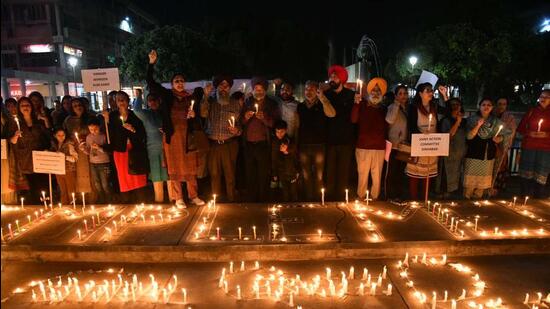
Protesting teachers said the UT was the only place in the country where teachers and non-teaching staff have not been granted the benefits of revised pay scales and other benefits — due with effect from January 2016 — so far.
The teaching and non-teaching associations of Chandigarh colleges said the staff was facing the brunt as their several issues are pending including promotions, probation period and scales to new recruits as per UGC norms.
“Even after the announcement made by the Home Minister and subsequent Issuance of notification by the president of India, Chandigarh administration has done nothing to implement it,” the statement said.
PU senator Inderpal Sidhu said the unnecessary delay caused by the administration has also resulted in a confusion over whether the college managements should retire people at 60 or allow for extensions.
Representatives of both teaching and non-teaching staff warned that they would intensify the protests in case of any further delay in the adoption of their demands.


