E-Paper



Three charts that possibly explain Monday’s student protest | Number Theory
There is good reason to believe that the protest has resonated with a larger constituency beyond just NEET aspirants.

 Prefer HTon Google


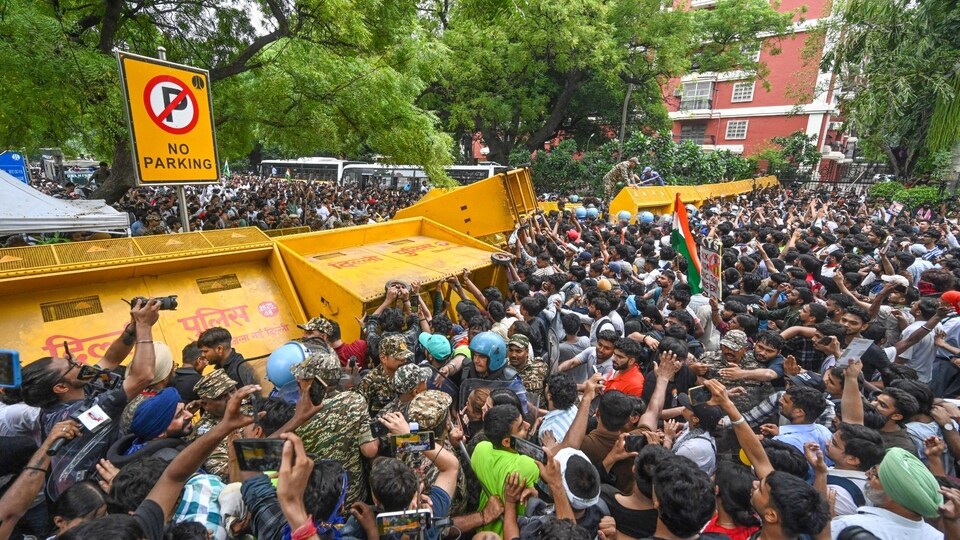
Delhi saw its largest students’ protests in many years on Monday. The protests, which originated as a response to the proposed parliament march by the Cockroach Janta Party following a 20-day long hunger strike by Sonam Wangchuk and some student activists, gained rapid momentum after Wangchuk was moved to a hospital by the police. The protests started primarily against the NEET paper leak and the subsequent cancellation of the test (a retest has since been conducted). Their most important demand is the resignation of the Union education minister. There is good reason to believe that the protest has resonated with a larger constituency beyond just NEET aspirants. Is there an objective basis for such as response? After all, there has been no such movement against this government so far. Here are three data points from statistics produced by RBI and the government which could offer some indication on what is happening.
(Shreya Khandelwal and Abhishek Jha helped with the data work for this story.)
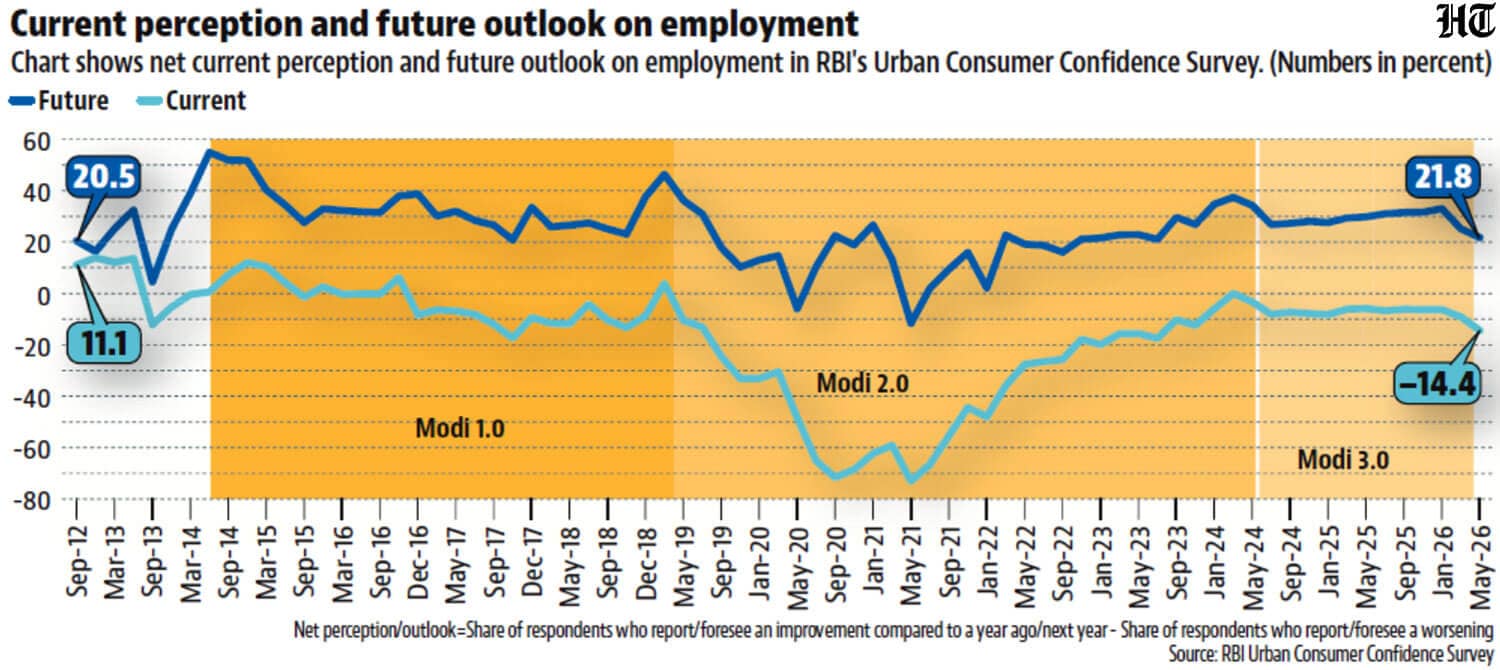
 The government’s third term has seen a stagnation of sentiment around employmentRBI’s Urban Consumer Confidence Survey (UCCS) asks questions on current perception and future outlook on employment. The net sentiment on these measures the difference in share in respondents who report an improvement compared to last year or foresee an improvement in the year ahead. Long-term data from the UCCS shows that both current perception and future outlook peaked in the early part of the first Narendra Modi government which came on a promise of widespread economic prosperity powered by good governance . While sentiment withered a bit through the first Modi government, it improved once again by the end of its term. The second term saw a poor performance on both these indicators, which is expected given disruptions such as the Covid-19 pandemic. While things improved steadily once the pandemic eased, the rising trajectory has stalled under the third Modi government and even seen a decline in the past couple of rounds. To be sure, there is still nothing in the data which suggests a large reversal.
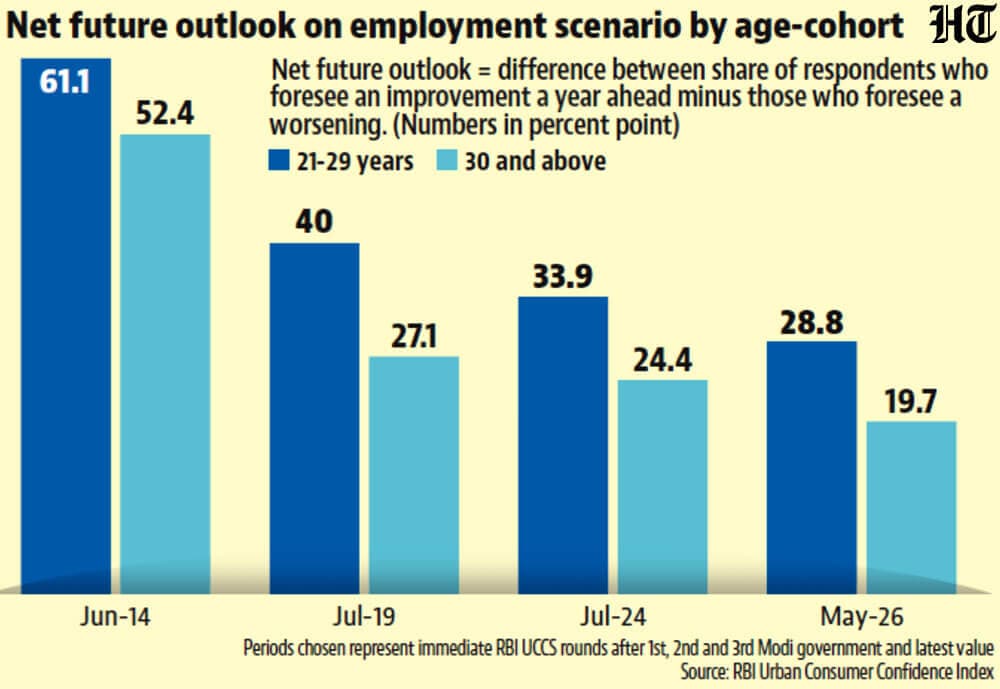
- Deterioration in future outlook has happened across younger and older respondents, but younger population is still more bullish than older oneIf one is talking about younger population empathising with a protest around education, it is important to ask whether they have become more pessimistic vis-à-vis their future employment prospects. An age-cohort wise breakdown of the response – in UCCS rounds immediately following the election of three Modi governments and the latest data – of future outlook vis-à-vis employment shows that there has ben a worsening on this count among both younger respondents (21-29 years) and the rest of them in the UCCS data. To be sure, the younger respondents are still more bullish than their older counterparts.
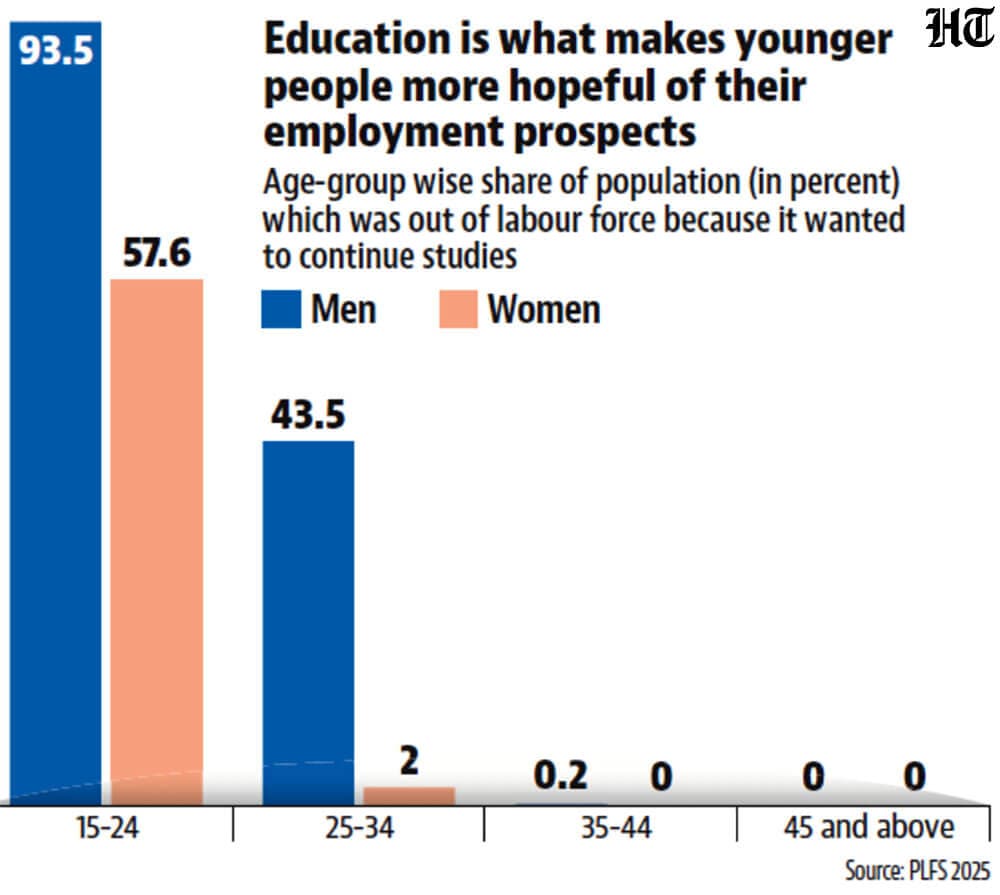
- What might have broken the youth’s patience is a fear that paper leaks are nullifying their educational effortsTo be sure, RBI’s UCCS data is not really representative of youth sentiment in the country because its occupational classification only includes working, self-employed, housewives, retired and unemployed people. A very large part of India’s youth population is actually neither working nor unemployed because they are not a part of what economists call the labour force (population working or looking for work). A very large part of the out-of-labour-force youth population attributes their status to a desire to study, which, it hopes will bring better job prospects in the future. The recent controversies about paper leaks, especially for NEET – one of India’s most competitive exams for medical college entrance which is held by a central agency – might have added to the fear that investment in education might be wasted because of systemic flaws such as paper leaks. The protestors we saw on Monday in Delhi could have largely come from the ranks of the out-of-labour-force young population.
- ConclusionThe unprecedented mobilisation in the Monday’s protests -- even the government has admitted it -- can partly be explained by the fact that it has unlocked the protest threshold for a new cohort, which is still studying rather than working or unemployed, and therefore susceptible to the economy’s cyclical swings. Irrespective of the politicking around the issue (the numbers have definitely swelled because of political actors), it is absolutely important that the government does everything to assure students that the system will not derail the translation of their educational investment and efforts in employment prospects.