
 E-Paper



Chandigarh has achieved just 20% of PNG goal: Parliament data
According to the Union Ministry of Petroleum and Natural Gas, the city recorded 34,175 domestic PNG connections as of May 31, 2026, against a minimum work programme (MWP) target of 1.75 lakh

 Prefer HTon Google


Despite the administration’s aggressive push to shift households from LPG to piped natural gas (PNG), the city has so far achieved only 20% of its target, data tabled in the Parliament shows.
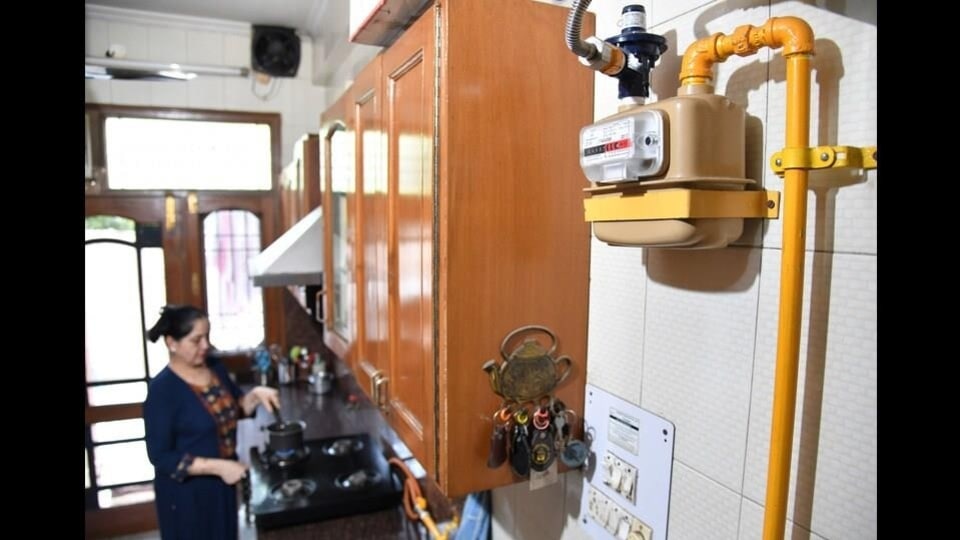
According to the Union Ministry of Petroleum and Natural Gas, the city recorded 34,175 domestic PNG connections as of May 31, 2026, against a minimum work programme (MWP) target of 1.75 lakh connections within a 90-day period, starting the end of March. In contrast, there are nearly 3.08 lakh LPG connections.
The figures were shared in response to an unstarred question in the Lok Sabha on the expansion of PNG infrastructure across the country.
Efforts to bring the city under the PNG network had gained momentum amid concerns over energy supply disruptions triggered by the West Asia conflict. India imports nearly 60% of its LPG requirements, with about 90% of shipments passing through the Strait of Hormuz, a key chokepoint vulnerable during geopolitical tensions.
The lag assumes significance as the Centre has now mandated a transition to PNG in areas where pipeline networks are already in place. Under the Natural Gas and Petroleum Products Distribution Order, 2026, issued under the Essential Commodities Act, households are required to switch to PNG within three months of receiving notice, failing which LPG refill supplies may be discontinued.
City areas under PNG cover
Indian Oil-Adani Gas Pvt Ltd (IOAGPL), which introduced PNG in the city in 2016, has laid pipeline infrastructure across several parts, including Sectors 32-38, 40-51, Industrial Area, Phases 1 and 2, and Manimajra — covering roughly 30% of the city. The adoption has, however, remained limited over the years.
To bridge this gap, the UT administration has launched a multi-pronged strategy, including door-to-door awareness campaigns, registration camps in group housing societies and coordination with resident welfare associations (RWAs).
Officials from the food and supplies department have been directed to hold two camps daily in housing societies to facilitate on-the-spot registrations and address consumer concerns.
The commercial sector — particularly hotels and restaurants — is also being nudged to switch, given their higher fuel consumption.
Cost-effective over time
Some of the advantages of switching from LPG to PNG include convenience and uninterrupted supply through a pipeline network, eliminating the need for cylinder booking and refilling. PNG offers enhanced safety as it is lighter than air and disperses quickly in case of leakage, thereby reducing fire hazards, and operates at lower pressure without the need to store bulky cylinders.
PNG is also cost-effective over time with a pay-as-you-use billing system and no requirement for cylinder deposits or refills. Additionally, it provides ease of use by removing the inconvenience of handling heavy cylinders, making it particularly beneficial for elderly residents and those living in apartments.
National push
PNG rollout is part of the broader City Gas Distribution (CGD) network being developed across the country by entities authorised by the Petroleum and Natural Gas Regulatory Board (PNGRB). The network now spans 309 geographical areas nationwide.
At the national level, over 1.70 crore domestic PNG connections have been provided so far against a long-term target of 12.65 crore connections by 2034.
To accelerate adoption, the Centre launched National PNG Drive 2.0 earlier this year, focusing on expanding connections, activating inactive users and improving utilisation of existing infrastructure.
A control order notified in March 2026 has also sought to remove bottlenecks in pipeline expansion by mandating time-bound permissions, enabling deemed approvals and restricting arbitrary charges by authorities. PNGRB has been designated as the nodal agency to monitor implementation.


