
 E-Paper



Chandigarh: HC allows St Kabir School to provisionally admit students
School was derecognised by the Chandigarh administration in May this year for not admitting EWS category students as mandated under law


In a relief for St Kabir Public School, Sector 26, the Punjab and Haryana high court on Thursday allowed it to admit students provisionally.
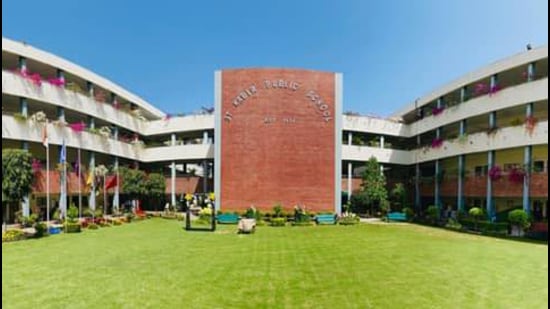
The court’s nod came after the school gave an undertaking that it will admit students from the economic weaker section (EWS) category as mandated under the Right to Education (RTE) Act.
The school, the first in the city to face such an action, was derecognised by the UT administration in May this year, as it failed to admit EWS category students to the extent of 25%, as mandated under law.
In July 2022, a division bench of the high court had quashed a 2014 notification of the National Commission for Minority Educational Institution, granting minority status to St Kabir. The matter remains pending in the Supreme Court (SC).
But as the school did not admit EWS category students in the 2023-24 session without obtaining a stay from SC, the administration had derecognised the school, stalling fresh admissions.
The detailed order of Thursday’s proceedings is awaited. However, UT’s senior standing counsel Anil Mehta said the HC bench, without interfering with merits at this stage, directed the petitioner school to submit an undertaking that they will admit 25% students of EWS category, which the school did.
The court was hearing a clutch of petitions involving controversy surrounding minority status obtained by some schools, non-admission of EWS category students and issue of non-reimbursement of full fee as mandated under the RTE Act by the UT administration.
The court on the last date of hearing had sought details about EWS admissions, teachers’ salary and other related details from private schools, which was submitted by some. But the court remained dissatisfied and asked them to re-submit details about salary and staff, etc., again and “come with clear and complete records” on the next date of hearing on December 21.
Reimbursement for EWS seats hiked from ₹825 to ₹2,618 per student: UT to HC
During the hearing, UT told the court that irrespective of the status of the school (minority or non-minority), they are bound to admit at least 15% EWS students as per its land allotment policy of 2005.
The affidavit by UT school education director Harshuhinder Pal Singh Brar said RTE mandated 25% reservation for EWS category. Hence, non-minority status schools are bound to admit 10% more students from EWS category for which they are given reimbursement. Minority status schools are not bound to admit EWS category students beyond 15%. The reimbursement to be made per child under the RTE Act is calculated by internal departmental committee and approved at the highest level.
Per child reimbursement, which was ₹825 per month in 2010-2011, has now been increased to ₹2,618 per month, Brar submitted in the affidavit.
As of government schools, admission is provided irrespective of economic status and up to Class 8, it is free. However, an annual door-to-door survey to identify EWS students is done in December/January for which government schools have been divided into 20 clusters. In the 2023-24 survey, there were a total of 43,593 children of EWS category studying in government schools, the affidavit said.


