
 E-Paper



Chandigarh: HC quashes GMCH-32 merit list for UT-pool SC candidates
The HC bench of justice Suvir Shegal and justice Rajesh Gaur acted on a clutch of petitions challenging the final list, which treated “migrant SC candidates” as general candidates, thereby denying them the reservation.

 Prefer HTon Google


The Punjab and Haryana high court (HC) has quashed the merit list prepared by Government Medical College and Hospital (GMCH), Sector 32, for Scheduled Caste (SC) candidates under the UT pool for admission to the MBBS course for the 2026-27 academic session.
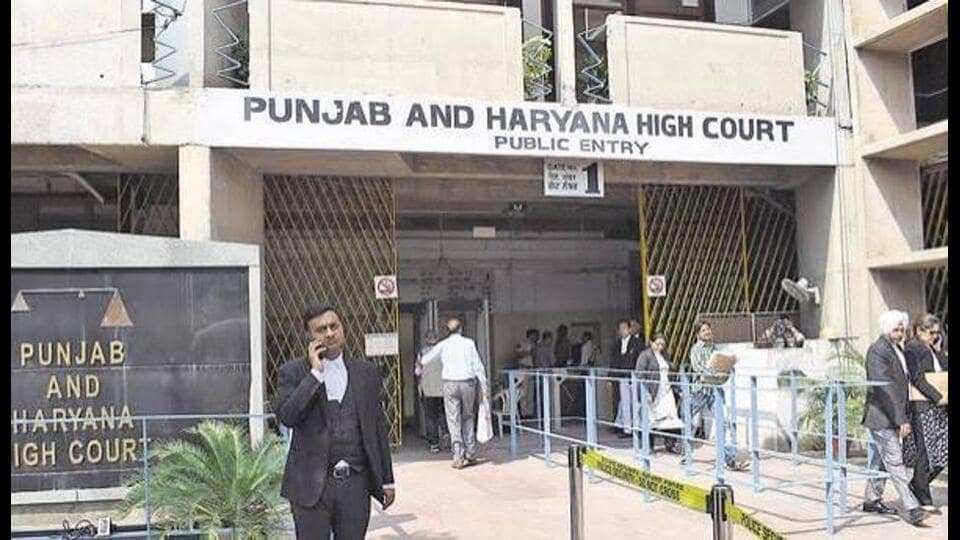
The HC bench of justice Suvir Shegal and justice Rajesh Gaur acted on a clutch of petitions challenging the final list, which treated “migrant SC candidates” as general candidates, thereby denying them the reservation.
GMCH has 200 MBBS seats in all, out of which, 156 is for UT pool candidates, including reserved seats, while the remaining seats are for all-India quota, foreign and NRI students.
Prospectus did not distinguish between SC & migrated SC candidates
The students had claimed that the prospectus did not distinguish between those candidates having SC status of other states – termed as “migrated SCs”– and those whose fathers and forefathers lived in the city. In the merit list, migrated SC candidates were treated as general category candidates. The court found that in the prospectus released by the GMCH, an SC candidate was required to produce the prescribed SC certificate from the designated authority within UT. It did not have any other requirement laid down in the clauses. The criterion also did not say that a candidate must prove that his/her father, grandfather or forefather was residing in Chandigarh before November 1, 1996. Further, there was no stipulation that a candidate, whose certificate bears the expression “migrant”, would automatically be treated as a general category candidate.
“In case the respondents intended to confine the benefit of reservation to SC candidates of Chandigarh origin, it was required to be categorically mentioned in the prospectus, however, the same has not been done,” the bench said.
‘Modification of prospectus after its release not permissible’
The court also rejected the UT’s argument of 2018 instructions from the Centre mandating that a SC person migrating from one state/UT to another, would retain the status in the state/UT of origin and cannot claim corresponding benefits in the migrated state/UT. “In case these instructions are read into the prospectus, it would result in a modification of the prospectus, which is impermissible. It would mean that respondents have altered the original prospectus and introduced a new eligibility condition. Instead of being clarificatory in nature, these instructions introduce an eligibility condition for the very first time,” the court said, adding that some of the candidates, who are otherwise eligible to be considered for admission as per the plain reading of the prospectus, have become ineligible.
“Applying such a condition after the candidates had applied, qualified and are likely to be called for counseling, would amount to “altering the rules of the game after the game has begun”,” it asserted.
The court reiterated that prospectus constitutes a declared norm by which the eligibility, scrutiny, preparation of merit and admission has to be regulated. “An educational institute or an admitting authority, which has framed the prospectus, is as much bound by the norms laid down therein as the candidate, who seeks admission thereunder,” it held.
Now, the GMCH has been told to revise the merit list according to the conditions spelt out in the prospectus within a period of 10 days and also treat those with “migrated SC certificates” eligible for SC seats of UT pool. The court, however, said that the judgment will not preclude the authorities from prescribing an admission criteria based on instructions of the Government of India, from the next academic session.


