
 E-Paper



Chandigarh: Two oxygen generation plants to be inaugurated today
Four oxygen generation plants are installed at four government health institutes in Chandigarh with cumulative capacity to generate 3,600 liters of medical oxygen per minute

 Prefer HTon Google


In an effort to augment the medical facilities in the city amid the possibility of the third wave of the Covid pandemic, two pressure swing adsorption (PSA) oxygen generation plants will be inaugurated in Chandigarh on Thursday.
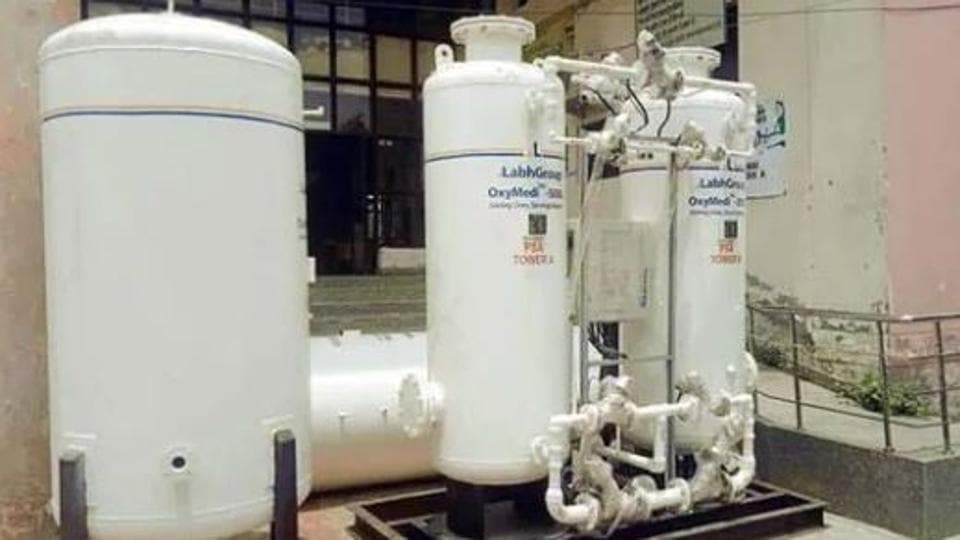
One of these plants is among the 35 such units to be virtually inaugurated by Prime Minister Narendra Modi under the PM CARES fund across 35 states and union territories.
The Post Graduate Institute of Medical Education and Research (PGIMER) has already installed two oxygen generation plants on its campus, each with a capacity to generate 1,000 litres of oxygen per minute (LPM).
One of these plants will be inaugurated by UT administrator and Punjab governor Banwarilal Purohit and Chandigarh MP Kirron Kher. UT adviser Dharam Pal will also be present on the occasion. Both the plants, however, are already operational.
The second plant to be inaugurated is at the Government Multi Specialty Hospital (GMSH) in Sector 16, which is capable of generating 500 LPM.
So far, four oxygen generation plants have been set up at Chandigarh’s four government health institutes (including the two plants which will be formally inaugurated on Thursday) with a cumulative capacity to generate 3,600 liters of medical oxygen per minute.
Besides, four more oxygen plants are being established at various government hospitals in the UT with the help of donations from non-governmental organisations. Once operational, 2,000 LPM oxygen will be added to the Chandigarh’s in-house generation capacity.
During the second wave, the demand for oxygen had suddenly increased with the rise in patient load and the UT administration had to request the Centre to raise its oxygen quota from 20MT to 35MT.
“The UT government hospitals are now self-sufficient in generating medical oxygen and we will be able to handle the demand in case of emergency in the third wave. Besides, we are requesting private hospitals of Chandigarh, with the bed capacity of over 50, to set up their own oxygen generation plants so that we do not face any shortage at the time of crisis. We are conducting regular meetings with private hospitals and are helping them to install the plants,” said Yashpal Garg, Chandigarh health secretary.


