
 E-Paper



Demolitions loom over Nayagaon residents as Punjab forest dept bats for 3-km ESZ around Sukhna sanctuary
As per Supreme Court directives, permanent structures cannot be constructed within an eco-sensitive zone (ESZ) for any purpose

 Prefer HTon Google


In a decision that could affect around 2 lakh residents of Kansal, Karoran and Nada—areas under the Nayagaon municipal committee in Mohali district—the Punjab department of forest and wildlife protection has proposed a 3-kilometre eco-sensitive zone (ESZ) around Sukhna Wildlife Sanctuary.
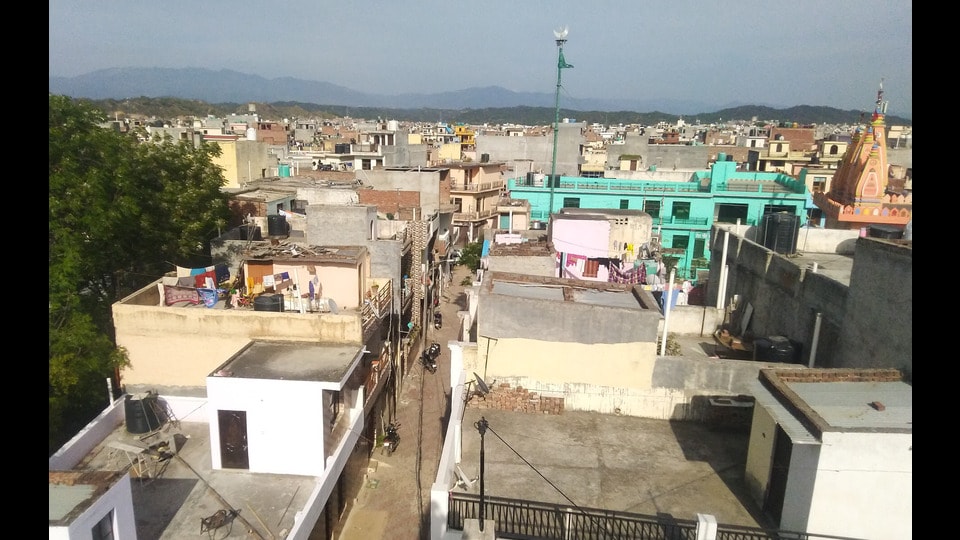
The department has sent the proposal to the Punjab Cabinet for final approval, before forwarding it to the central government for notification. Chandigarh and Haryana’s areas around the wildlife sanctuary are already demarcated.
As per Supreme Court directives, permanent structures cannot be constructed within an ESZ for any purpose. Moreover, no commercial construction is allowed within a 0.5 km radius outside the ESZ. In the range of 0.5 km to 1.25 km, construction of low-density and low-rise buildings up to 15 feet is permissible. Beyond 1.25 km, new building construction, including houses, is allowed.
Thus a 3-km ESZ around Nayagaon would lead to demolition of numerous structures, including houses, shops, hospitals, religious places and hotels in Kansal, Karoran and Nada, complain local residents, voicing opposition to the proposal.
They argue that Punjab’s stance contradicts its earlier position of maintaining a 100-metre ESZ around the sanctuary.
On the Haryana side, an area ranging from 1 km to 2.035 km around the sanctuary has been demarcated, as notified by the Union ministry of environment, forest and climate change (MoEFCC) on November 11, 2024.
The UT administration had similarly declared an ESZ of 1 km to 2.75 km from the sanctuary’s boundary on the Chandigarh side in January 2017, notified by the environment ministry the same year.
The Sukhna Wildlife Sanctuary, covering 25.98 square km (approximately 6,420 acres), falls under the administrative control of the Union Territory of Chandigarh, and borders both Punjab and Haryana. Located in the ecologically sensitive and geologically unstable Shivalik foothills, the sanctuary’s protection remains a priority for environmentalists.
Speaking to media, senior BJP leader Vineet Joshi opposed the proposal, arguing that a 100-metre ESZ was sufficient for a Category D wildlife sanctuary like Sukhna, as authenticated by the Wildlife Institute of India, Dehradun.
“The Punjab government is being insensitive to the plight of poor and lower-middle-class people. This decision could displace nearly 2 lakh residents,” he said.
Surinder Kaushish Babbal, a councillor from Nayagaon MC, highlighted the historical and legal context of these settlements. He noted that people began building homes in Nayagaon and Kansal as early as the 1980s, followed by Karoran and Nada. To address urban growth, the Punjab government formed the Nayagaon nagar panchayat in 2006, later upgrading it to a municipal committee in 2016. Legal frameworks, including the Master Plan, Zonal Plan and building bylaws, were subsequently notified.
“Residents have built houses, flats, and commercial establishments with government approval. Now, a single decision could render these legal structures invalid, depriving lower-middle-class families of their lifelong investments,” Babbal said.
He further pointed out the irony that these villages existed long before the Sukhna Wildlife Sanctuary was established. “Yet, it’s the residents who will bear the brunt of this decision,” he added.


