
 E-Paper



Dengue snuffs out two lives in Mohali, 119 new cases in Chandigarh tricity area
At 69, Mohali remained the largest contributor to the tricity tally of dengue cases; of the total 35 dengue deaths this year, 29 were logged in October alone, followed by four in November

 Prefer HTon Google


Dengue claimed two more lives in Mohali on Wednesday, taking the district’s fatality count to 35 this year. The worst-hit in the tricity, Mohali has witnessed as many as 33 dengue deaths in the past forty-one days.
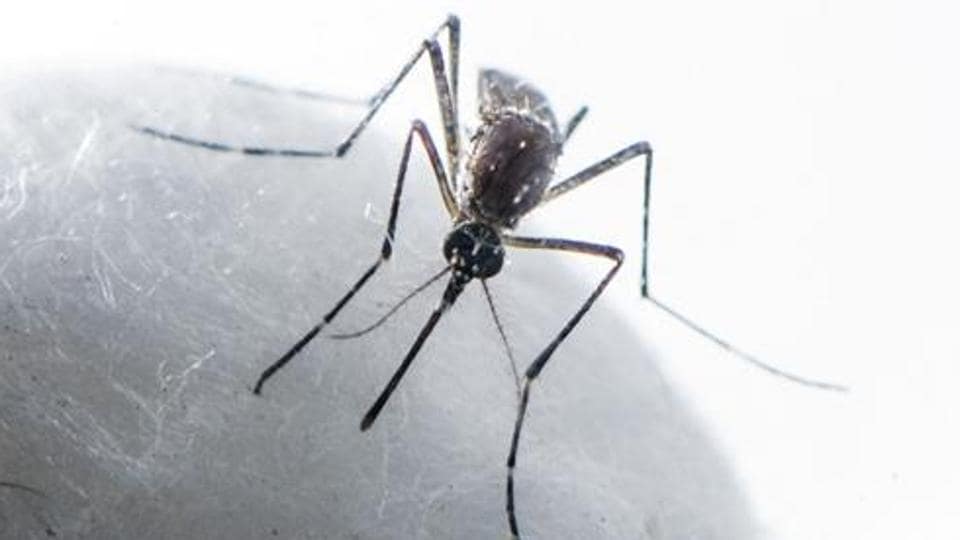
The latest victims of the viral infection include a 65-year-old man of Phase-7 who was admitted at IVY hospital in Sector 71; and a 45-year-old woman of Phase-10 who was undergoing treatment at Sohana hospital.
Of the total 35 deaths this year, 29 were logged in October alone, followed by four in November. Two people had succumbed in September. This is the highest toll since 2018 when eight people had died. In 2019 and 2020, only one fatality each was confirmed.
However, Chandigarh and Panchkula recorded no new fatality on Wednesday, keeping this year’s death tally at 3 and 1 respectively.
Mohali civil surgeon Dr Adarsh Pal Kaur said, “Though there has been a drop in the number of cases over the past few days, the maximum cases are being reported from urban areas of Dera Bassi, Kharar, Phase-7, Phase-10, and 3B1.”
She further said, “When our team visited these places, it was found that there was a lot of plastic waste such as carry bags, empty bottles, disposable glasses scattered, and stagnant water in various places in the villages. Plastic waste is the most suitable place for breeding mosquitoes as empty bottles, glasses and other items collect rainwater in which it is natural for mosquitoes to breed.” Arrangements were made by the health department to carry out anti-larvae spray, she added.
Mohinder Pal Singh, president, residents’ welfare and development, Sector 79, said, “Fogging is not done on regular basis and at several construction sites in Mohali, water can be seen accumulated, which become a breeding mosquitoes.”
119 more infected in tricity
Meanwhile on Wednesday, the health authorities confirmed 119 fresh dengue infections in the tricity, with Mohali reporting 69 cases, followed by 26 in Chandigarh and 24 in Panchkula. The UT has so far recorded 1,133 dengue cases, of which 244 surfaced in November. Of the fresh cases on Wednesday, maximum cases were reported from Manimajra and Hallomajra. Mohali’s dengue count has now gone up to 3,437 while Panchkula’s case tally stands at 751.
In Panchkula, the hospitals are flooded with suspected cases of dengue as there were 114 suspected cases of dengue till date, including 65 in government hospitals and 49 in private hospitals. Forty-nine suspected as well as confirmed cases of dengue are admitted in private hospitals, 65 patients in Government Hospital, Sector 6.
As per the authorities, indoor fogging has been done in and surrounding areas from where confirmed dengue cases have been reported. These include Sectors 4,6,10, 14, 12-A, 25, 28, and other rural areas such as Mankiyan, Billa, Kheri, Bagwali, Jalauly villages and Sector 26.
Meanwhile, Dr Suman Singh, director health services, Chandigarh, said, “The cases have started dipping in UT and admissions in government and private hospitals are improving. Now, less people are complaining about fever in OPDs.”
‘Authorities need to step up preventive measures’
“Though the temperature is falling in the tricity, the afternoon hours still have suitable temperature for the mosquitoes to breed. Besides temperature, other elements also contribute to the dengue outbreak. Water accumulation near construction sites, which are usually ignored during checking, result in more breeding,” said Dr Sonu Goel, professor, department of community medicine and School of Public Health, PGIMER.
He further added, “The health authorities are not doing intensive fogging in affected areas, even though they have mapped the localities. Also, people should participate in controlling the outbreak by ensuring cleanliness at their homes and localities and by allowing health teams to inspect their houses.”


